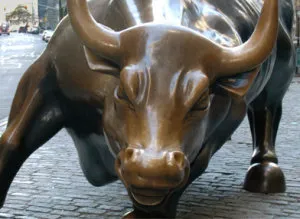
Pessimism has a strong intellectual hold among many political activists, and 60% of the respondents in the Huffington Post poll about my book "Rebound: Why America Will Emerge Stronger from the Financial Crisis" think I must have my head in the sand if I think that our economy is going to be rebound any time soon.
People have sold America short before in the recent past and have been proven wrong. Remember in mid-1980s when it was fashionable to say that Japan was about to become the world's leading economic power and that a combined Europe would surpass America as well. Remember when Ross Perot in 1992 predicted that there would be a "great sucking sound of jobs leaving America" if NAFTA passed. Instead, Japan's bubble burst leading to a ten-year slide, Europe has had intermittent periods of reasonable and slow growth, and America added 22 million new jobs in the 7 years after NAFTA passed.
Over the past 150 years, America has been the most successful economic system that the world has ever seen; at the center of this success has been a thriving middle class. According to the most definitive study on comparative living standards, our major competitors were significantly behind the U.S. level: Britain (−24%), Japan (−25%) Germany (−27%), France (−29%), and Italy (−35%). Further, two Swiss research groups have rated the US one of the top three "most competitive" countries for the last 20 years.
We've done this by having the most open economy, bar none. People are encouraged to find their own path to success. But, for those who don't find good jobs or are laid off due to the winds of change, America does not provide nearly as much support as Western European countries.
So even during prosperity, many people are just scraping by. In the 1990s, the availability of public assistance was curtailed as people demanded greater personal responsibility from those getting help with basic necessities. And obviously, more people experience difficulties since the onset of the severe recession brought on by the popping of the housing bubble and the crazy actions of the financial sector: unemployment is high; long-term unemployment is very high by American standards; and many people have lost their homes while others in the foreclosure process.
Crises like this were very common in America from 1850 to 1950. This crisis feels so bad because the period from 1945 to 2007 had mainly short and shallow recessions. While this downturn is longer and deeper, it is not 1929. If history is any guide, we should expect a rebound and it is incumbent on those arguing otherwise to prove what's different now.
Many authors tell us that the American middle class has been left behind over the past 30 years (which Robert Kuttner calls "a silent depression"). This is overly pessimistic. At the same time many people think that capitalism is self-correcting and call for limited government and few if any regulations.
My book carefully refutes both of these extreme positions. I describe the financial crisis as one of "brilliant idiocy" caused by the collective mistakes of many actors: e.g., mortgage brokers who convinced people to take totally inappropriate loans, mortgage originators who loosened their lending rules, credit-rating agencies that issued AAA ratings on questionable instruments, institutional purchasers who bought bonds without knowing their true risks, regulators who saw no problems, and financial leaders who orchestrated a system that generated tremendous rewards for themselves. Everyone was confident that they were pursuing a rational path and underestimated the downside risks.
Even though I do think that people learn from their mistakes and that few institutional buyers are going to purchase bonds of such poor quality in the future, I propose ten principles for new financial regulations. This is needed because finance is fundamentally different from any other industry in three ways: it deals primarily with other people's money, it deals with valuations based on future worth with lots of uncertainty and wild swings, and it is at the center of the crucial process of allocating capital to firms, governments, and individuals.
Over the last several years, I have been at the center of a debate on the state of the middle class. In my book, I refute many of the common dire claims on income inequality (rising but not as much as often claimed), shrinking middle class (because more people have moved up), quality of jobs, the effects of international trade and rise of China and India, personal debt, savings, and the availability of health insurance.
As several people who have read my book have noted, I say things that will annoy both liberals and conservatives. My real message is that while this downturn has hurt many people, perhaps permanently, our economy is robust and we have the resources to find ways to help those people and the responsibility to regulate the financial markets.
Because the pessimists think that our social problems are much greater, they call for a "new New Deal" based on an expanded public sector. This position is doomed to fail because middle class Americans view their situation much more positively and because of the unique American wariness towards "big government."
George Lakoff: Brown v. Democracy
Daniel Bruno Sanz: Economy Recovers Under Obama
Maria Bartiromo: Maria Bartiromo's 10 Laws of Enduring Success
Consensus for financial regulations fading: IMF
Germany, Italy Are Broadly On the Right Track
Financial Reform Closer to Ending 'Too Big to Fail': Geithner
We Americans are too smart not to see that if you just move some money around we could save this economy. Look at the defense budget. It is so unbelievably enormous that it could solve all of our problems if we spent that money correctly.
But we Americans also see our leaders as severely compromised, uwilling or unable to change the system they profit so handsomely from.
This is not a normal downturn. It doesn't feel like a normal downturn, it feels like a sea change.
America will rebound. The American people will rebound. But this economy, in this incarnation, is not going to rebound, and it doesn't deserve to.
So we will recover to flat earnings to float or sink slowly? Going green will help with many of these issues. And yes people do poorly in a great economy too but in the 90's there was no: sorry no raise this year, sales are down and insurance cost is up.
And yes everyone is moving up. Like to see those numbers in print.
Yeah right! I guess all the studies on the problems of the middle class done by Prof. Elizabeth Warren's group (before coming to DC mind you!) are just puff and smoke, right?
As for the income inequality, Prof Saez must be smoking the strong stuff too, I presume?
Sorry, but your thesis assume that, since we've rebounded before, we ought to rebound this time too, because...well, because!
Talk about circular logic!
Expanded public sector? What expanded public sector? If you're referring to stimulus spending, it's based on the formula for GDP located on page ten of every economics textbook in the known universe. If you're referring to a public option, then explain why Canadians pay lower income tax rates than Americans AND have no monthly insurance payment.
I live in the Tennessee Valley. There was a great big market failure here that left 94% of our farmers without electricity. A massive federal public works project called TVA made the economy of this area possible and created its middle class. As a matter of fact, there has never been a middle class without some kind of government spending to sustain it -- those highway projects are widening the arteries of commerce.
Nor am I pessimistic. In fact, I am rather optimistic that a green energy growth policy will fuel the rise of a new middle class.
This conspicuous Las-Vegas-style economy is based entirely on taking on huge debt for the straight-out purpose of gambling. Well, the gamble failed and now the ever-put-upon middle class has been called to bail the gamblers out.
There's no real value underlying much of our economy, no goods, services, natural resources, just a house of cards built on the lies of the financial firms that profit from it and the ratings agencies paid to ratify their lies.
It's pathetic and it needs to be fixed.
income for most people has been flat for the last ten years?
This guys tripping...
http://yieldpig.blogspot.com/
The government intervention we are still seeing was and is still necessary, but it is transient.
The government will retreat as the economy gets on more solid ground. The current right wing freak out will subside. In fact, I don't see the teabaggers being around after 2010, most view them as a pathetic joke already.
However, we are not going to "trickle down" our way out of this, and I think the income and wealth disparities are being underestimated in this article. There is a danger of a certain party getting control and trying to go all Reagan and slash taxes on the wealthy. That would be very damaging.
As bad as unemployment is right now, when the boomers really start to leave the workforce in droves you are going to see a labor shortage. Sounds crazy, but I think that is going to happen in about 5-10 years. This will cause great inflationary pressures and budget pressures. The only way out will be to allow massive immigration into the U.S. The Tom Tancredo's of the world are going to look very foolish in the future.
EVERYTHING the US Government does is designed to grow and consolidate
its own power. While average Americans were losing their jobs by the millions
in the last two years, the Feds have hired 85,000 new employees and
will soon add 16,000 new IRS agents to "enforce" the new Health Care
reform bill. Bush tripled the size of the US Govt. and Obama has already
doubled Bush's tripling.
"Meet the New Boss...
Same as the Old Boss...."
I think the author's book may be worth a glance, but so are over half the retorts by HuffPo readers prior to mine. But the last paragraph is very concerning. The author says a new New Deal would be "doomed to fail", yet it is the old New Deal that has helped build such a wonderful middle class in this country, keeping the less fortunate from plummetting into a life cycle of poverty.
The author lastly speaks on the American wariness of Big Government. Yet I strongly think the majority of Americans do not share this right-wing media and political paranoia of the government. Nearly all of us have relatives who work for the government, the majority of us have been educated in government funded schools, and we all eventually will cash those government S.S. checks and be on Medicare to help cover medical costs as we grow old.
Mr. Rose, it started out as a good read, but.............
Now we have a jobs report that shows potential growth in health care. Don't get me wrong, that's wonderful. But somehow I don't see construction and factory workers becoming nurses en masse. This is the danger of the so-called "he-cession;" traditional blue collar jobs are simply not coming back, and there are no related fields these workers can easily plug into. The Tea Party movement draws much of its rage and fear from this sector of the workforce; socially traditional men who are used to being the breadwinners for their families, who now see no prospects on the horizon. I'd like to think everyone can adapt, but switching from industrial work or construction to health care or IT is one hell of a leap. These folks are beginning to fear that they have outlived their usefulness, that the world has changed and left them behind, and I'm afraid they may be right.
off the East Coast? Obama = Fraud