
President Barack Obama's speech in Cairo to the Muslim world marked a welcome departure from the Bush administration's confrontational approach. Yet many Arabs and Muslims have expressed frustration that he failed to use this opportunity to call on the autocratic Saudi and Egyptian leaders with whom he had visited on his Middle Eastern trip to end their repression and open up their corrupt and tightly controlled political systems.
Imagine the positive reaction Obama would have received throughout the Arab and Islamic world if, instead of simply expressing eloquent but vague words in support of freedom and democracy, he had said something like this:
Let's fight to make sure our so-called allies in the Middle East, the Saudis and the Egyptians, stop oppressing their own people, and suppressing dissent, and tolerating corruption and inequality, and mismanaging their economies so that their youth grow up without education, without prospects, without hope, the ready recruits of terrorist cells.
Could he have said such a thing?
Yes. In fact, those were his exact words when, as an Illinois state senator, he gave a speech at a major anti-war rally in Chicago on October 2, 2002.
Coddling Tyrants
Egypt is the second-largest recipient of U.S. military aid, while Saudi Arabia is the number-one buyer of U.S. arms. Obama would have enormous leverage, should he choose to wield it, in pressing these two regimes to end oppression of their own people, suppression of dissent, toleration of corruption and inequality, and mismanagement of their economies. Yet he was apparently unwilling to take advantage of his highly publicized visits with the leaders of these two countries to break with his predecessors' coddling of these tyrannical regimes.
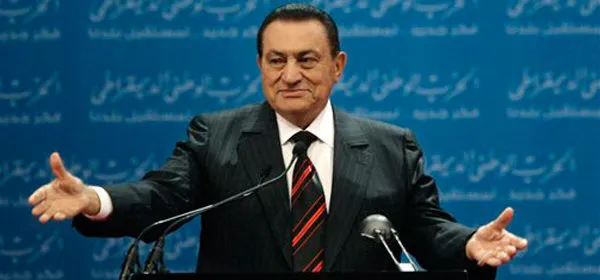
To his credit, while in Egypt Obama did engage in a few symbolic efforts to demonstrate a concern for human rights. He didn't praise his Egyptian host, the dictatorial president Hosni Mubarak, from the podium, as is generally customary on such occasions. Nor did he physically embrace Mubarak or Saudi King Abdullah or otherwise offer visual displays of affection, as is typical during such visits to leaders in that region. The Obama administration invited some leading critics of the regime, including both secular liberals and moderate Islamists, to witness his University of Cairo speech. However, Kefaya, Egypt's leading grassroots pro-democracy group, boycotted the speech. It demanded that Obama show his commitment to democracy in deeds, not words.
Since his address was directed to the Muslim world as a whole, and not just to Egypt, it may not have been appropriate in that particular speech to specify particular human rights abuses in that country or explicitly call on Mubarak to release political prisoners or allow for free elections. However, it appears that there was no clear effort by Obama, at any point during his Middle East trip, to pressure the Egyptian dictator or his Saudi counterpart to end the repression in their countries.
Despite taking a conciliatory role in the Arab-Israeli conflict in recent years, Saudi Arabia's King Abdullah reigns over a brutal and misogynist theocracy. The royal family, with the consultation of reactionary Wahhabi religious scholars, rules by decree. There's no constitution and no elections (save for one male-only poll for some powerless local advisory councils in 2005). No public non-Islamic religious observance is allowed. Political prisoners are routinely tortured and the execution rate (through beheading) is the second-highest in the world. The country is routinely ranked as one of the most repressive on the planet. During his visit to the kingdom last week, however, Obama refused to utter a word of public criticism about the family dictatorship, but did praise the king for "his wisdom and his graciousness."
Ignoring Egyptian Repression
As with Saudi Arabia, the repressive nature of Egypt's Mubarak dictatorship has been well-documented by Amnesty International, Human Rights Watch, Freedom House, and other groups. This is a country where a simple gathering of five or more people without a permit is illegal. Peaceful pro-democracy protesters are routinely beaten and jailed. Martial law has been in effect for more than 28 years. Independent observers are banned from monitoring the country's routinely rigged elections, from which the largest opposition party is banned from participating and other opposition parties are severely restricted in producing publications and other activities.
It's well documented that the Egyptian government engages in a pattern of gross and systematic human rights abuses against perceived opponents of the regime, including massive detentions without due process, torture on an administrative basis, and extra-judicial killings. Targets of government repression have included not just radical Islamists, but leftists, liberal democrats, feminists, gay men, independent-minded scholars, students, trade unionists, Coptic Christians, and human rights activists.
It's therefore quite disappointing that, even though the human rights situation in Egypt has actually worsened since his 2002 speech in which he advocated fighting to end repression in that country, Obama now refuses to even acknowledge that country's authoritarianism. In an interview with the BBC just prior to his departure to the Middle East, Justin Webb asked him directly, "Do you regard President Mubarak as an authoritarian ruler?"
Obama's reply was "No," insisting that "I tend not to use labels for folks." Obama also refused to acknowledge Mubarak's authoritarianism on the grounds that "I haven't met him," as if the question was in regard to the Egyptian dictator's personality rather than his well-documented intolerance of dissent.
In further justifying his refusal to acknowledge the authoritarian nature of the Egyptian government, Obama referred to Mubarak -- whom he dismissed as a "so-called" ally back in 2002 -- as "a stalwart ally, in many respects, to the United States." He praised Egypt's despotic president for having "sustained peace with Israel, which is a very difficult thing to do in that region," though -- given that no Arab government has waged war with Israel for over 35 years -- this is hardly so unique an accomplishment as to justify shying away from legitimate criticism of the Egyptian leader's dictatorial rule.
Obama went on to insist that "I think he has been a force for stability. And good in the region." Such an assessment is in marked contrast to his remarks from less than seven years ago, where he publicly acknowledged that Mubarak's corrupt and autocratic rule was creating conditions where Egyptian youth "grow up without education, without prospects, without hope, the ready recruits of terrorist cells." Since coming to Washington, Obama has surely read the intelligence reports that note many young Egyptians have been radicalized in reaction to Mubarak's corrupt and autocratic rule, and some have gone on to play key roles in al-Qaeda and other terrorist groups that have dangerously destabilized the region.
When the BBC's Webb asked Obama how he planned to address the issue of the "thousands of political prisoners in Egypt," he answered only in terms of the United States being a better role model, such as closing the prison at Guantánamo Bay, and the importance of the United States not trying to impose its human rights values on other countries. While these are certainly valid points, they offer little hope for the thousands of regime opponents now languishing in Egyptian prisons. Obama said nothing about the possibility of linking even part of the more than $1.5 billion in annual U.S. aid to the Mubarak regime on providing freedom for these prisoners of conscience.
The most negative assessment Obama could muster for Mubarak's dictatorial regime in the interview was, "Obviously, there have been criticisms of the manner in which politics operates in Egypt." Given that there have also been criticisms of the manner in which politics is conducted in every country of the world, including the United States, this can hardly account for a public display of disapproval. Even the Washington-based Freedom House ranks Egypt in the bottom quintile of the world's countries in terms of political rights and civil liberties. Webb's question was not about whether there have been criticisms of the manner in which politics operates in Egypt. The question was whether Mubarak was an authoritarian leader. Even if Obama did not feel comfortable labeling the Egyptian president himself as an authoritarian, he should have at least acknowledged that Mubarak leads an authoritarian government.
The Return of Realpolitik
In his recent speech, Obama claimed to have "an unyielding belief that all people yearn for certain things: the ability to speak your mind and have a say in how you are governed; confidence in the rule of law and the equal administration of justice; government that is transparent and doesn't steal from the people; the freedom to live as you choose." Emphasizing that such concepts are not just American ideas but basic universal human rights, he pledged that the United States "will support them everywhere."
Yet few on the proverbial Arab Main Street are going to believe the United States actually supports human rights until such noble rhetoric is matched by action, specifically an end to the arming and funding of repressive governments in the Middle East. As Shirin Sadeghi said, "Obama's inevitable message to the Muslim world" is that "the United States will look the other way at your governments' repressive policies because a working relationship with them is more important than a consideration of the peoples' rights."
Similarly, while Israel is an exemplary democracy for its Jewish citizens, that country's U.S.-supplied armed forces have engaged in massive violations of international humanitarian law against Arab and Muslim peoples, with bipartisan support from Washington.
It appears, then, that in rejecting the dangerous neoconservative ideology of his predecessor, Obama is largely falling back onto the realpolitik of previous administrations by continuing to support repressive regimes through unconditional arms transfers and other security assistance. Obama's understandable skepticism of externally mandated, top-down approaches to democratization through "regime change" is no excuse for arming these regimes, which then use these instruments of repression to subjugate popular indigenous bottom-up struggles for democratization (and then, in turn, justify the large-scale unconditional support for Israel because it's "the sole democracy in the Middle East").
Because this is the aspect of U.S. foreign policy most Arabs and Muslims experience firsthand, support for these corrupt and despotic regimes is arguably the single biggest motivation for the young disenfranchised men that join the ranks of radical Islamists against the United States, even more so than U.S. support for Israel or the U.S. invasion of Iraq. Continued support for the dictatorial regimes in Egypt, Saudi Arabia, and other countries, therefore, ultimately places Americans at risk.
Largely as a result of the longstanding bipartisan U.S. effort to prop up the Mubarak dictatorship, the percentage of Egyptians who look favorably upon the United States in recent years has plunged into the single digits, which is a significantly lower percentage than even Iranians. With more than 80 million people, Egypt is by far the world's largest Arab country and remains the center of Arab and Islamic culture, media, and scholarship. It's therefore not a country whose people the Obama administration should risk alienating. Like the series of administrations from Eisenhower to Carter, which insisted on supporting the despotic Shah of Iran, Obama's insistence on continuing to arm and support the Mubarak regime could be sowing the seeds of yet another disastrous anti-American reaction.
Another problem with Obama's apparent willingness to continue America's strategic and economic support for these dictatorships is that it provides the neocons and other right-wing critics an opportunity to appear to seize the moral high ground. Despite the fact that U.S. military and economic support for Egypt, Saudi Arabia, and other repressive regimes in the greater Middle East actually increased under the Bush administration, Obama's failure to speak out more forcefully for greater freedom and democracy in the region is now becoming a Republican line of attack. Just because Bush and his supporters disingenuously used "democracy promotion" as a rationalization for its invasion of Iraq and other reckless policies, however, it doesn't therefore follow that supporting democracy is a bad thing.
Almost none of the dozens of successful transitions to democracy in recent decades have come from foreign intervention. The vast majority have come from democratic civil society organizations engaging in strategic nonviolent action from within. While the United States cannot instigate such "people power" movements, at least we can stop providing autocratic regimes with the means to suppress them. And there's no better place to start than the Middle East.