Earth Day was founded on April 22, 1970, to raise awareness about the natural world with the hope that educating people would lead to a cleaner environment. Senator Gaylord Nelson of Wisconsin originated the concept of Earth Day while visiting a polluted beach in Santa Barbara, California, after a major oil spill in 1969. He believed that educating people could avert future disasters and tapped into the social activism of the time by promoting "teach-ins," a common tool used by anti-Vietnam War activists.
Since then, Earth Day has become recognized around the world, and in some places has been expanded to week-long events.
There has been much progress in the last four decades. The Environmental Protection Agency, created later that same year, now enforces regulations to protect the air, water, land and endangered species. The United States has mileage requirements in vehicles, which now burn much cleaner, unleaded fuel. Heavy industry has been forced to put scrubbers on their smokestacks so they emit less sulfur dioxide, curbing the problem of acid rain. The Superfund was created to clean up toxic waste sites. The first Earth Day was observed less than a year after the Cuyahoga River in Cleveland caught fire. Lake Erie, into which the Cuyahoga flows, was declared "dead" in the 1960s. Both of those bodies of water are now much cleaner. Environmental regulations were virtually nonexistent four decades ago, but have since become an integral -- and vital -- part of our government framework.
So, we must ask ourselves, on Earth Day's 41st anniversary, why do some extremists want to gut the EPA's enforcement authority, de-fund it, even dismantle it? How would that improve life for anyone? They assert that during a recession, and with such high government debt, we can't afford to protect the environment.
But this simplistic argument makes a terrible -- and wholly inaccurate -- assumption. It assumes that the economy and the environment can be separated, that environmental protection is an economic burden and even some kind of luxury that stands in the way of progress. Nothing could be further from the truth. The environment is the core foundation of economics.
If environmental regulations are such a burden to economic growth, why do the countries with the strictest environmental regulations tend to be the wealthiest and most stable? We might also look at the states of the union, where environmental protection is not correlated with poverty and unemployment, but rather with prosperity.
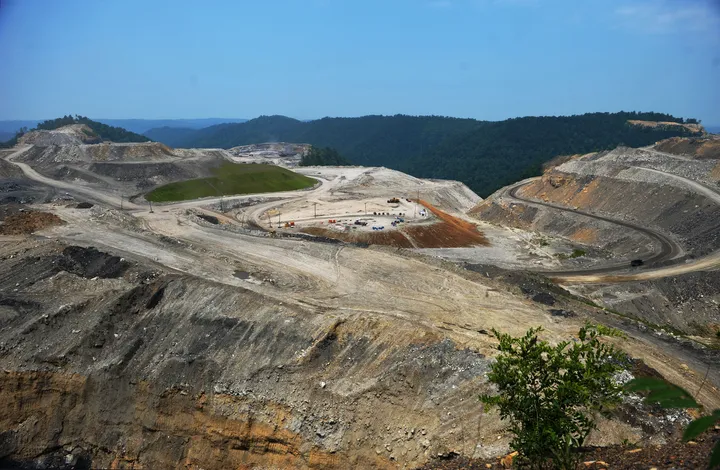
Take West Virginia, the heart of coal country, as an example. The "mountain state" may need to change its name to the "plateau state" if mountaintop removal mining continues unabated. It has some of our most polluted land and waterways, with the highest incidences of industry-related accidents and illnesses. Forbes magazine recently rated West Virginia as the least green state of the union. No wonder the state's slogan "Almost Heaven" was replaced with "Open for Business" (since changed to "Wild and Wonderful"). This Faustian bargain should come as no surprise in a state with some of the weakest environmental regulations in the union.
Has avoidance of environmental responsibility contributed to prosperity in West Virginia? The right-wing extremists should surely expect West Virginia to enjoy an environmentally unfettered economic boom, but that is not the case. West Virginia has the 49th lowest per-capita income in the nation and unemployment more than a point higher than the national average. Yet, states like West Virginia have some of the loudest anti-environment voices. Many rally around the coal companies, which claim that stronger environmental regulations will cost jobs, impede their state and hurt their people. Nothing could be further from the truth.
As we mark the 41st anniversary of Earth Day this week, it would be wise to ask whether we are better or worse off than we were in 1970. What would Senator Nelson, who died in 2005, think about the state of our world today? We think he would be pleased with the progress that has been made but concerned by some current trends: environmental protection is under siege by two powerful forces.
The first force is a floundering economy and the erroneous belief that environmental regulation is one of its enemies. The second force is a looming energy crisis. We demand more and more energy, but must dig and drill deeper and deeper to find it: deeper into the mountains of West Virginia to mine coal, deeper under the backyards of Pennsylvania to extract natural gas from shales, and deeper under the waters of the fragile Gulf of Mexico to find our oil. These difficulties increase the risks of environmental damage. What is needed now is not a weakening of environmental regulations, but a tightening. The question is not, "can we still afford to protect the environment?" but, "can we afford not to?"
Steve Hallett is the author, with John Wright, of Life Without Oil: Why We Must Shift to a New Energy Future (March, Prometheus Books). Wright is also the author of The Obama Haters: Behind the Right-Wing Campagin of Lies, Innuendo & Racism (April, Potomac Books).