
Washington's CARS Program (the clunker law) is officially over, after moving somewhere between 700,0000 and 750,000 new cars and trucks off showroom floors.
Considering your point of view, the program has been either a wild success or just another step on the way towards Obama Socialism (when will your neighborhood's Clunker Panel show up at your front door and demand you get rid of your old car and buy a new one, and with the law on their side, too?).
But something we predicted here weeks ago seems to be coming true: on their own, dealers are offering their own versions of the clunker program. I saw one TV ad yesterday in Southern California for a local dealership offering up to $2,500 for a traded-in "clunker" (here's a pertinent story we found: http://www.wkyc.com/news/news_article.aspx?storyid=120481).
The parameters for these private programs will certainly be different from the federal program, so check carefully before getting involved in any deal you may not fully understand. These programs won't be based on a 136-page law, as was CARS, but will be a much more casual way for buyers to feel better about their purchase.
As of today (Thursday), no car-maker has yet jumped into the "private clunker" pool, but it won't be a surprise when it happens (and we say it will).
And any dealer or car-maker considering starting their own clunker operation must make their mind up to do so fast ... the public has a way of forgetting what happened yesterday, much less last week, and jumping in now will allow the dealer or manufacturer to take advantage of the great momentum the fed program has created.
There's no argument about this: CARS brought millions of people into dealerships who wouldn't otherwise have been considering a new-car buy, and, consumer confidence has taken a jump in the past month, something analysts credit to the program putting a lot of us in the mood to buy.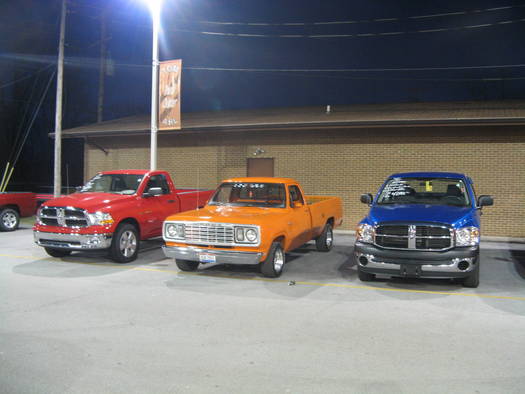
What these private programs really will be are enhanced rebate deals. There won't be any rules about having to junk your old car, disable the engine, etc. The dealer (possibly with help from the car-maker) will just be tossing some more money on the hood of the old car you're trading in.
Let's take a moment and quietly praise Lee Iacocca for his creation of the "buy a car, get a check" rebate ... the industry's first. He'd just been fired from his position as president of Ford Motor Company and quickly went cross-town to ailing Chrysler (for a salary of $1 a year), where a radical program like rebates turned out to be just what the doctor ordered.
If you're a car company or dealer exec, you might not feel so warm and fuzzy about Iacocca's invention, which has become common in every retail industry worldwide. Consumers sure responded in a big way. And like rebate junkies, none of us expects to pay anything near the sticker price for a new car or truck anymore. Or just about anything else, for that matter.
Which brings up one of the most closely-guarded secrets in all of industry and government: what it really costs to build a new car. 
For example, rumors said that once Ford had paid off the development and tooling of the original Explorer SUV, which probably took between the initial two and three years of sales, the company was clearing something in the neighborhood of $15,000 on each unit sold. And at its height, Ford was selling more than 1,200 Explorers a day. Yep, a day. Even with my lousy math skills, I know that's a hell of a lot of money coming into Ford's coffers.
As we're located in southern California, it seems right to compare the car industry with the movie business with their arcane complications and methodologies of determining a product's costs and profits (and losses and taxes and write-offs).
Both businesses take years of "pre-production" and by the time a car makes it to the showroom or a film to your local screen, thousands of people and hundreds of companies may have been working full-time for years on it -- and often after all that work and time and money the project either never gets off the ground or is a bomb.
Keep in mind, also, that car dealers buy their cars and trucks from their respective factories; they have to get financing and pay back those loans just like we do. And dealers and car-makers have at least as many rebate and other money-saving deals and bonuses between them as dealers offer the public. 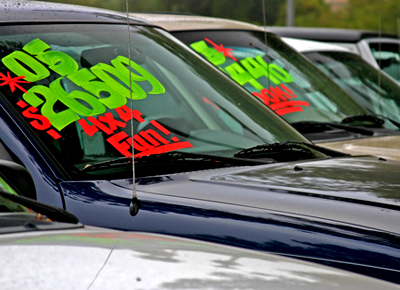
Our point is that by the time the customer sees the Monroney sticker on the new car with the MSRP, the Manufacturer's Suggested Retail Price, that number has little to do with the actual cost of the car or even what the dealer intends to sell it for. The all-important number is what the dealer will ultimately pay the factory for that vehicle.
Even with the incredible amount of information about new and used car-buying and -selling on the Web, the actual cost of shepherding a car along from an idea to a concept and prototyping then to showroom floor and the garages of America remains a true mystery. Just be assured that even with all the clunker programs and rebates and 0% down and free regular maintenance and roadside service and all the other deals, a lot of people are still making a lot of money in the auto industry.
With every new deal, every new "financial product," every new price adjustment in the consumer's favor and adding what were formerly expensive options as standard features, we might actually be paying closer than ever to the actual cost of the car.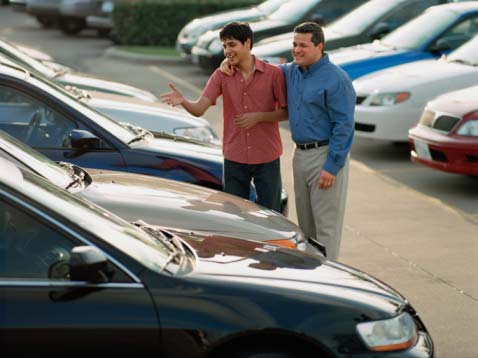
Some of you might think that how the price of cars has far out-stripped the cost of inflation is also something the industry needs to deal with, too.
Let us know what you think about what dealers and car-makers should be doing "post-clunker" --- we know for a fact that top industry people stop by here almost daily and my opinions pale in importance to what you, the sophisticated and educated car-buyer, has to say.
So let them have it. How should we be buying cars in the 21st century? Should the car-makers be allowed to own their own dealerships? Should new cars and trucks be bought outright on the Web, delivered by flatbed truck to your home or office, using a system which means you never have to set-foot in a dealership? Should groups of dealers be allowed to band together and create "service supercenters" outside of town, a place where warranty and repair work is done, but a place which the customer never needs to see?
Even with GM's revolutionary use of eBay, allowing customers in California to bid online for various GM makes and models, that customer still has to take delivery of the car or truck at a brick-and-mortar dealership.
In future posts, we'll take a look at how Nissan, through their Infiniti luxury "channel," and Mazda, with their proposed luxury division code-named Amati, both had great opportunities to change the landscape of auto dealing (and servicing) in the US, but choose instead to stick with the status quo.
The auto industry is leaving its exuberant teenage years. Now it needs guidance from you, the adults.