

Let me start by saying I'm a believer in openness and sharing. The concept of owning ideas seems to stifle innovation, and in particular, the emerging re-mix culture we're seeing explode seems like it's on a collision course with owning and controlling IP.
So when Fred Wilson pens a blog post that calls for the abolition of patents, I found myself nodding in vigorous agreement. But then, something happened.

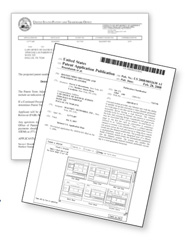
The United States Patent and Trademark office sent me a letter. My Patent had been granted. US Patent # 8,117,545.
My first reaction was... "Huh???" Then, it all came back to me. The year was 2006, and I had an idea of what the future of web video would be. We had invented a process, created code, built out a solution, and written a patent. Then we hired a patent attorney and we waited.
Along the way the world changed. Software became more prevalent and iterative.
Companies sprung up to buy IP, and turn innovation into a series of chilling litigations. And the line between early stage IP and big corporate patents became a battle line. Cross it at your own peril.
So -- here we are, holding a patent today that was filed many yesterdays ago. 
What's an entrepreneur to do?
Fred, always the friend of the startup -- had an easy word of advice. "Patents are the anti-Christ," he told me. Ouch.
But the more I thought about it -- the more I found myself feeling like Fred was telling other young entrepreneurs not to use a tool that is very much part of the current landscape of how larger players manage their intellectual assets. Would Fred ask Google, or Apple, or Microsoft to relinquish their patent portfolios? What about TIVO, a company who's entire future hung in the balance until their patents paid off?
Are software patents bad? For arguments sake lets say yes.
 But, like any peace treaty -- the decision to set down arms needs to be bilateral. Will the big tech companies burn their patent portfolio if I burn mine? If so, then we're on all on an even playing field. But so long as every employee at Google or Apple is writing patents and adding them to the value of those companies -- then Magnify.net and our feisty startup friends should be able to do the same.
After all -- it's not often you get a letter from the Federal Government that says you've been awarded protection under Federal Law. So on behalf of my investors and clients, having protectable IP is a good thing. And so long as a patent is the coin of the realm, then owning one seems like a good thing to me.
There's only one problem; within the startup world, patents are seen as anti-competitive, and a force that stifles innovation. So for companies like Magnify.net -- we're in a place where we need to walk a tightrope between the world of predatory patent prosecution and the need to promote your invention and innovation within the context of current patent law.
As I explained to a friend the other day -- it's like getting someone a puppy for their birthday. Much as they may be happy, now they have to feed it. And that can be a time consuming and costly effort, depending on how big the dog gets.
By all measures, our patent has big paws. So stay tuned.
Originally published on Forbes.com.