Fat has the reputation as the bad boy of the nutrition world. Maligned for decades, the message from many health organizations has been the same: reduce or cut the fat. For those who are overweight or have chronic health issues, this is probably the right advice. However, the idea of fat as universally "bad" simply isn't true. Maybe it's time to reframe the conversation, starting with the real facts about fat.
1. Eating fat does not necessarily make you fat.
Many think that if you eat any fat it will go to your sides, backside, hips or stomach. If you are consuming more food than your body requires it does not matter what you are eating -- carbohydrate, protein or fat. In fact, eating too many starchy processed carbs is more likely to trigger high insulin levels and fat storage or weight gain than moderate fat or protein.
2. No need to avoid nuts.
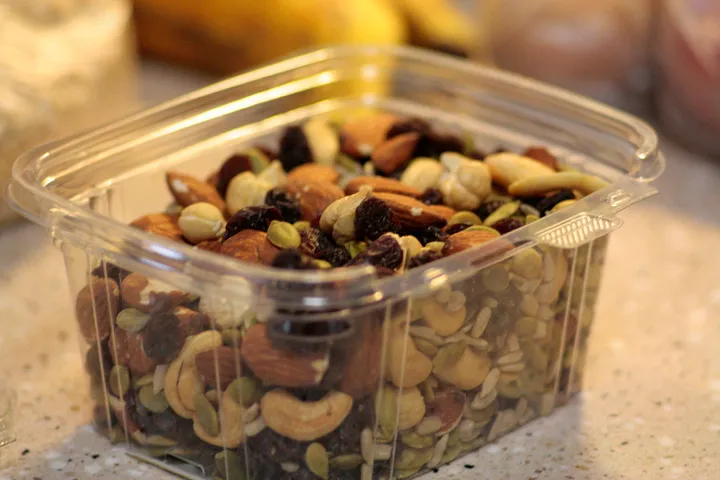
Nuts do contain fat but the healthy kind called monounsaturated fat, which helps not only with satiation (feeling full) but also increasing the good type of cholesterol, called HDL. Richard Mattes, MPH, R.D., distinguished professor of foods and nutrition at Purdue University, has studied the relationship between nuts and weight (1). His research shows nuts are not associated with weight gain due to their high level of satiety and inefficiency with being digested. Apparently nuts have cell walls that are not easily broken down during the chewing process. Translation: This means nuts basically go through the body undigested without releasing the fat they contain into your system. What great news for nut lovers!
3. Saturated fat is not the evil villain to avoid.
Once thought to be the villain, many health care professionals recommended avoiding all sources of saturated fat (fat that is solid at room temperature). We now know that having some saturated fat will not break your health bank and some types of saturated fat can be part of a healthy diet.
One healthy source of saturated fat is extra-virgin, organic coconut oil. Coconut oil contains a type of MCT (medium chain triglyceride) oil called lauric acid that is only found here and in mother's breast milk. Lauric acid is a powerful immune stimulant and may help in preventing sickness. In addition, coconut oil is safe to use at high temperatures since it is saturated and the molecules cannot be damaged. I've tried many brands of coconut oil and my favorite one is Kelapo -- great for stir-frying veggies and your morning eggs.
4. A label that says "no trans fat" may not be entirely free of trans fat.
Unfortunately, many manufacturers make the serving size on the label so small it falls under the "do not need to report" guideline. If the serving size has less than the .5 grams of trans fat, a manufacturer can state "no trans fat" on the label. If you ate several servings of a food with "no trans fat" it can quickly add up to well over 2 grams of trans fat per day, which has been consistently linked to heart disease.
5. You don't need to steam all your veggies to get the most nutritional value.
The American Journal of Clinical Nutrition published research showing that eating a salad with dressing containing fat significantly increased absorption of nutrients called carotenoids (2). Eating a salad with fat-free dressing resulted is no carotenoid absorption. Carotenoids are responsible for the yellow, red, orange, and green colored pigments in fruits and veggies -- important for disease prevention. If you want to absorb all the amazing nutrients in your veggies, have some healthy fat on them or fat within the same meal.
6. Extra-virgin olive oil is not ideal for cooking.
Although extra-virgin olive oil is a healthy monounsaturated fat, it can easily become damaged at high temperatures. Use it for making salad dressings or marinating vegetables and meats. If you want to cook with olive oil, use it only in recipes where the smoke point is between 200 to less than 400 degrees Fahrenheit.
A particularly good olive oil I found last year at the Natural Foods Expo was cold-pressed Olivaylle Olive Nectar -- processed within six hours of harvesting and put in an oxygen-free dark glass, which holds in the nutrients since olive oil is fragile and can be easily damaged or oxidized.
7. Fat plays an important role in the body.
Fat has multiple functions in the body and is so important that without fat, we would not be alive. Some important reasons we need fat are:
• Your brain needs fat: Approximately 60 percent of the dry weight of brain is fat, and healthy neurons contain a type of fat known as DHA.
• Sex hormones are derived from fat.
• Fats supply essential fatty acids the body cannot manufacture, which are needed for healthy skin and hair.
• Fat is involved in metabolism of food, immune function and helping to stabilize blood sugars.
Now that you know the facts, you can see how fat's bad rap is undeserved. As with all things, moderation is the key. Enjoy some healthy fat with meals -- and taste how good "bad" can be!
References
1. Mattes, RD., et. al. (2010) "Nuts and healthy body weight maintenance mechanisms." Asia Pacific Journal of Clinical Nutrition. 19(1):137-141
2. Brown, MJ., et al. (2004) "Carotenoid bioavailability is higher from salads ingested with full-fat than with fat-reduced salad dressings as measured with electrochemical detection." The American Journal of Clinical Nutrition. 80(2):396-403.
Susan is the author of "A Recipe for Life by the Doctor's Dietitian." Her new book "Healthy You, Healthy Baby: A mother's guide to gestational diabetes" will be out in May 2012. For more information, visit susandopart.com.
For more by Susan B. Dopart, M.S., R.D., C.D.E., click here.
For more on diet and nutrition, click here.