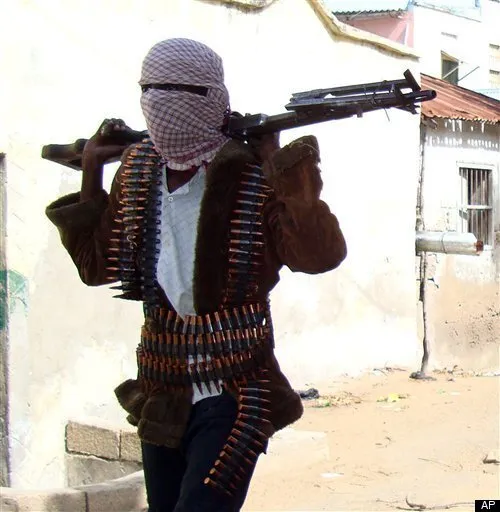
Piracy has been drawing huge attention to Somalia's shores in the past few years, but this is just one part of the country's complex profile. Somalia has been without an effective government since the collapse of its socialist system in 1991. Since then, the country has been embroiled in conflict as disparate groups vie for territory and power. The U.S. government believes one of these groups, Al Shabab, has links to al-Qaeda. The transitional Somali government formed in January 2009 continues to push for stability across the country. Within a population of almost 10 million, an estimated 3 million people are in urgent need of humanitarian assistance and 1.2 million have been displaced by the continuing violence. The threat of kidnapping has caused foreign aid groups to pull their international staff out of Somalia, while piracy has drawn much attention to the country's security issues.
Steve Hansch, Knowledge Management Director for Development Assistance Research Associates, has recently returned from a research trip on Somalia. He talked to the HuffPost about Somali pirates, politics, conflict, and kidnapping.
Piracy began threatening international vessels in one of the main international shipping routes lying off the Somali coast after the collapse of the government there in 1991. Who are the pirates?
They are often unemployed young men, primarily from Puntland in Somalia, who have seen their fishing decline because of overfishing of their waters by international fishing. They've found that if they occasionally intercept people, the insurance companies reward them for it.
Has piracy been affecting the distribution of aid relief to the local civilian population?
No, the pirates have on occasion boarded food shipments, but overall an enormous amount of aid has been delivered. There's a completely different phenomenon going on in Somalia which I don't want to refer to as 'piracy'. In the central part of Somalia where the main aid needs are, aid workers and doctors have been taken hostage. It's obviously similar to the piracy, but it's not the same as boarding a ship. Now there are no longer ex-pat aid staff working in Somalia. The level of ex-pat aid staff working in the area is the lowest area per aid dollar spent in any country.
Aid agencies have been saying for some time now that Somalia is a highly dangerous place to work in given the continued political instability, violence, and kidnappings. After the recent assaults on UN offices in Somalia, a UN official said yesterday that the UN would not 'back out' of the country, but is it feasible to continue humanitarian efforts in this environment?
A gang takes people hostage and hopes it will make them millionaires because the government of those hostages will step in and pay the ransom. Governments have created a market by being willing to pay millions of dollars. Most aid professionals are working for NGOs and the ransoms that have been paid have not been negotiated at the initiative of those organizations, which could use their position to work through mediators. Governments have leapfrogged the NGOs.
Are aid agency ex-pat staff likely to return in the coming months?
I don't know when they'll go back in. Crime is a funny thing. In the long term history, some things don't seem to change.
What is the situation regarding aid distribution now?
Aid is not just about taking stuff and distributing it. The largest share of U.S. government aid is in food aid, and it's being distributed through local Somali NGOs. But the more professional people from other countries are the people who would do the project supervising and monitoring, and they are not able to get through. One of the things humanitarian people do is make sure that key things are done; it's not just about spending dollars. That's been dramatically reduced, and that phenomenon is really being seen this year. Effectively in 2009, there are no ex-pats working in Somalia.
What are the prospects for humanitarian relief in Somalia?
By every measure I can think of, Somalia has gotten worse. In terms of access by aid professionals, Somalia is worse than any other country in the world. I'm concerned that the people who have most clout - western governments - are not exhibiting any sensitivity to the issue. They are all of one mind on terrorism and are pushing the government to militaristic solutions.
The longer term issue is how to we get the Somali people to not be dependent on our massive amounts of food aid. And so, in lack of a good answer, we keep doing things in Somalia for food aid which in the short term will help people from dying, even though we know we're creating the same dependency for next year. We are simultaneously doing a good thing from the point of view of saving lives, while addicting an economy to food aid.
The thing that the aid community does not do well is address the core problems of places like Darfur and Somalia regarding the lack of economic opportunities. No one has figured out how to engage these people in diverse industries. We should be putting all of our billions of dollars of aid into helping introduce industries and find ways for people to trade with one another and diversify.
So what should governments who are sending aid to Somalia be focusing on?
We shouldn't be pushing anything with regard to funding. Our governmental aid that tries to meddle in their government has the effect of reducing our ability to do humanitarian aid because it annoys Somalis. So, a lot of groups in Somali have kicked out NGOs. CARE has been largely pushed out in the last few months. The Somalis know the U.S. government is pushing money with democracy and governmental intentions behind it, and they resent that. They see the transitional government as a group that is relatively in bed with the international and western community.
How is the conflict continuing to affect Somalia?
The fundamental issue is not a conflict. It seems the Somali people as a community have not come together in a central way to support a central government. They value their independence a lot. The questions we are asking and the type of aid we are giving presume that Somalia wants to move towards our notion of government, with decisions being made from the top down. For me, the fundamental problem is that the economy - meaning what the majority of people live on and produce every day - is about as primary or undiversified as it was about a thousand years ago. So while almost every other country in the world keeps creating new jobs, Somalis have been left behind. Relative to all of their neighbors, they keep getting poorer. And this is why we predict ongoing vulnerabilities.
The Kenyan government recently emphasized their intentions to close down the borders and stop weapon sales and militia recruitment from taking place in their country. Ethiopia's military has been involved for years in supporting the transitional government. Is the violence in Somalia likely to spread to neighboring countries?
The simple answer is no. The more sublime answer is that the Ethiopian government is worried about it spreading, not so much as a conflict, but as an influence because they're a bit wary of the sizeable Muslim presence in their country.