This article first appeared on www.parentdish.com
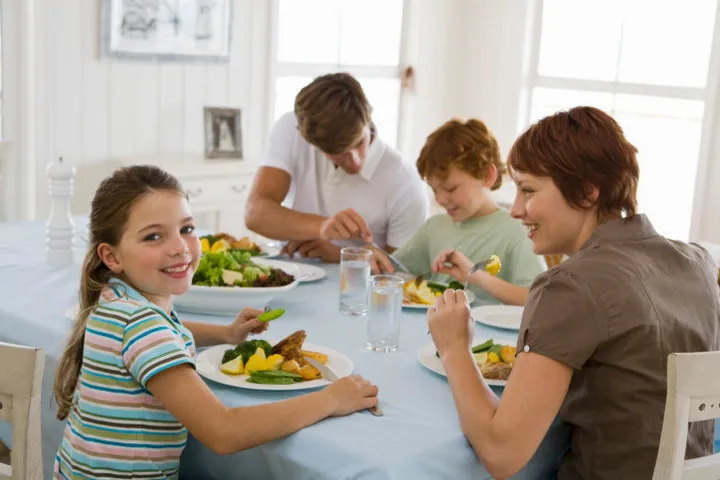
Here's a new year's resolution idea: How about trying to get the family together around the table for dinner more often?
Not only is the family meal an opportunity to make sure that your kids aren't subsisting on soda and cheese curls, it's also an important time to connect as a family. But what if your family conversation lags? I spoke with Laurie David, friend, mom and author of the new book, "The Family Dinner," to get her take on how to keep table conversation lively and friendly.
Susan Stiffelman: Laurie, one of the most unusual aspects of your book is your emphasis on creating fun and connection at the table.
Laurie David: I think the trick to great dinner conversation is coming to the table prepared with a lively question or easy verbal game. I don't like leaving things up to chance, particularly holiday dinner talk. One good question is generally all you need to get things going. Of course "The Family Dinner" is full of ideas, but here is one to get started. Go around the table and have everyone describe one of their idiosyncrasies. You will be amazed by what you learn about people you think you know really well.
SS: Are there rules to this game?
LD: The main rule is to avoid being rigid, and to let the conversation flow wherever it goes so that people feel safe to share their quirky weaknesses without feeling criticized or judged. It's not about controlling the conversation; it's just about starting it. That is the whole point of the questions: Getting people to relax, have fun and talk about things other than the food.
SS: It sounds like you believe it's important that everyone -- including children -- learn to associate the dinner table with a time for exchanging ideas and getting to know one another better rather than simply a place to refuel with a quick meal.
LD: It's my philosophy that everyone should come to the table ready to participate and be good dinner companions. That includes kids, dad, moms -- everyone. It's not something you would ordinarily think of on the list of manners you want your children to adapt as they grow up, but I believe it's right up there with putting your napkin on your lap. In the "olden days," kids were expected to be good conversationalists and recite poetry to entertain dinner guests!
SS: And after dinner, the extended family would gather around the piano and sing songs, since there were no televisions, iPods or stereo systems! I like the idea of teaching children to come to the holiday table -- or any meal -- prepared to not only enjoy the food, but to forge more meaningful connections with family and friends.
Susan Stiffelman is the author of "Parenting Without Power Struggles." To read more of her Parentdish columns, please click here.