
iPhone app iPad app Android phone app Android tablet app More

Featuring fresh takes and real-time analysis from HuffPost's signature lineup of contributors
Suzan Mazur

GET UPDATES FROM Suzan Mazur
 

The Origin of Life Soufflé

Posted: 11/19/2012 5:13 pm

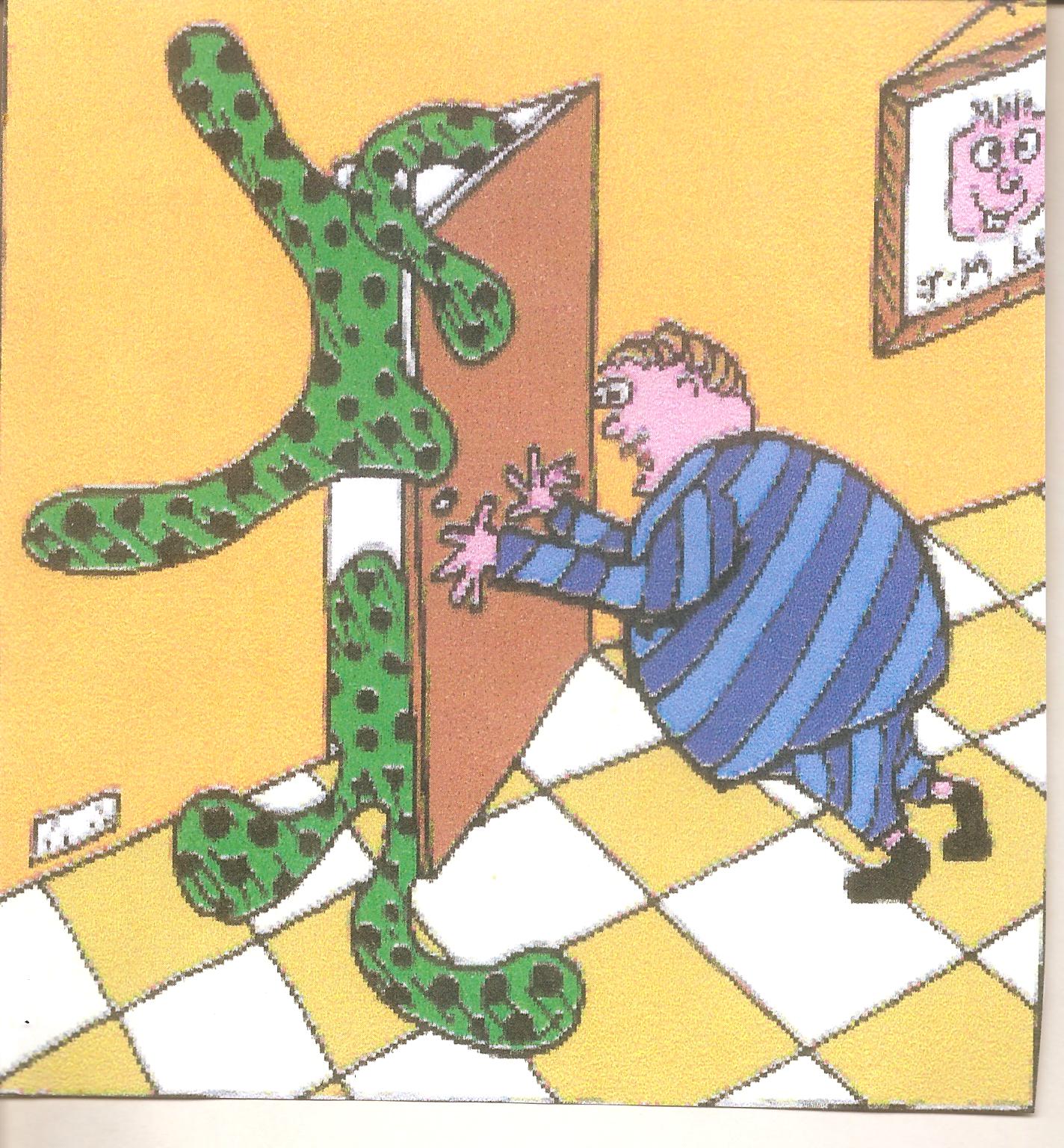
2012-11-19-GuntervonKiedrowskicartoonbyAndrewRobertson.jpg
"Prof. von Kiedrowski achieves phenomenal success with a new self-replication system"
Drawing: Andrew N. Shipway


With the Large Hadron Collider safety issue now settled in the German court, the way is clear for a strategic meeting in February on Origin of Life at CERN. Some of the biggest names in science will be participating -- for starters, Complexity pioneer Stuart Kauffman; Gunter von Kiedrowski, the father of Systems Chemistry; Eors Szathmary, an expert on major transitions in evolution and one of the famed "Altenberg 16."

Markus Nordberg of CERN-Atlas is hosting the Geneva talks and John Templeton Foundation, represented by Mary Anne Meyers, is sponsoring the gathering. Templeton supported the historic Vatican conference on evolution in 2009, and year after year helps underwrite the World Science Festival.

Stu Kauffman terms the event "radical science," aimed at finding an answer to the big question that interests every one of us -- who we are and where we came from.

But will the Origin of Life soufflé about to be baked in Geneva rise or fall?

Markus Nordberg, perhaps to avoid overexposure of the upcoming summit, has described CERN's role as simply one of helping to manage a "large multinational collaboration with a different kind of science."

But here's what some of the participants are saying about the meeting three months from now.

While there's a growing consensus among scientists that lipid-like entities may have been central to first life, Gunter von Kiedrowski, a co-organizer of the event, told me, "we'll never know the historical course [of the origin of life]" because "we can't travel back in time."

Realization of that hard cold fact has led to a stepped-up interest in the protocell ("a physical-chemical implementation of the simplest life form that either we can make or that can emerge spontaneously" -- S. Rasmussen). So creating a protocell will be central to the Geneva talks, says von Kiedrowski.

Stu Kauffman, who invented autocatalytic sets ("CAS") (the preliminary meeting at CERN about Origin of Life in 2011 was his brainchild, too), said that if all goes well the group would like to tap CERN's phenomenal computer power to create chemically real reproducing and co-evolving protocells, as well as apply some of CERN's organizational models to engineer an Origin of Life scholar grid-linking researchers, experiments and funding sources.

Many approaches to building a protocell are currently being explored. Roughly 10 to 100 or more labs, depending on who you talk to, are either mainly focused on protocell development or on certain aspects of it. The approaches include not only the RNA (ribonucleic acid) world, PNA (peptide nucleic acid) world and autocatalytic sets, but cooperative feedback and computational protocells.

Some scientists, Danish physicist Steen Rasmussen among them, who Stu Kauffman has told me he'd like to see at the February meeting in Geneva, thinks researchers are now very close to having what is needed to make a protocell. Rasmussen says this will "provide a brick in the ancient puzzle" of Origin of Life.

Rasmussen also says it is his deep fascination and awe for life that drives his research on the protocell, as well as systems beyond. He asks: "How can we use the properties of living processes for the good of mankind, make technology that has some of these wonderful properties that living systems have?"

While Rasmussen, considered by many to be the flag bearer of Artificial Life, actually finds the idea of machines that can copy themselves and ultimately evolve a bit scary, he also says humans may be naive to think that we are the end of evolution. But he doesn't think it has to be as frightening as Hollywood films project. Rasmussen envisions that we may "create things that can make more beautiful poetry, that can love more than we can."

Lab on a chip microfluidics is now unfolding, for example, which will enable at-home medical readings like cholesterol and PSA by simply plugging the test the chip has done into a computer port.

Rasmussen is also keen on John von Neumann's Universal Constructor, a mathematical machine that already exists, although it has not yet been implemented. "Our technological vision," he told me, "is that once we get to the point where we can combine the essence of biological systems as we develop with protocells bottom up at the microscale with what we do in factories, with what 3D printers do, that is top down design, then we'll be able to have our own production facilities at home to print medicine, clothes, electronics."

But will the development of a protocell, take another decade, as many scientists predict?

"When I look back at what I said 10 years ago," Rasmussen says, "I did think we'd be able to do it in ten years. We're not there quite yet. ... We've put together an information controlled metabolic production of the protocell components. We still haven't got evolution going yet."

Perhaps in jest, Freeman Dyson said to give it another hundred years.

But why are the Origin of Life strategic talks taking place in Europe and not the U.S.?

Rasmussen spent 20 years in the U.S. at Los Alamos and Santa Fe Institute, returning to Denmark five years ago to continue his reasearch. He emailed me stating:

It was the shift in the availability of basic research funding that made me return to Europe. ... Curiosity-driven research, also called basic research, has recently grown in Europe and is more an integral part of the scientific culture there than in the US."

Kauffman would also like to see Gonen Ashkenasy at the Geneva talks. He says Ashkenasy, at Ben Gurion University in Israel, formerly at Scripps Research Institute working with Reza Ghadiri, has a nine-peptide collectively atuocatalytic set. Kauffman says it's the most complicated collectively autocatalytic set he knows of.

Meanwhile, Wim Hordijk and Mike Steel are expected to participate in the February discussions as well. Hordijk, a computer scientist now at the University of Lausanne, emailed saying he and his colleague Mike Steel, a mathematician at New Zealand's University of Canterbury, have taken Kauffman's original idea of autocatalytic sets "much further."

Hordijk and Steel call their model self-sustaining autocatalytic sets ("RAFs"). Hordijk says, "We are now even starting to think of it as a general model of functional organization and emergence in living systems, perhaps even in social systems and the economy."

Kauffman did actually articulate some of these themes in his last book, Reinventing the Sacred, and has more recently described the economy as an "evolving autocatalytic set" in his paper "Evolution Beyond Newton, Darwin, and Entailing Law: The Origin of Complexity in the Evolving Biosphere."

Kauffman says February's Origin of Life meeting will also identify other avenues as to how molecular reproduction started. He expressed interest in Gunter Wachtershauser's ideas about temperature and energy and Cairns-Smith's regarding clays. Said Kauffman:

"Maybe it's that lipids and liposomes orient molecules on their surfaces and the search problem for the molecules now is two-dimensional not three-dimensional. This changes the thermodynamics -- two molecules finding one another in 3D is much harder than in 2D, so you increase the rate of synthesis because things are confined to two dimensions."

Rasmussen describes the "wonderful and terrible" green fingers of chemists in relation to the Origin of Life, where one chemist synthesizes molecules without any problem and another using the exact same recipe "makes the souffle' fall flat."

Gunter von Kiedrowski cautions that it's all "POP (persistence of possibles)" until all of a sudden and out of the blue it becomes real.

Kauffman concurs, saying we just can't predict the future, and that: "Not only do we not know what will happen, we don't even know what can happen."

In other words, the proof in Geneva will be in the pouf.

 
FOLLOW SCIENCE
"Prof. von Kiedrowski achieves phenomenal success with a new self-replication system" Drawing: Andrew N. Shipway With the Large Hadron Collider safety issue ...
 
 
  • Comments
  • 28
  • Pending Comments
  • 0
  • View FAQ
Comments are closed for this entry
View All
Favorites
Recency  | 
Popularity
09:47 AM on 11/25/2012
why aren't we seeing these mutations now? where does love come from? How can they build a single cell that has thousands of mechanisms in it? how is the Cambrian fossil record on every continent, yet not a single sign of new species? I have to believe in intelligent design to fill in all the blanks. how could the process of evolution using natural processes and chance solve the problem of complex information sequencing without intelligence? Did Microsoft find a program, or did it take intelligence to make them? i am curious
This user has chosen to opt out of the Badges program
ManhattanMC
My bio is far too large
02:24 PM on 11/25/2012
"why aren't we seeing these mutations now?"

Why would you assume we aren't? You have around 175 mutations as do most humans.

"where does love come from?"

Love is mostly an illusion. No two people ever experience the same way in any given pair relationship.

"How can they build a single cell that has thousands of mechanisms in it?"

How did Venter create an artificial bacterial genome?

http://www.guardian.co.uk/science/2010/may/20/craig-venter-synthetic-life-form

" how is the Cambrian fossil record on every continent, yet not a single sign of new species?"

There are signs of new species-and ancestors of those species from the pre-cambrian fossil record.

http://en.wikipedia.org/wiki/Cambrian_explosion#Precambrian_life

" I have to believe in intelligent design to fill in all the blanks."

Then your 'god' is merely a 'god of the gaps' and will continue to recede as science advances until there is nothing left of it.

{"how could the process of evolution using natural processes and chance solve the problem of complex information sequencing without intelligence?"

Evolution isn't goal directed-it's simply adaptation to environment. The rest is chemistry and time.

" Did Microsoft find a program, or did it take intelligence to make them? i am curious "

Do straw men grow wild or are they imported from the 'Discovery' Institute literature?
You aren't curious-you're an ideologue with an agenda.
06:56 PM on 11/25/2012
If love is mostly an illusion, what is the part that is not an illusion? Are moral laws an illusion? When someone uses you and it hurts is that an illusion? There is a different truth about venter if you check it out.He did not make it from scratch. Thanks for your input, I have no agenda, I choose to believe in a creator who both loves and is just. HE is JESUS CHRIST who died for the sins of the world, and I believe it.
photo
HUFFPOST SUPER USER
RedDogBear
02:13 PM on 11/22/2012
"Gunter von Kiedrowski, a co-organizer of the event, told me, "we'll never know the historical course [of the origin of life]" because "we can't travel back in time."

What a ridiculous thing to say. How can someone this ignorant be organizing something like this? It sounds like something a Creationist would say. Just because something happened in the past doesn't mean we can't understand it. Of course it makes it harder and quite likely there ARE things (and the specific origin of life may be such a thing) that we may never know with any degree of certainty. But its ridiculous to say that just because something happened in the past the only way to understand it is to travel back in time.
HUFFPOST SUPER USER
DakkonA
www.DisentangledReality.com
07:37 PM on 11/22/2012
To be slightly fair on this point, it does look like there was enough inter-mixing and changing that early on that there is little, if any, extant evidence that would indicate how it developed, which we rely on to infer what happened in the past. We can come up with plausible scenarios that match other information, but whether that course is actually what happened is harder to actually say. We may not even get a good idea of how prokaryotes developed into eukaryotes either, because the last eukaryotic common ancestor was almost 'feature complete' compared with prokaryotes or archea.
photo
HUFFPOST SUPER USER
whirlpool
founder walnut tree congregation
10:38 AM on 11/25/2012
The work of Lynn Margulis on the symbiotic origin of eukaryotes seems pretty sound to me.
photo
HUFFPOST SUPER USER
RedDogBear
02:09 PM on 11/22/2012
"While Rasmussen, considered by many to be the flag bearer of Artificial Life, actually finds the idea of machines that can copy themselves and ultimately evolve a bit scary, he also says humans may be naive to think that we are the end of evolution. "

Anyone who says that humans are "the end of evolution" doesn't understand evolution. Evolution doesn't have any goals. Evolution is not some deity or spiritual force trying to make the most perfect living organism. Evolution is a continuing process by which organisms adapt to their environment. Usually such adaptations result in organisms that are bigger, faster, stronger, and smarter but its not always the case. There can be times when being slower and weaker (e.g., but requiring a lot less food) can be a superior adaptation. In any case to look at evolution as some goal oriented process with an end point is wrong.
01:03 PM on 11/21/2012
Re: "Danish physicist Steen Rasmussen...says humans may be naive to think that we are the end of evolution."

It would be interesting to know into what Dr. Rasmussen envisions humans "evolving."
TryToBeFlexible
MENSA, Gay, Atheist, Believer in justice, age 58
07:40 PM on 11/21/2012
Why would humans be doing the evolving? The universe is extremely large, and probably has many loci of life. Even on earth, life's length is long and humans have been here but a short time.
10:23 AM on 11/22/2012
Perhaps my perception of the Rasmussen quote is unclear. What was meant?
HUFFPOST SUPER USER
DakkonA
www.DisentangledReality.com
02:18 PM on 11/22/2012
There is no particular goal. We'll keep changing until we're extinct. There is a reason why people from different parts of the world look very different--they evolved semi-isolated from others. It's hard to say just where evolution could take us without identifying what selective pressures exist now that didn't in the past (e.g. abundance of calories), and vice versa (medical care prolonging lives).
07:04 PM on 11/22/2012
Re: "There is a reason why people from different parts of the world look very different--they evolved semi-isolated from others."

Is there experimental evidence that people from different locales look differently from others because they evolved?
This comment has been removed due to violations of our [Guidelines]
04:00 AM on 11/20/2012
Attempts to produce a "protocell" are certainly interesting and not to be discouraged. Even though they are very unlikely to meet with success there is often much useful knowledge to be gleaned from research of this kind.

However, Kaufman's unbounded enthusiasm for "autocatalytic sets" stems from an unwarranted awe of the great simplifications of mathematics, in much the same way that Howard Bloom would claim to explain the wonders of nature in terms of fractals.

While the origin of biology on this planet is unknown, and may well remain so, a fairly plausible mechanism for production of the prototype involving the special properties of matrices associated with alkaline thermal vents has been proposed. The presence of a high thermal gradient at these sites also presenting favorable energetic circumstances for such events to occur. This, along with other current speculations regarding abiogenesis, is discussed in a clear and balanced manner in "Life Ascending" by Nick Lane.

However, it is possible to extend the concept of a "life" process beyond the domain of biology.

For there is a very real way in which observed natural phenomena can be regarded as part of an evolutionary continuum.

Stellar nucleosythesis, the geological evolution of our planet, biology, the evolution of technology within the collective imagination of our species being among phases of what can be viewed as an on-going, integral "life" process.

This broad evolutionary model is outlined in:"The Goldilocks Effect: What Has Serendipity Ever Done For Us?", a free e-book download.
02:08 PM on 11/20/2012
"Kaufman's unbounded enthusiasm for "autocatalytic sets" stems from an unwarranted awe of the great simplifications of mathematics"

Exactly.... (:-)
ThinkCreeps
Seriously, it's time.
12:21 AM on 11/20/2012
What a pile of abject nonsense. (Not the CERN meeting, but the author's witterings, suggesting that she is somehow involved or relevant.)

Out damned creationist.
Al Schrader
Don't limit your potential
05:51 PM on 11/19/2012
Einstein had the clues to this. Trying to create a "proto-cell" etc is a waste of time since, the origin of life cells have already existed and mutated.