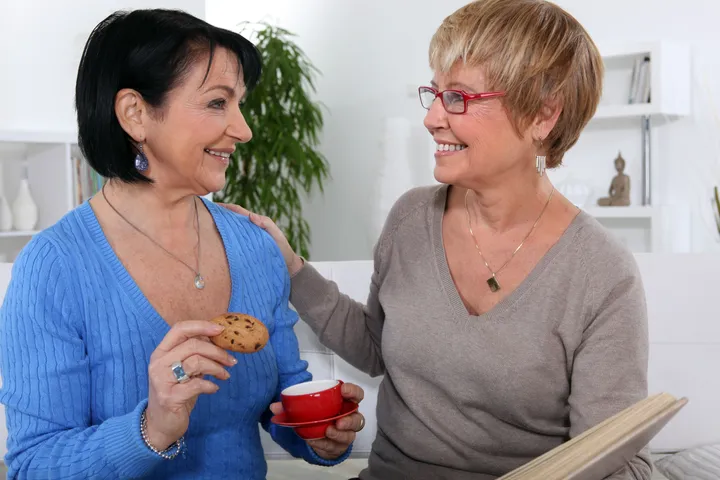
The surest route to decline as we age is isolation. Older people fade away psychologically, physically, and socially, if they don't have the emotional or intellectual stimulation we take for granted earlier in our lives. So the post 50 version of "an apple a day" is "nurture your friendships."
During our first adulthood, frantically balancing the multiple demands on our lives was (over)stimulation enough. Many of us neglected important friendships other than those that develop out of common interests (parents of kids your kids' ages) or shared space (workplace colleagues). Now that we are starting to think about the rest of our lives, though, the notion of close friends comes to mind. When we ask ourselves what matters going forward, most of us would agree that a "circle of trust" is a clear priority.
You know who your friends are. They are the support group that will see you through the changes that lie ahead; they will accept your eccentricities and show up when you need them. And they will make you laugh. (If this doesn't sound familiar, you've got some serious upgrading to do.)
What you may not realize is that they can also contribute to a longer life. Here are some of the ways being among our girlfriends makes affects women's health:
* Research shows that when women are sharing an experience with other women, their bodies produce oxytocin, also known as the "cuddle hormone" (because it is released in nursing mothers). Unlike husbands or kids (who can also bring about this chemical response but are often the cause of anxiety), our friends consistently elicit that warm glow, which feels good and soothes anxiety.
* Studies of female primates conclude that the company of a small but trusted band of other females reduces damaging spikes in stress hormones, which can affect women's health. Having a circle of trust to "mop up the cortisol spills that can weaken the immune system" (as The New York Times writer Natalie Angier puts it) may contribute to the fact that women live longer than men.
* Laughter, our most precious gift, is a powerful elixir -- in fact, the act of laughing releases endorphins, those feel-good brain chemicals. No matter how intense the conversation gets, it is very rare to spend more than a few minutes with a girlfriend where there isn't a burst of laughter.
Gestalt therapist and mind-body pioneer Ilana Rubenfeld calls humor "a martial art" because it cuts a frightening situation down to size. In addition, the physical exercise of a hearty laugh, not unlike an orgasm, is a good workout. Summarizing the physiological benefits, Rubenfeld points out that laughing "improves blood circulation, increases the oxygenation of the blood, enhances digestion, reduces pain...and best of all strengthens the immune system" -- all key to women's health.
* Women are inclined to respond to danger -- particularly emotional or psychological threats -- as a mutually supportive group, while men show a "fight or flight" surge of adrenalin. (On those occasions when adrenalin is called for, there is no one faster on her feet than a rescuing mom.) It used to be thought that all humans responded that way, but recent work (by women scientists) found that women are wired somewhat differently, so that our reaction to a crisis is more likely to be a "tend and befriend" approach, which again reduces tension.
* This conciliatory response may also make a group of women better and more creative crisis managers, because the fight or flight response is produced in the primitive ("reptilian") part of the brain, which shuts down more rational resources in order to concentrate on physical strength and agility.
Interestingly, the scientists who first identified the "tend and befriend" response, first observed it in their own lab; when something went wrong, the men would storm into their offices and slam the doors, while the women would come out of their offices and make coffee. We didn't need scientists to tell us that an old-fashioned coffee klatch with the girls is one of the many ways we tend and befriend each other, but it is nice to know that along with our lattes we are getting a biochemical boost.