iPhone app iPad app Android phone app Android tablet app More

Featuring fresh takes and real-time analysis from HuffPost's signature lineup of contributors
Tabby Biddle

GET UPDATES FROM Tabby Biddle
 

Women Speak Out About What's Gone Wrong with the United States Birthing System

Posted: 11/10/10 02:35 PM ET

"Women die in childbirth as a result of systemic failures including: barriers to accessing care, inadequate, neglectful or discriminatory care, and overuse of risky interventions like inducing labor and delivering via cesarean section." -- Amnesty International
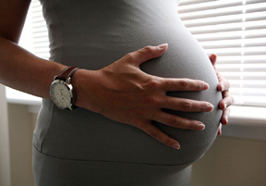
2010-10-20-pregnant_momtobe.jpg For many of us who haven't yet been through childbirth, there's an image we have of what it's like: A woman is rushed to the hospital in a taxi; she gets put in a wheelchair and is rolled down the hallway in dire emergency; then we see her screaming, and yelling in pain and then... there's the baby.

Sadly, this is the image that a lot of television shows have put into our minds, and have led many of us to believe: Birth is scary. Birth is dangerous. And it might be better if we just numb out through the whole experience.

Because so many women don't have an image of what a natural, empowered birth looks like, there is a lot of fear surrounding the act giving birth. Accordingly, the majority of women give their inner authority over to doctors in their birth process. They trust the doctors more than themselves. The problem with this is that many women aren't aware that the majority of her doctor's medical decisions are being made today for monetary and legal reasons, and not necessarily for the good of her and her baby.

Here is the reality: Hospitals are businesses. They want those beds filled and emptied. They aren't really interested in having women with long labors hanging around. And there is something else you should know: Having a baby in a hospital might not be as safe as you thought.

Did you know that the United States has the second worst newborn death rate in the developed world... and one of the highest maternal mortality rates among all industrialized countries?
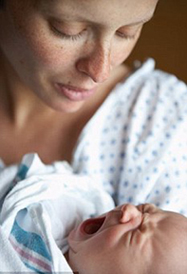
2010-10-20-childbirth_Europe.jpgYou can go to any other developed country in the world, and you will find that they are losing fewer women and fewer babies around the time of birth. The important thing to know here is that in these countries, midwives are attending 70 to 80 percent of the births (doctors are there for the small percentage that have complications). In the United States, midwives attend less than 8 percent of births.

Why is this number so low?

"I've interviewed a lot of nurse midwives and I've noticed that as soon as their practice reaches over 30 percent of the women in a certain hospital, the doctor will start firing them because that's too much competition," said medical anthropologist Robbie Davis-Floyd, PhD, in an interview for the documentary The Business of Being Born.

Hmmmm... interesting.

The common way to have birth now is be Cesarean section. Today in the United States, the Cesarean section rate is at an all-time high. Since 1996 the C-section rate has risen 50 percent, according to the National Center for Health Statistics.

Today one out of every three babies comes into this world by C-section.

This seems like a crazy statistic. What is really going on here?

Marsden Wagner, M.D., former director of Women's and Children's Health at the World Health Organization, gave his opinion in an interview for The Business of Being Born: "A Cesarean is extremely doctor-friendly, because instead of having a woman in labor for an average of 12 hours, 7 days a week. It's 20 minutes, and I'll be home for dinner."

Many women come to the hospital with a plan for a natural birth, but all too often their birth plan changes very quickly based on a doctor's decision (that is not necessarily based on any real complication). For example, one friend of mine had written a birth plan with her doctor. She would be having a natural, vaginal birth at St. John's Health Center in in Santa Monica, California. On the day of my friend's birth, her doctor did not show up. So my friend was then under the charge of another doctor. This doctor decided that instead of the natural birth my friend had wanted, she should have a C-section. His reason: she was taking too long in labor.

But the doctor forbade my friend from squatting and getting on all fours (apparently against hospital policy), even though it felt so good for her and it opened up her pelvis. (FYI: When he left the room, she went ahead and squatted anyway.) My friend knew she could give birth naturally. She felt deep inside that she had the strength and power to do this. She trusted herself. But the doctor kept insisting on a C-section.

After fighting off some medical interventions that the doctor was insisting on (one of these was the "fetal probe"), and a lot of eye rolling and shaming from the hospital staff in the process, her baby was born. While my friend was happy as can be about her new baby girl, she explained to me: "The birth was something that should have been beautiful, but degenerated into something that wasn't."

As Nadine Goodman, Public Health Specialist, has put it: "What the medical profession has done over the past 40, 50 years is convince the vast majority of women that they don't know how to birth."

I have heard too many stories from friends and family members where the hospital told them that they were open to the natural birth they wanted, but then the reality was so different. First came the Pitocin to speed up the labor, then the epidural to dull the pain from the strong contractions caused by the Pitocin, and then the C-section "for the safety of the baby."

"We need to make sure that we reduce the overuse of interventions that are not always necessary, like C-sections, and increase access to the care that we know is good for mothers and babies, like labor support." -- Maureen Corry, executive director of Childbirth Connection

As Dr. Eden Fromberg, OB/GYN, has admitted in an interview: "There was a doctor who used to train me who said, 'They can never fault you if you just section them. Just section them.'" In other words, the current thinking in the medical world is: avoid being sued at all costs.

"There's the prevailing sense among doctors that you don't get sued for the C-section you do, only the ones you don't," said Nan Strauss, a maternal health researcher for Amnesty International, quoted in The New York Times. Amnesty International published a report earlier this year declaring the country in the midst of a crisis in maternal health care.

The reality is that once the hospital starts with an intervention, it becomes a domino effect. They say: Thank God we were able to do all of these interventions to save your baby. But, as Eugene Declerqc, Ph.D., Professor of Maternal and Fetal Health at Boston University School of Public Health has said
.... the fact of the matter is if they didn't start the cascading of interventions, none of the rest would have been necessary.

[By the way, putting a woman flat on her back for giving birth literally makes her pelvis smaller and makes it much more difficult for her to use her stomach muscles to push. The result: It is much more likely that she will need an episiotomy and a vacuum or forceps will be used to deliver the baby.]
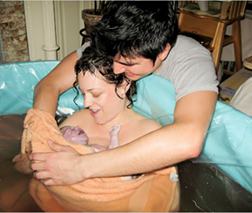
2010-10-20-HomeBirth.JPG
Negotiating their way through the hospital environment is a power struggle that many women aren't interested in, so they are choosing to have their babies at home.

"For most women who are having a normal, healthy pregnancy, it can be safer to have a home birth," said Cecily Miller, prenatal and perinatal specialist living in Los Angeles, in an interview with me.

When I asked Ms. Miller to tell me more about the benefits of a home birth for expectant moms, here is what she told me:

"Giving birth is a rite of passage. It is an initiation into motherhood. If we want an empowered initiation where women are honored in the female body, and we are ushering in new life to the society, then women need to feel safe in their birth process... Giving birth is the most intimate experience we can imagine. And how we make love is how we want to give birth."

Cecily explained to me that the qualities of making love and the qualities of the environment -- dim lights, private space, intimate space -- is the same conducive environment for birth. It should be a place where a woman feels she can be herself, which, as Cecily explained, is usually at home.

Sure makes sense to me.

When a woman is at home she can groan and make natural sounds (these sounds actually open up her pelvis); she can eat when we she needs to; rest when she needs to; have privacy when she needs to; kiss her partner, be held; walk around, look out at nature, and basically do what feels best for her. "The comforts of home afford a woman her ground, her roots... and then the body will naturally in most cases, open, and will give birth," explained Cecily.

A friend of mine who had both of her babies at home described just that: "The best thing about giving birth at home was that I never had to leave my home. I could be rooted there. My husband brought me smoothies. I could hop in the tub when I wanted to. I could get on all fours. Then after the birth, I was exhausted and all I wanted to do was curl up with my baby, and that is exactly what I did."

When I asked her about her confidence level for her home birth, she explained to me that through her birth classes and her yoga practice she felt prepared. "Deep breathing, steady focus, determination, and a desire to do it myself helped me bring my babies into the world." she said. My friend explained that when the time came, she allowed her body to take over and do the rest. "I really do believe we are all strong women. I think the whole hospital realm has brainwashed women to think: 'Oh you can't handle this, so we will give you drugs.' It's pretty sad." Agreed. She added: "While giving birth was the most challenging thing I've done in my life, having my children at home was comforting, inspiring and empowering."

While a home birth might not be for every woman, it's my hope that more women will consider it as an alternative to the institutionalized and currently over-medicalized environment of the hospital. As Cara Muhlhahn, a Certified Nurse Midwife in practice for more than 10 years, has said: A home birth gives the power back to the woman.

To join an online community of women sharing information, advice and experiences about home births and natural childbirth choices, please visit www.mybestbirth.com.

To learn more about the current situation in hospitals, please see the documentary film, The Business of Being Born


Follow Tabby Biddle on Twitter: www.twitter.com/tabbybiddle


  • Comments
  • 138
  • Pending Comments
  • 0
  • View FAQ
Comments are closed for this entry
View All
Favorites
Recency  | 
Popularity
Page: 1 2 3 4  Next ›  Last »  (4 total)
06:51 PM on 11/19/2010
After reviewing my first birth I have come to the conclusion that I was manipulated into an unnecessary c-section. There were a lot of conflicting information in my chart; the nurses documenting things that I never told them, placenta previa found while in a labor that I wasn't feeling and a c-section scheduled for the next morning despite the dangers of delivering natural with that condition. I delivered my second child 12 years later by VBAC after almost being forced into a second c-section, unnecessarily, after being promised attempting a natural birth. I switched from a Dr to a midwife. I wish more woman would read and research and trust themselves more. What a shame that we are just complacent and so willing to give up the power we hold on ourselves to satisfy a stranger. I'm not saying to not trust your Dr, I'm saying to trust yourself more. I KNEW I could deliver naturally despite the Dr and nurses assuring me it wasn't safe and probably not possible.
09:03 PM on 11/17/2010
Thanks for this important piece. I had a homebirth VBAC (or HBAC) three months ago and have been surprised how many people have said something like "you can do that?" about birthing at home. Rather than give my full pro-homebirth perspective, I usually limit responses to people new to the idea to explaining that if you want a VBAC and don't want to have to fight tooth and nail for it, home is the place to be! I also shrug, "It went so fast, I wouldn't have wanted to have to go anywhere!"
The National Women's Studies Association recently had a panel with a friend of mine about the way pregnant women have been left out of the women's rights discourse. Women should have the right to birth as they want to without coercion or shame. With such a pervasive medical model, it's becoming harder and harder for women to even imagine what "normal" or peaceful birth could look like.
http://crunchychewymama.com/index.php/nwsa-panel-addresses-pregnant-women-and-feminism/
04:21 PM on 11/17/2010
I tried to post, and it deleted! Dang. What I wanted to say was that I felt like I was robbed of my birthing experience. I had been induced 2 weeks early, and had been in labor for 15 hours, and the doctors decided that I just had given up. (I hadn't given up. I was exhausted and the nurse was rude and snippy, and I just felt so uncomfortable around her). They decided on a C-section, and since I had no birth plan, I just went with it. I watched as they carried my daughter away from me, and my husband followed, just before they knocked me out. I did not get the chance to watch her be weighed and measured. I missed her first bath. I was not the first one to hold her. I even missed her first feeding. I will never get that back. And since the birth of my daughter 5 years ago, I have been unable to conceive. Without doing extensive studies, I will not be able to determine if it was a result of a botched C-Section. I can't blame the c-section completely. I should have had a plan. I should have refused to be induced so early. Should have, would have, could have. If I ever have the chance to do it all again, I will do what I can to find a midwife or maybe just a better hospital with my birth plan.
11:11 PM on 11/16/2010
I was one of "those moms" who had a natural birth plan, trusted my doctor, and when 9 days past my due date was told we needed to induce which led to the dominoes falling - ending in a c-section after 11 hours after induction. I've since had 2 more children via c-section. I dreamed of a VBAC, but after problems with my health when it came time to deliver my 2nd child, was again pushed toward the repeat. And forget finding someone to let me try for my 3rd child. What is left out of this report is not only the bad about surgery to DELIVER your child, but also the domino effect doesn't stop when the baby is out. 20 months after having my third child, I'm now on surgery #2 (in December) to remove the scar tissue from my delivery surgeries. I'll likely be losing my uterus as well.
01:47 PM on 11/16/2010
There's a new video which has interesting comments that physicians have made about their families’ choice to have a homebirth:

http://www.homebirthdads.com/doctors_choose_homebirth.htm

Also for those considering homebirth, the Video Homebirth Dads is fantastic to help men understand how and why other dads have been part of the decision to choose homebirth and how it worked out for them. Real men sharing their own perspectives.
08:33 PM on 11/15/2010
Thank you for this thoughtful article. I think that it is so important that moms research their options. Many are not aware that homebirth is an option. I encourage moms to interview at least 1 homebirth midwife while pregnant. When they get their questions answered then they know if it is really a good fit for them or not.
photo
HUFFPOST BLOGGER
Tabby Biddle
women's leadership expert, writer & writing coach
10:14 PM on 11/15/2010
Great advice! Thank you for sharing this.
photo
HUFFPOST SUPER USER
knucklelady
The prettiest dresses are worn to be taken off.
02:16 PM on 11/15/2010
I am the odd one out in this one. I have read through all the comments thus far, and there is no comment even remotely similar to what mine will be.

I have no interest in giving birth naturally. No interest. I have had 4 children and all 4 have been delivered by c-section. Now, my first was induced, and inevitably lead to the c-section(I know the statistics on induction and rate of c-sections), but to be honest, I had no desire to deliver him vaginally anyway.

Now, something that may play a part here in my opinion is that I have had multiple surgeries. I had had multiple surgeries before becoming pregnant with my first. Having my abdomen cut open was no big deal to me. Sure, there is a greater recovery time, but I knew what to expect.

Also, I had a terrible accident as a child(surgeries) that affected my back and so all of my pregnancies were painful. Very painful. Excrutiatingly painful for my lower back. Natural child birth would have been a horrific experience for me, I am sure.

So maybe those two things coupled together leaves my with the strong opinion I have. I am a c-section advocate all the way.
04:40 PM on 11/15/2010
you see, i sympathized with you up untill you said based solely on your experience alone that you advocate c-sections. you feel it was right for you, but how can you sit there and say you are a c-section advocate all the way, advocating to people who are better off without them, you should be ashamed.
photo
HUFFPOST SUPER USER
knucklelady
The prettiest dresses are worn to be taken off.
07:08 PM on 11/15/2010
Sorry for the confusion/misunderstanding. I am an advocate. And I support any woman's *choice* to have a c-section. Yes, even for purely selfish reasons. No shame here.
11:28 AM on 11/16/2010
You're right. With an attitude like that, natural childbirth would have been extremely painful for you.
12:43 PM on 11/15/2010
Good article overall. I don't understand why no one mentions that there are other options though. I couldn't afford the out of pocket expense of a homebirth and my insurance covered a midwife (medicaid actually, shocking I know.) so I found a midwife that had a hospital affiliation and had an amazing experience with her. The trick was I searched for literally 5 months before I found her and asked as many questions as I could. It is so important to have the utmost confidence in whoever you choose to assist you in your birth...

I had to drive about an hour to the hospital where I gave birth just so I could my midwife but it was entirely worth it and as an after thought I think the size of the hospital you use can play a big role in the care you receive. I went to a tiny hospital (normal pregnancy nothing high risk which is also important) and they only had 5 rooms for birthing and 7 rooms for recovery. My midwife was with me for the 20 hours I labored there and I wouldn't have changed a thing about the situation...
The bottom line, knowledge is power. People spend more time researching cars than they do midwives or OBs...Seriously people just read as much as you can!
photo
HUFFPOST BLOGGER
Tabby Biddle
women's leadership expert, writer & writing coach
06:31 PM on 11/16/2010
That is wonderful that you had a midwife with you in the hospital - and that she was with you for the 20 hours you labored. Unfortunately this offering of delivering with a midwife in the hospital is not as common as it needs to be - as many midwives are being let go from hospitals, and insurance is not covering their services. I am happy to hear that through your research to find what you needed, you had a very positive experience. As you said: "The bottom line, knowledge is power." Thank you for sharing your story!
06:32 PM on 11/19/2010
It's my understanding that, legally, every insurance plan has to offer midwife services. Has that changed since I had my daughter 3 years ago?
12:43 PM on 11/15/2010
I am looking forward to Cecily Miller guiding me through my pregnancy and birthing process. I recently experienced a miscarriage and started working with Cecily shortly afterwards. My work with Cecily has been incredibly profound and what I have learned about the miscarriage, my childhood, parenthood and the connections between them all has been inspiring. Cecily has helped me to reconnect with what I know to be true and I trust Cecily implicitly. Working with Cecily is a true gift.
12:11 PM on 11/15/2010
A friend who is a nurse on a maternity floor tells me that fully 85% (or more) or C sections are requested by pregnant women because they want to schedule the birth around other things they have to do.
04:41 PM on 11/15/2010
thats just utterly disgusting and sad!
11:29 AM on 11/16/2010
gross.
09:36 PM on 11/14/2010
I have had the privilege to experience prenatal sessions with Ms. Miller during my pregnancies with my son and daughter. She is a highly intuitive and intelligent healer and guided me into confidence not only for my birthing process, but also in preparing myself for motherhood. There is a strong kinesthetic connection between our childhoods, pregnancy, birthing, and mothering, and our emotions about each. I am very grateful for the early connections that she helped me to foster with my children during my pregnancies. And she continues to be a well of support and knowledge for me. If you are an expectant mom in the Santa Monica area, seek out Cecily Miller!!
photo
HUFFPOST BLOGGER
Tabby Biddle
women's leadership expert, writer & writing coach
06:34 PM on 11/16/2010
This is wonderful to hear about Danielle. Thank you for sharing about your experience with pre-natal and perinatal specialist Cecily Miller. It's profound work!!
08:25 PM on 11/13/2010
We must move the conversation of maternal mortality beyond the privileged and address the global stateof maternal mortality, and our abhorrent national prevalence for racial disparity for women of color.

This is from the World health Organization's Atlas of Birth:
Over 99%ninety-nine per cent of all maternal deaths happen in
developing countries.Even in the same country, differences are huge. A well-off
woman in Nairobi can face much lower risks than her cousin who
lives in a remote rural area. A woman living in an apartment block in
Delhi may have a good chance of surviving with a healthy baby – but
the woman who does her cleaning and lives in a slum a few hundred
yards down the road is at much greater risk.

In Peru the poorest women are six times more likely to die in
childbirth than wealthy women3. One study in Sub-Saharan Africa
found that women in urban areas have maternal mortality ratio
(MMR) of 447 deaths per 100,000 live births - compared with 640 per
100,000 in rural areas.1

Even in the wealthy USA black mothers have a death rate of
over three times that of white women or Hispanic women.
HUFFPOST SUPER USER
DragonMama
01:52 PM on 11/15/2010
there are many confounding variables in this discussion, most of which are well beyond location of birth issues - what is the nutritional status of the women in the lower classes? what access to prenatal care have they had? are they treated with dignity and respect if their pregnancy/birth choices do not conform to the mainstream expectations? all of these factors, and more, affect birth outcomes as well as confidence in mothering. also, women in the lower classes are more likely to have to return to out-of-home work too quickly after giving birth, further risking the health of mother and baby.
photo
HUFFPOST BLOGGER
Tabby Biddle
women's leadership expert, writer & writing coach
06:36 PM on 11/16/2010
Thank you Walker for sharing these very important statistics.
03:08 PM on 11/13/2010
Of course I am all for reducing unnecessary C-sections but I'd like to point out that the only way a mother wins a lawsuit against her OB is if she or the baby is injured or harmed. In other words, some C-sections are required to avoid permanent injury or death to babies. And some times being in labor too long does require surgery for a healthy baby. Yes, years ago women had their babies at home but the mortality rates for mothers and babies was much higher, too.
05:34 PM on 11/13/2010
I'd agree with you if your were right but this is a HUGE myth. The introduction of the male medical practitioner did not make birth safer--it made it more dangerous. Birth has historically been extremely successful. The moving of birth to hospitals and doctors increased the death rate for both mother and babes. It was not til the advent of anti-biotics and blood transfusion around 1945, which put out the fires started by male "meddlesome midwifery," did the mother birthing in the hospital have the same chance of positive outcome that had been historically enjoyed by the mother birthing at home. This knew no class--wealthy women were dying as often, if not more, than the lower classes, because they were employing obstetricians.
09:24 PM on 11/14/2010
It's not as black and white as you put it byonddgaze. Birth has NOT historically been extremely successful as you put it. In fact, for hundreds of documented years either the mother or the child or both would die in the process of birth or shortly after in 1/3 of the cases. A much higher percentage of babies than now would also be hurt in the process of birth: physically and mentally (due to not getting enough oxygen). C-section was invented BECAUSE vaginal birth was so often unsuccessful. But it is true: when births moved to hospitals and medical entities, midwives had a higher rate of success and lower mortality rates (especially for the mothers) than the doctors/surgeons. Why? because they did births only, while the doctors/surgeons worked on all types of patients, including those dying of deadly infections, and did not know to wash their hands and change their scrubs between patients. In fact, trying to figure out why midwives had lower mortality rates is what led to the discovery and current sensitization practices.
There is nothing wrong with home births if no complication is anticipated and one lives close to a hospital in case something does go wrong. There is also nothing wrong with planned c-section of a full-term baby. There's power in that too. There IS something wrong with taking the choice away from the parents without a good medical reason.
07:37 PM on 11/13/2010
seriously? Did you not read the article? the infant and mother mortality rate HAS RISEN over the last 20 years.

Chiming in about 'oh i needed a c's' does nothing for healthy women who want to birth at home.
09:33 PM on 11/14/2010
If c-sections are to blame for the higher mortality rates in the past 20 years, then why is there no difference between mortality rate of mother or baby between c-section and natural birth? In fact, if you eliminate the cases of emergency c-section and look only at planned c-section vs. vaginal birth, planned c-section has a lower mortality rate. In countries like Brazile something like 80 percent of women give birth by c-section, and they do not have a higher mortality rate either. So there goes that theory. Not to say that there are no side-effects to c-section: 10 percent chance of developing an infection, reduced rate of success with breast-feeding, decreased mobility of mother for a few weeks as opposed to a few days, more expensive hospital bill, etc. But higher infant or mother mortality rate is NOT one of the side effects.
01:42 PM on 11/13/2010
Thank you for this article. Birth affects everyone, and I'd love to see more articles about the maternal and fetal health crisis we're in.
11:26 AM on 11/13/2010
My five children were born at home with midwives in attendance. The babies were all healthy and I had warm, wonderful birth experiences. My children range in age from 14 to 26 and I even my 23 year old twins were born at home. I am an RN and worked in maternal child health for 10 years and taught childbirth classes for nearly 20 years. I have often heard doctors say, "Do you want a safe birth or a satisfying one?" as if they are mutually exclusive. Why would I choose home birth? I wanted to have a birth without unnecessary interventions and I didn't want to be separated from my babies after birth while they went to the nursery. I didn't want the staff interfering with breastfeeding. I just wanted a safe and satisfying experience. If we could revamp the current system of birth in America, we could make it safer and more satisfying. We could reduce infant and maternal mortality, reduce the c-section rate, improve breastfeeding rates, increase the mom's satisfaction with her experience and significantly REDUCE costs. We just have to get the docs and hospitals "let" us. Thanks for this article. Women need to know they are being duped.