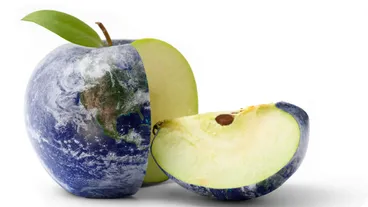
How do we create prosperity for all without destroying the natural world that sustains us? We can do this, but we must first awaken to what is truly needed.
For a resilient food supply, we need to keep our specialty farmers farming and we need to make it monetarily worth their while not to sell out. We need to replace abandoned acres of asphalt with small allotments and grow crops.
How many of us have wished we could predict the future? To gaze into a crystal ball and see our fate in fifty years time? A group of agricultural researchers from around the globe are coming together to do just that, and examine the future of our food system.
WASHINGTON -- Representatives from the world's largest private employer and other Fortune 500 companies joined worker advocates, trade groups and gove...
On a desolate Arctic island off the coast of Norway is the Svalbard Global Seed Vault, a repository with the capacity to hold up to 2.25 billion seeds...
There is an intrinsic problem with measuring the quality of a system by how well it conforms to what you already believe. Such a system gets bonus points for agreeing with you -- even when you are wrong.
By surveying the versatile ecology of cow dung, even urban dwellers, like me, can see the earthy pragmatism embedded in the Indian worship of cows (and indeed all life) as sacred.
It is clear we also need to embrace technology to enable us to double or triple food production to meet our needs. It may not sound too tasty, but just yesterday a Dutch scientist unveiled what purports to be a hamburger grown in a test tube from bovine stem cells.
As we head into 2012, I invite you to think about what you can do to shake things up, make your voice heard, and make 2012 another banner year for people power.
It is a staggering statistic to realize earth's inhabitants have increased two-fold in the past fifty years. I wondered, "How is the earth going to feed all these people?"
Inefficiencies in harvesting, packaging, storing, transporting, marketing and selling, rather than just low yields or poor farming techniques, are often to blame for food shortages and low prices for growers.
In the July issue of National Geographic, writer Charles Siebert takes an in-depth look the world's impending food crisis -- in order to feed our grow...
CIUDAD OBREGĆN, Mexico ā The dun wheat field spreading out at Ravi P. Singhās feet offered a possible clue to human destiny. Baked by a desert su...
Advertisements are plentiful for all kinds of products and supplements that purport to improve longevity or fend off disease. What may be harder to find, however, are ways you can influence these yourself.
The gating factor for huge sustainable change in the food production system, I conclude, isn't the availability of better food production and processing technology, but the perverse subsidies of the agriculture industry.
Chavez's war against hunger has been defeated by seven years of a reckless food policy that causes shortages, involves price controls, central planning and currency manipulation and rewards corruption.
Are we getting better quality food? Fewer pesticides? The possibility of improved health? Or, as an editorial in The Lancet suggests, maybe we are just making ourselves think we are doing better.
Advice to eat more plant foods simply states the destination; it does not provide the step-by-step, GPS-like guidance people need to move in that direction. Besides, alas, it doesn't work.
It's baffling that in some parts of the world, there's an oversupply of food, while elsewhere people are suffering from malnourishment. Denis van Waer...
Rather than teaching about the perils of obesity, new research out of Stanford suggests that teaching college students about where their food comes fr...