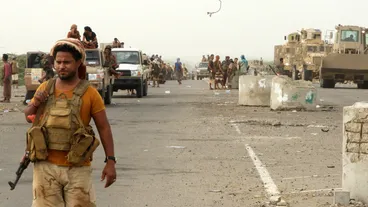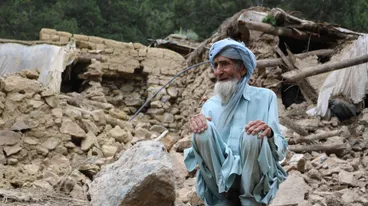
Despite the militant occupation in the north which bans the creation and enjoyment of music (even Tuareg music is banned in Tuareg land), and despite the widespread shortage of food and water, musicians will continue to sing.
Conventional wisdom has it that our country is turning inward. But with dramatic global events that often unfold on the Internet, the public seems to have a heightened awareness of the risk of genocide and other kinds of mass atrocities -- and want our leaders to act.
We can't prevent what appears to be increasing cycles of drought, but we can and are working to create better solutions and build greater resilience among the most vulnerable.
Our politicians are consumed with the crisis in Syria and the suffering there, but I would like to draw their attention to the crisis in Sudan, too. I know we can't police the world, but there is a simply solution worth exploring.
Why is it so important that data be widely accessible during a disaster? Imagine that you're in a coastal region reeling from the aftermath of a tsunami. You may be trapped under rubble or in desperate need of medical attention, food and water.
The international humanitarian response system will fail to cope with the expected rise in the number of people exposed to crises unless there are more resources closer to where disasters happen and there is more investment in preventing and reducing the risk of disasters.
Little has been written about North Korea's driving state ideology - the "Juche idea" - and the clues it may hold for predicting the nature of post-Kim Jong Il North Korea
If in the last few years you got out your checkbook or credit card and donated to help rebuild Haiti, rescue Pakistanis from floods or fund a school in Tanzania, your contribution did not make its way into global aid figures.
In gut-wrenching testimonies on the economic costs and humanitarian crisis related to mountaintop removal operations, two Appalachian coalfield leaders turned the tables on an EPA-bashing Natural Resources House Committee hearing in Charleston today.
The number of refugees pouring out of famine-stricken Somalia has greatly reduced in recent days, aid workers in the region say -- and that may not be...
It was a stuffy, windowless broom closet like any other -- replete with empty cardboard boxes, threadbare rags, mops, and of course brooms. "This is where we counsel rape victims," said the center manager.
The sight of families stumbling into the camps after days of exodus through the desert and receiving their first nutritious meals in months is heart-breaking. We will pursue a coordinated, forceful and comprehensive response.
The long-suffering nations in the Horn of East Africa are enduring the worst drought conditions in more than half a century, and are at risk of "massi...
When disaster strikes, the need for quality, updated information becomes crucial to the success of relief efforts.
Map Action speeds this process al...
The climb to and on the glacier was grueling. It took three hours to climb up the glacier and 1.5 hours down. The sun beat down on the ice and practically baked us in our climbing gear.
In considering the response of President Obama and the State Department to the Libya crisis, immediate parallels to Ronald Reagan's Grenada experience come to mind.
The dilemma in world politics today is that the UN remains unable to produce a coherent blueprint to face legitimacy conflicts in the developing world.
UNITED NATIONS -- Though the world's attention is fixed on Libya, the fighting in another hot spot -- Ivory Coast -- is escalating. The power struggle...
Location: Sodhari Masijib village, Dadu, Sindh Province, Pakistan
Shortly after leaving the town of Dadu we are soon driving along roads cutting thr...
ISLAMABAD, Pakistan -- The floods tearing through Pakistan's breadbasket have further weakened this already unstable country, inflicting more economic...