In his wildly popular 2006 TED talk, Sir Ken Robinson defined creativity as "the process of having original ideas that have value." Aside from being wonderfully succinct, this definition implies that any creative enterprise requires two key phases.
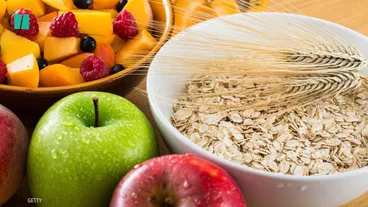
Health experts are unanimous about the effect our diet as a whole has on health, and on cancer risk. The World Health Organization estimates that 25 percent of death burden in developed countries is due to lifestyle -- completely up to us -- risk factors.
Do opposites attract, as Paula Abdul once assured us in a pop song, or do you need to be similar on 19 dimensions of personality -- as eHarmony suggests -- to find the perfect match?
For too long, our system has been set up to focus on "sick care," instead of helping us all stay healthier in the first place. This needs to change and, thankfully, it has begun to.
Prevention is so much more important than predicting risk. In the wake of recent school tragedies and a resonating fear in schools, these key tips are invaluable for both teachers and administrators alike, as well as for parents.
As the Affordable Care Act continues to benefit the country, in another year, we'll have an abundance of stories to share of communities turning their health around by focusing on preventing illness and thereby creating happy, healthy and thriving neighborhoods.
With the help of a cameo appearance by a friend you are likely to know, a preventionist reflects on vulnerability -- and the opportunity to take arms against a sea of troubles imperiling our children, and by opposing -- end them!
We need to be sure women and girls are safe whether they are caught in the first stages of a crisis or in a long-term refugee situation, whether they are living in a refugee camp or in an urban setting.
The new study in Public Health Nutrition reminds us that in developing countries, sugar intake continues to rise. Therefore, the developing world needs policies that limit added sugars, hopefully before the train leaves the station.
Although Dr. Koop was deeply conservative and religious, he was opposed by many on the left and the right because he had the integrity to go where the data took him, regardless of politics or his own personal opinions.
February is heart month -- a great time to think about heart health. While we tend to think of heart disease as a problem of adults, it can start in childhood, and the health habits of childhood have everything to do with heart health in adulthood.
I think the Mediterranean diet would be worth adopting for the sheer pleasure of it, and the health benefits are just another great reason to go Mediterranean.
A growing body of research now shows that Americans -- rich or poor, minority or not -- suffer from a widening "health disadvantage" when compared to citizens of other high-income countries.
With adequate, stable funding that ensures basic foundational capabilities, the nation's chief health strategists can take advantage of several evolving opportunities to turn the nation's sick care system into a true health care system.
Based on a powerful spoken word problem, Shane Koyczan's To This Day Project explores the profound and lasting impact that bullying can have on an individual.
Insights from our heart can help us uncover what has stopped us from moving forward in our lives, transform the way we think and feel about people, and stir up yearnings we might have buried for years -- desires that lead us to living our dreams.
Norovirus is a common but unpleasant illness. If you do get it, make sure to drink plenty of fluids and get good rest. As with anything else, prevention is the best medicine.
If we got down to the bedrock of true prevention -- lifestyle as preventive medicine -- we could add years to life, add life to years, and save a whole lot of money by putting to use the science and sense long at our disposal.
Prevention delivers real value as a cost-effective way to keep Americans healthy and improve their quality of life. Everyone wins when we prevent disease rather than treating people after they get sick.
From a nutritional point of view, if we were to invent the worst diet ever -- one with a component list designed uniquely for unhealthy weight gain and cardiovascular and metabolic morbidity -- we'd be hard pressed to imagine one worse than the typical fast food regimen.
We live at an exciting crossroads in the world of health care. Ancient medical systems like Ayurveda and traditional chinese medicine are as accessible as modern medical treatments like pharmaceuticals and surgery.
"I am well" means much more than the absence of active disease. What the public -- and most doctors -- hasn't found out is that the cause of illness is becoming more and more murky.