


psilocybin
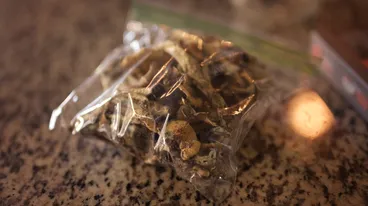
The bill would have covered several hallucinogens.

“It was just her for a really, really long time and then eventually it just trickled and evolved, and everybody found it in their own ways,” the "Icon" rapper said.

The former child star said she wants to search for the reason she's so "tired and exhausted" with romance.
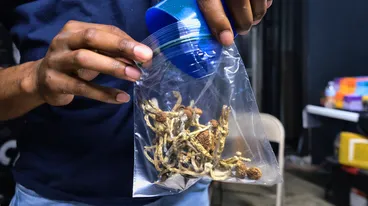
About 100 people recently completed a $7,900, six-month course at a retreat near Portland to learn how to become facilitators and earn a certificate.
WHAT'S HAPPENING


“The decision acknowledges the current lack of options for patients with specific treatment-resistant mental illnesses," the government said.

Colorado becomes the second state, after Oregon, to vote to establish a regulated system for substances like psilocybin and psilocin.

The compound in psychedelic mushrooms helped heavy drinkers cut back or quit entirely in the most rigorous test of psilocybin for alcoholism.

"It’s not the ’60s and I’m not a hippie. Neither am I in my experimental teens or 20s. Yet here I am: a mom on mushrooms."

The Northern California city follows Denver in decriminalizing psilocybin.

Denver will be the first U.S. city to decriminalize the use or possession of psilocybin by people 21 and older.