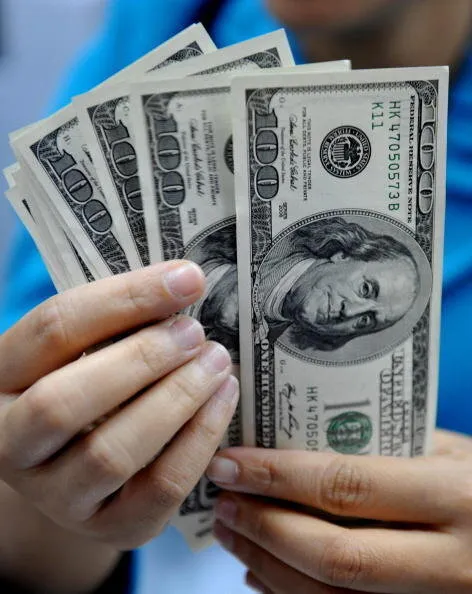
Now that trillions of taxpayer dollars have been pumped through the financial system, Wall Street giants JPMorgan and Goldman Sachs are reporting record profits -- and giving out record bonuses. Goldman is planning to pay out $11.4 billion in compensation "earned" with our money. Even worse, attempts to regulate reckless financiers or empower ordinary workers are still being stymied by influential corporate lobbyists.
How did Goldman score the biggest quarterly profit in its history? Matt Taibbi explains in an interview with GritTV's Laura Flanders. The $10 billion in direct capital that Goldman received from taxpayers under the Troubled Asset Relief Program (TARP) is actually one of the minor offenses. The company also converted corporate charters to become eligible for guarantees, and issued a whopping $28 billion in debt guaranteed by the government.
Banks were foundering last fall, and very few investors were willing to supply them with emergency capital. So the FDIC guaranteed their debt, which allowed banks to raise funds at extremely low interest rates. The FDIC guarantee means that taxpayers will get stuck with the bill if the company defaults. If you can raise money at absurdly low rates, it's very easy to turn over huge profits, as both Goldman and JPMorgan did.
There are other outrages: We still don't know how much money the Federal Reserve loaned Goldman through its emergency lending facilities. The government's bailout of AIG served as a huge windfall for the company, funneling at least $12.9 billion in taxpayer largesse directly to Goldman Sachs.
"AIG owed Goldman about $20 billion, and if AIG had gone through a normal bankruptcy, Goldman probably would have gone out of business. Instead, they got paid 100 cents on the dollar for every dollar that AIG owed them," says Taibbi, author of a blistering take-down of the investment banking giant in the most recent issue of Rolling Stone.
In Salon, former Clinton Secretary of Labor Robert Reich says that this year's big bank failures have resulted in a heavier concentration of financial influence in the few surviving firms, namely Goldman Sachs and JPMorgan. We have taken the "too big to fail" problem and made it bigger. JPMorgan acquired rival Bear Stearns for a pittance last March with billions of dollars in government guarantees. The company also picked up national banking giant Washington Mutual last fall. That means more risk in our economy and a greater concentration of lobbying power in our political system.
"We've ended up with two giants that now have most of the casino to themselves, are playing with poker chips backed by taxpayers, and have a big say in what the rules of the game are to be," Reich writes.
Adam Schlesinger of Air America took to Wall Street to compile a hodgepodge of one-on-one interviews with bailout critics and condescending financiers. Schlesinger underscores the absurdity of Goldman's pending bonuses by posting his own checking account balance ($13.75). The point of this massive bailout was to make the economy function for ordinary people. Instead, we've made sure that it benefits extremely wealthy bankers.
The government so completely resists doing anything about this staggering inequality, as Eyal Press writes for The Nation. There are two ways to approach the inequality problem. We can rein in the recklessness at the top by imposing serious regulations, and empower those at the bottom by giving them greater negotiating leverage with their employers (i.e., promoting unionization). While the bonus money flows on Wall Street, the Employee Free Choice Act (EFCA), a key bill to empowering unions, was just stripped of a crucial provision that would have made it easier for workers to organize, as David Moberg reports for In These Times.
As EFCA is gutted, bills proposing regulations for the financial sector are moving at a snail's pace -- even after two years of economic turmoil. Last week, Congressional leaders from both parties nominated members for a new panel, the Financial Crisis Inquiry Commission, to investigate the causes of the financial crisis. The investigation seems doomed to failure by its very design. Zachary Roth details the committee's various shortcomings for Talking Points Memo. Of the panelists, six were nominated by the Democratic leadership, while four were nominated by the Republican leadership. If all four Republican nominees vote to block a subpoena, the committee cannot issue it, and without broad subpoena power, the entire exercise is futile.
Roth also emphasizes the excessively political nature of the appointees, particularly on the Republican side, which named former Rep. Bill Thomas, R-Calif., as Vice Chair. The Democratic picks are generally uninspiring, except for Brooksley Born, who fought to regulate derivatives in the 1990s as head of the Commodity Futures Trading Commission. But the Democrats have nobody anywhere near as frightening as Rep. Thomas, a vicious partisan who specialized in ushering money to special interests during his tenure as Chairman of the House Ways and Means Committee.
Mary Kane of the Washington Independent explains the troubling record of another Republican commission appointee, Peter Wallison of the American Enterprise Institute (AEI), a conservative think tank. The various conspiracy theories Wallison peddled include a robustly debunked belief that a decades-old anti-discrimination law is responsible for the mortgage meltdown. The law in question, known as the Community Reinvestment Act (CRA), dates back to 1977, and Wallison's conspiracy theory has been rejected by nearly everyone in the financial commentariat, including regulators appointed by George W. Bush.
The Community Reinvestment Act requires banks to make loans to communities where they collect deposits. If you accept deposits at a branch in a poor neighborhood, you have to offer responsible loans in the same community. The idea is to expand access to affordable credit in the inner cities, while the subprime crisis is heavily concentrated in the suburbs. CRA loans have to be affordable, which means high-interest subprime loans do not count. CRA does not require banks to lower their lending standards, because any recipients have to be credit-worthy. Only 6% of high-interest mortgages were made by companies subject to CRA regulations, and lest we forget, this law was passed in 1977, while financial crisis erupted in 2007.
Instead of appointing toothless commissions, we should be making sure the financial oligarchs do things that are good for the rest of us. Congress should be writing regulations to curb risk in the financial system as fast as bankers are paying themselves bonuses. They're our representatives, after all, and it's our money.
This post features links to the best independent, progressive reporting about the economy. Visit StimulusPlan.NewsLadder.net and Economy.NewsLadder.net for complete lists of articles on the economy, or follow us on Twitter. And for the best progressive reporting on critical health and immigration issues, check out Healthcare.NewsLadder.net and Immigration.NewsLadder.net. This is a project of The Media Consortium, a network of 50 leading independent media outlets, and was created by NewsLadder.