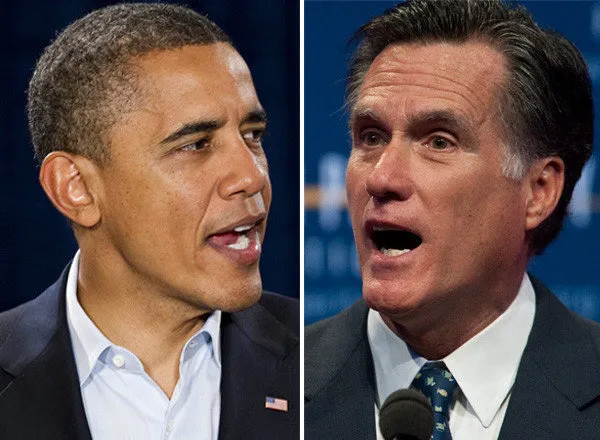
With the first debate scheduled for just a few days from now, media attention has begun to focus on what to expect, or not expect, from this year's head-to-head match ups. Fortunately, it seems that most commentators are on the same page: don't expect much to change because of the debates. In the spirit of piling on the "debates don't matter much" argument, I'm reposting and updating some of the analysis I presented four years ago on this blog's predecessor.
So the basic idea is that if debates "matter," levels of candidate support should be appreciably different following the debate than they were prior to the debate, presumably shifting in favor of the candidate seen as having "won" the encounter. This is fairly easy to measure, and I present data in the table below that gives us a sense the magnitude of debate bumps from the last several elections. Here, I compare the polling average from six days prior to the debate to the day of the debate with the average from the seven days following the debate, for all debates from 1988-2008.

Focusing on single debate bumps may be obscuring a more general, cumulative effect of debates. The last column in the table shows the change in candidate support from one week prior to the first debate to one week after the final debate. Here we see that the debate period generated a 2.42 point bump for George H. W. Bush in 1988; cost Al Gore 3.52 points in 2000; cost George W. Bush almost 2 points in 2000; and John McCain lost almost two points in 2008. Of these debate period swings, the 2000 debates stand out as the most important, especially in the context of the closeness of the election. Part of the explanation for Gore's swoon during the debate period is perhaps related to his performance but another important factor was the media meme that emerged as a result of the debates, including open discussions of whether or not Al Gore was a "serial exaggerator" (see Jamieson and Waldman). This brings up an important point: it is probably not a good idea to attribute all of the change in candidate support during the debate period to the debates, since there are many other important events, or perhaps even natural drifts in candidate support occurring during these several week periods.
So what does this mean for the three presidential debates this year? I suspect more of the same, which means that neither candidate will probably benefit much from them. The key factor will be whether one of the candidates can make small gains from each debate that, together, add up to something like a two or three-point gain during the debate period. I'm doubtful, but it could happen.