
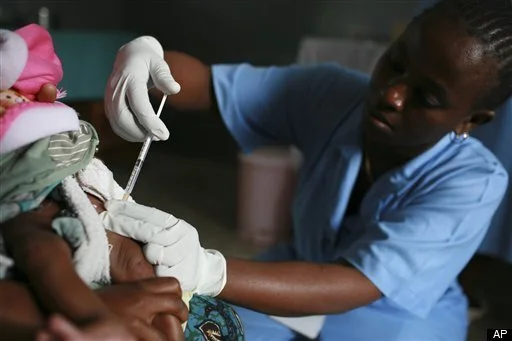
Last week saw the announcement of a new weapon in the fight against malaria. GlaxoSmithKline, the Bill and Melinda Gates Foundation and the PATH Initiative together announced on Tuesday early results of a clinical trial in Africa of a malaria vaccine that cuts the rate of developing the disease by half.
The development of the world's first vaccine against malaria, and indeed any parasite, is an extraordinary scientific breakthrough. Vaccines have helped us bring down death rates from a number of diseases that threaten lives in developing countries, like measles and meningitis, and have even led to the eradication of some killer diseases like smallpox.
Close to 800,000 people die from malaria every year, and almost all are children in Africa. A malaria vaccine that works would be a major breakthrough. But while the latest advance toward the development is scientifically important, there are several reasons to be cautious about the difference this vaccine could make, on the basis of current results.
Firstly, protection is low. Only around half of children who got the malaria vaccine were protected from developing malaria, and only around a third were protected against severe malaria, the type that kills. In other words, two out of every three children are still exposed to contracting potentially fatal severe malaria, even after being vaccinated.
Secondly, the current vaccine offers only short-term protection. It doesn't give a child permanent protection from malaria; it just offers up a temporary guard that then wears off after about a year. Given that the threat of contracting malaria is ever present in some parts of the world (on average, people in some parts of Africa may get malaria up to six times a year), this raises practical problems; vaccinating children in Africa, even for the most basic diseases that do provide permanent protection, like measles, is proving difficult enough.
So while research must continue to see whether we can improve these results, the important point right now is to continue fighting malaria with all the other tools we know work -- prevention tools like bed nets and insecticides, tests to help rapidly diagnose disease and, most importantly, treatment that works to save lives.
Six months ago, in April this year, Doctors Without Borders/Médecins Sans Frontières (MSF) released a report on severe malaria treatment, "Making the Switch." The report looked at a landmark trial that showed treating children with a newer drug, artesunate, is more effective at preventing deaths from severe malaria. Artesunate reduces deaths from severe malaria by around a quarter compared to an older drug, quinine. That means if everyone used artesunate to treat severe malaria, 200,000 young lives could be saved per year.
We called on WHO to encourage governments to translate the new guidelines into national protocols as swiftly as possible. Six months on, and it's clear that hasn't happened.
The problem stems from money. Artesunate is currently three times more expensive than quinine, although taking into account the difference in hospitalization costs with quinine, the two treatments work out roughly the same. Some African countries also produce quinine, which provides a local industry, including jobs. Plus there has been no financial incentive from donors to encourage countries to make the switch to artesunate.
The cost difference for a global switch from quinine to artesunate is just US$31 million a year. This amount is a small drop in the ocean of the billions of dollars that are donated in foreign aid every year. It's the most cost effective way of saving 200,000 lives every year. It's imperative that donors commit to helping countries fund the switch to artesunate.
As well as financial support to make the switch, countries need support from donors and international organizations in training health workers and disseminating information on the new drug. WHO also needs to work with donors on the areas of greatest need. And all this needs to happen now.
So while we continue to live in hope that a vaccine for malaria will one day be produced that could truly help us to massively reduce infection, the priority for governments today is to continue to support the prevention tools that are currently out there and, importantly, to make every effort to ensure that when children develop severe malaria, they get the treatment that gives them the best chance of not dying. If another six months goes by with no change to the treatment status quo, that would mean there were 200,000 lives that could have been saved this year.
For more information, read MSF's report "Making the Switch" or visit doctorswithoutborders.org.