To retouch or not to retouch, seems to be the question these days. I chose the latter, for my current exhibition of large-format portraits titled "Supermodels of the 70's and 80's" at Steven Kasher Gallery in New York. The images, taken on my vintage Deardorff 8x10 view camera, were shot on color negative film, with a sharp, realistic, modern lens. At the same time, I lit the women with the warmest, oversized soft box in my studio. But, a single source soft box, with no under-fill, no bounce cards, no hair-lights, is hardly what you'd call flattering beauty light. Am I conflicted? No.
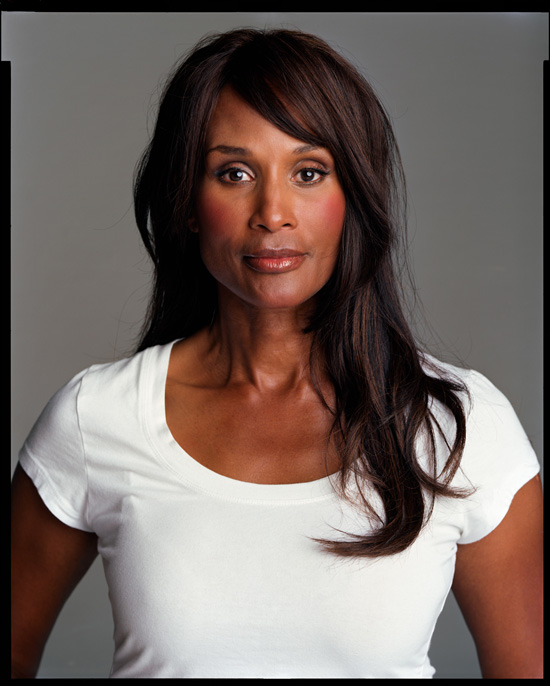
Beverly Johnson, Portrait by (c)Timothy Greenfield-Sanders
Photographers have at their disposal an arsenal of devices that control a portrait's final outcome. Lighting, lens, depth of field, focus, they all play a role. I'd say it's in post-production where things get a little screwy. Photoshop is probably to blame. It's just so easy to erase a few years. What the hell, why not take off a decade of wrinkles and age spots. Click of the mouse. Any first year photo school student can do it.
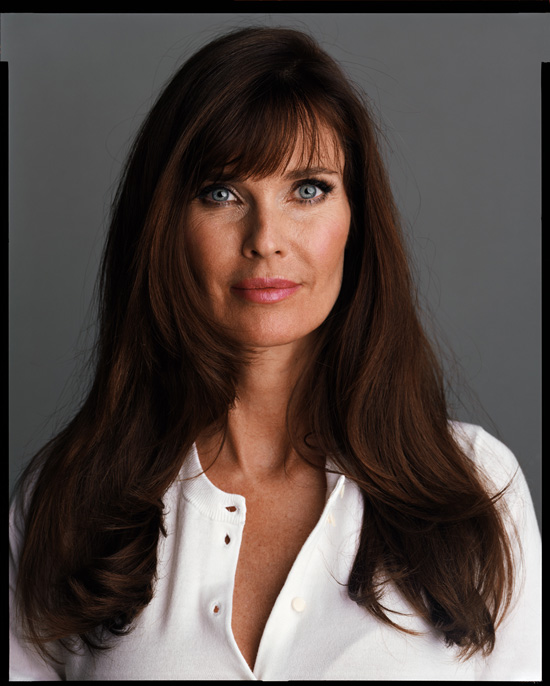
Carol Alt, Portrait by (c)Timothy Greenfield-Sanders
With the "Supermodels" I kept the post-production to a minimum. We cleaned up the scans, removed dust and scratches, but 95% of reality can be seen in the Ilfochrome prints. After all, some of these women have electively turned back 'time.' In a sense, they arrived at the studio already 'photo-shopped'. And that's beyond my control. But how I shoot, my lighting, my choice of camera and lens, that's all my decision. Blame me if you think I should have retouched and retouched and retouched, but I think these women look beautiful just the way they are.
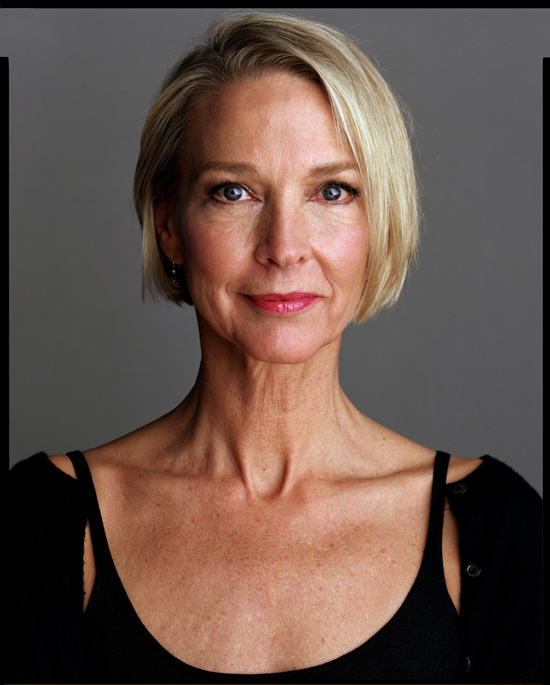
Karen Bjornson, Portrait by (c)Timothy Greenfield-Sanders
I'm not unsympathetic. There's a lot of pressure out there. We all want to be attractive and admired. What I object to is the excess, the shameless retouching, the body sculpting performed by so many magazines, and the dangerous message it sends.
A few years ago my wife and I gave a party in honor of a fashion designer friend. Karin and I were casually chatting in the hallway stairs with writer Fran Lebowitz. We were discussing facelifts and how people torture their bodies to look younger. Fran turned to us and said, "Yeah, I know what you mean, but YOU'RE not on the market".
Visit Timothy's website at Greenfield-Sanders.com.
Support HuffPost
Our 2024 Coverage Needs You
Your Loyalty Means The World To Us
At HuffPost, we believe that everyone needs high-quality journalism, but we understand that not everyone can afford to pay for expensive news subscriptions. That is why we are committed to providing deeply reported, carefully fact-checked news that is freely accessible to everyone.
Whether you come to HuffPost for updates on the 2024 presidential race, hard-hitting investigations into critical issues facing our country today, or trending stories that make you laugh, we appreciate you. The truth is, news costs money to produce, and we are proud that we have never put our stories behind an expensive paywall.
Would you join us to help keep our stories free for all? Your contribution of as little as $2 will go a long way.
Can't afford to donate? Support HuffPost by creating a free account and log in while you read.
As Americans head to the polls in 2024, the very future of our country is at stake. At HuffPost, we believe that a free press is critical to creating well-informed voters. That's why our journalism is free for everyone, even though other newsrooms retreat behind expensive paywalls.
Our journalists will continue to cover the twists and turns during this historic presidential election. With your help, we'll bring you hard-hitting investigations, well-researched analysis and timely takes you can't find elsewhere. Reporting in this current political climate is a responsibility we do not take lightly, and we thank you for your support.
Contribute as little as $2 to keep our news free for all.
Can't afford to donate? Support HuffPost by creating a free account and log in while you read.
Dear HuffPost Reader
Thank you for your past contribution to HuffPost. We are sincerely grateful for readers like you who help us ensure that we can keep our journalism free for everyone.
The stakes are high this year, and our 2024 coverage could use continued support. Would you consider becoming a regular HuffPost contributor?
Dear HuffPost Reader
Thank you for your past contribution to HuffPost. We are sincerely grateful for readers like you who help us ensure that we can keep our journalism free for everyone.
The stakes are high this year, and our 2024 coverage could use continued support. If circumstances have changed since you last contributed, we hope you’ll consider contributing to HuffPost once more.
Already contributed? Log in to hide these messages.