In today's dynamic classrooms, the teaching and learning process is becoming more nuanced, more seamless -- it flows back and forth from students to teachers. Here's a look at current trends in teaching and learning, their implications and changes to watch for.
THE THREE KEY TRENDS
1. Collaborative
If Web 2.0 has taught us anything, it's to play nicely together. Sure, there are times for buckling down and working alone, but in most cases the collaborative process boosts everyone's game. In progressives schools across the country, students and teachers are learning from each other in all sorts of ways.
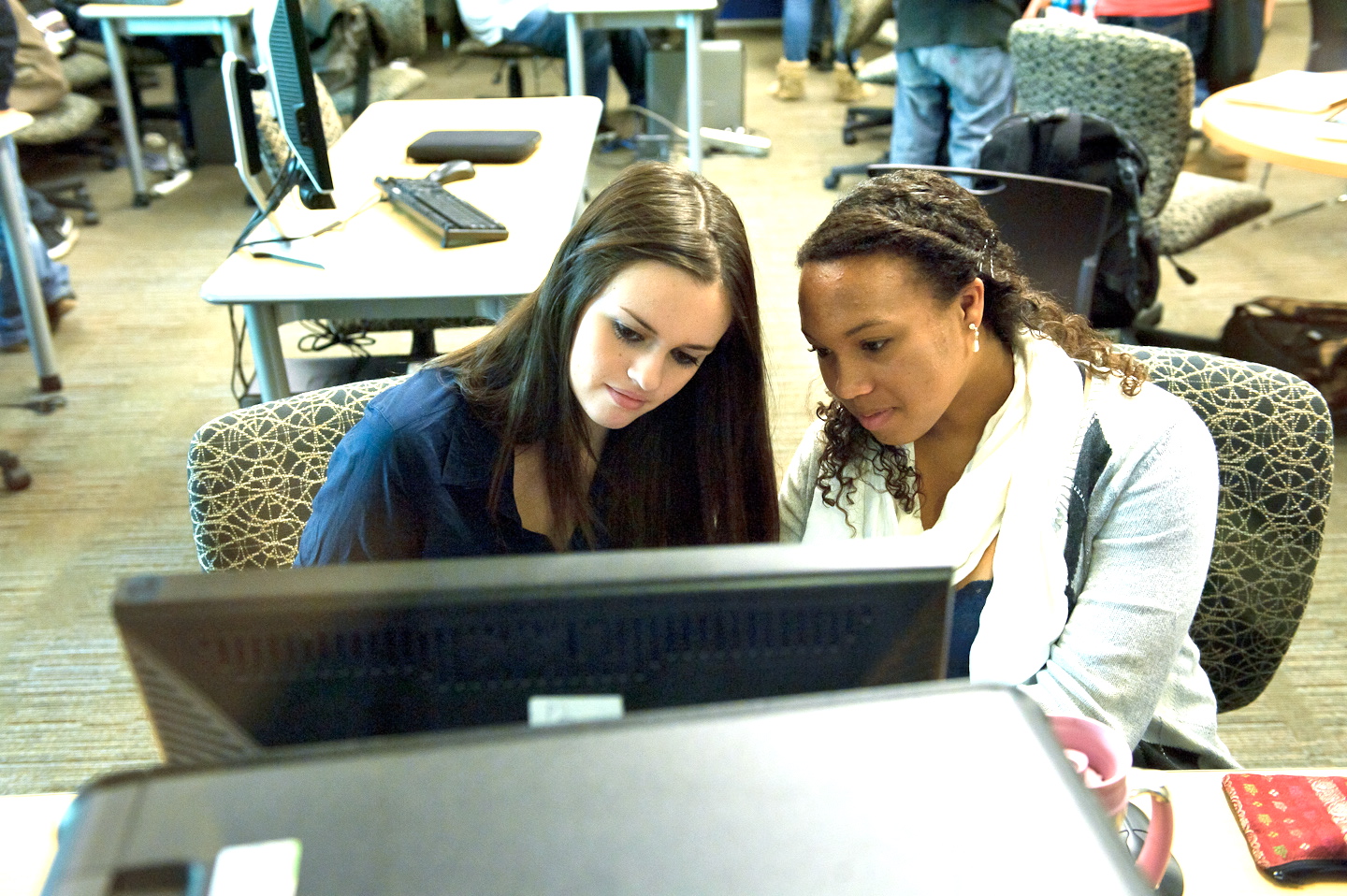
Sharing information and connecting with others -- whether we know them personally or not -- has proven to be a powerful tool in education. Students are collaborating with each other through social media to learn more about specific subjects, to test out ideas and theories, to learn facts and to gauge each others' opinions.
(Photo: Lenny Gonzalez)
They're finding each other on their own kid-specific social networking sites, on their blogs, on schools' sites and, of course, on Facebook and Twitter. Though Facebook is still a red herring when it comes to school policy (Massachusetts districts have threatened to fire teachers who friend students on Facebook), and educators are split over whether tweeting in class is disruptive or helpful, the sites continue to be pervasive in both higher-ed and K-12. Educators know they can grab students' attention where they naturally live outside the classroom -- the online social world, whether or not it's Facebook.
"If you're teaching something that's usually bland and you insert a simple tool that allows students to connect with each other or their peers in other schools and countries whenever they want, you just see kids' faces light up," says veteran educator Chris Lehmann of the Science Leadership Academy.
Educators Unite
But social networking is not just for teens, as evidenced by the 500 million-plus Facebook users. Teachers are putting their collective smarts together to find the best ways of engaging students, using social media to teach everything from reading and writing to Shakespeare. Educators are also using social media to connect with each other, share ideas and find the best teaching tools and practices. Sites like Classroom 2.0, Teacher Tube, PBS Teachers, Edmodo, Edutopia, and countless others are lit up with teachers sharing success stories, asking for advice and providing support. Collaboration is happening offline, too, at schools where educators team-teach and organize professional learning networks.
Collaboration is also finding its way into curriculum with open-source sites to which everyone is encouraged to contribute. Working together is woven into the fabric of project-based schools like the Science Leadership in Academy, which focuses on science, technology, math and entrepreneurship, and Napa New Tech High High. The idea is simple: by working together, students figure out how to find common ground, balance each others' skills, communicate clearly and be accountable to the team for their part of the project. Just as they would in the work place.
Watch for: (1) Department of Education working to establish a one-stop shop for teacher networks. (2) Commonly accepted guidelines for using YouTube, Facebook and other social media in schools.
2. Tech-Powered.
Pens and pencils are far from obsolete, but forward-thinking educators are finding other interactive tools to grab their students' attention. School programs are built around teaching how to create video games. Teachers are using Guitar Hero, geo-caching (high-tech scavenger hunt), Google maps for teaching literature, Wii in lieu of P.E., VoiceThread to communicate, ePals and LiveMocha to learn global languages with native speakers, Voki to create avatars of characters in stories, and Skype to communicate with peers from all over the world -- even augmented reality, connecting students to virtual characters. And that's just a tiny sampling.
Creating media is another noteworthy tech-driven initiative in education. Since media permeates our lives, the better able students are to create and communicate with media, the better connected they'll be to global events and to the working world. To that end, programs like Digital Youth Network focus on teaching students to create podcasts, videos and record music; and Adobe Youth Voices teaches kids how to make and edit films and connects them to documentary filmmakers.
Tech-savvy teachers are threading media-making tools into the curriculum with free (or cheap) tools, like comic strip-creation site ToonDo, Microsoft Photo Story 3 for slide shows, SoundSlides for audio slide shows, Microsoft Movie Maker and VoiceThread to string together images, videos, and documents, to name just a few.
Students in high school and college are using digital portfolios -- the equivalent of resumes -- to showcase the trajectory of their work on websites that link to their assignments, achievements and course of study, using photos, graphics, spreadsheets and web pages.
Watch for: The explosive growth of high-tech companies and venture capitalists investing ever-more capital in the education market.
3. Blended.
Simply stated, blended learning is combining computers with traditional teaching. Knowing that today's learners are wired at all times, teachers are directing students' natural online proclivity towards schoolwork. It's referred to as different things -- reverse teaching, flip teaching, backwards classroom or reverse instruction. But it all means the same thing: students conduct research, watch videos, participate in collaborative online discussions and so on at home and at school -- both in K-12 schools and in colleges and universities.
Teachers use this technique in different ways. Some assign interactive quizzes and online collaborative projects at home, some use computer time in class, some assign watching videos and lectures at home and use class time for hands-on projects, some place most of the curriculum online and work one-one-one with students in class. However they choose to do it, the best examples of blended learning programs involve teachers who use home-time online discussions and collaborative projects as fuel for content and discussion in the classroom.
Watch for: Schools using blended learning to save costs on books and supplements.
WHAT THESE TRENDS MEAN
Given the growing momentum of these trends, what does it mean for students, teachers, schools, and the education community at large?
- Teachers' and students' relationships are changing as they learn from each other.
- Teachers roles are shifting from owners of information to facilitators and guides to learning.
- Educators are finding different ways of using class time.
- Introverted students are finding ways to participate in class discussions online.
- Different approaches to teaching are being used in the same class.
- Students are getting a global perspective.
Read more in the MindShift series about the future of curriculum.