Back in the early 1970s, a professor at the Harvard Business School introduced a public sector case study for class discussion: the students were asked to analyze the paper flow in the office of then-U.S. Senator Ted Kennedy.
The topic being an unusual one -- studies of private enterprise, not the public sector, serving, of course, as the school's bread and butter -- one student objected, asking the instructor what a study of political office could possibly teach them about the workings of modern industry. "Well, you never know," he responded. "Someday, one of you may be president of the United States." This being the day of Richard Nixon, the cut-up in the front row threw both his hands up in a double "V" for victory, a familiar Nixonian pose, and laughter consumed the room.
That student was George W. Bush, who today holds the distinction as the only graduate of Harvard Business School to ever reach the White House. Indeed, Bush is also the only president to have earned an MBA, all of which may tell us something about the indifferent relationship between success in business and success in politics.
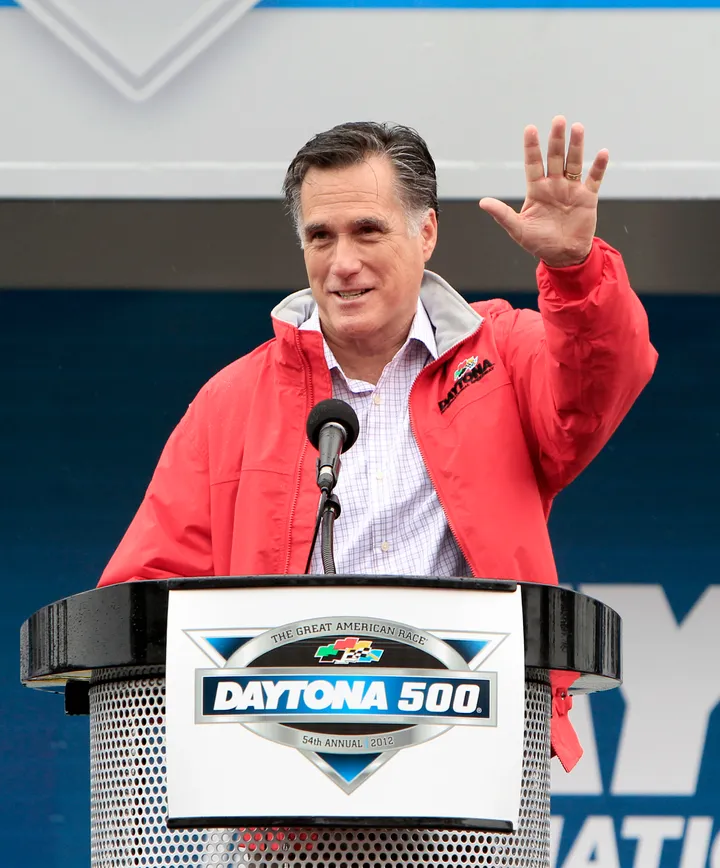
Still, in an election season in which the Republican frontrunner, Gov. Mitt Romney, has been brandishing his business credentials as making him well-suited for tackling the problems of Washington, the question lingers: Does business really teach anything that can be utilized in the Oval Office? And when choosing a president, should we look upon business experience as an asset?
A quick scan of the professions of former presidents provides some striking lessons. There are two occupations which predominate -- law and the military -- while business, farming and academia are distant followers. A study of businessmen who have occupied the White House is even more compelling.
Harry Truman owned and operated a men's clothing store in Kansas City, Missouri, before the Great Depression took it down and he entered politics. Warren Harding was a newspaper publisher, trading ink for personal and political favors, before he became a fixture in Ohio state politics, and Herbert Hoover was a mining engineer who earned millions and masterminded the relief effort following World War I, then served as Calvin Coolidge's Commerce Secretary on the way to becoming president in 1929. That, of course, was the year when the nation promptly slid into the worst economic calamity in American history. Among these three, only Truman -- the least accomplished businessman of the three -- is looked upon as a qualified success.
The appeal of a businessman-politician is fairly clear: in a world of gray hues, we think of business as refreshingly black and white -- you either make a profit or you don't. You succeed or you go belly up. Successful businessmen carry the "take charge," "can do," "suffer no fools" kind of attitude that seems well-suited to mastering big problems. (Think of the more recent appeal of Ross Perot, Lee Iacocca or -- shudder -- Donald Trump). But that superficial characterization overlooks some critical differences between business and politics.
Where business is an autocracy, governance relies on the consent of the people. Where a corporate chief executive runs an enterprise at his personal whim (more or less, depending upon the nature of his Board of Directors), the president in our democratic system has two coequal branches of government with which to contend. A business exists to sell something to people; a government exists to provide essential services to people.
A good business looks for the most effective and cost-conscious way to tackle a problem, but governments cannot only consider such efficiencies. Think, for instance, of how much money it would save the country if our defense industry was a private sector operation, engaged to carry out dangerous missions in our name. In the Iraq War, we began to do just that with companies like Blackwater (now Xe Services) handling some sensitive security operations. By employing around 160,000 "contractors" (many observers preferred the franker term "mercenaries") to aid in the post-war occupation, the plan may have conserved resources -- and saved face for those, like Defense Secretary Donald Rumsfeld, who rejected General Eric Shinseki's appeal for more troops -- but it resulted in scenes like the devastating raid in Nisour Square, Baghdad, where contractors, leading a convoy, opened fire on civilians and killed 17. An army in all but name.
Similarly, we might benefit by transferring some of the bookkeeping and call center operations of government services -- Social Security, Medicare even the IRS -- to low-paid workers in Third World countries, much like Nike and Apple or dozens of other large American companies do. But unlike business, a government must measure efficiency against equity; cost-cutting against accountability; productivity against justice. That may be one of the reasons why law, not business, has been the favored profession of our political leaders -- the profession that many businessmen know only as the guy down the hallway in the corporate counsel's office who tells you that you can't do something. Businesses deal with consumers because they have money to spend, but they do not care about those who do not. Why would they? But governments cannot ignore the helpless, the indigent, the sick, the needy.
Back in 1992 the businessman H. Ross Perot built a third-party challenge to the two establishment candidates -- George H. W. Bush and Bill Clinton -- on his reputation as a swashbuckling businessman, ready to take Washington by surprise. But a brief national flirtation faded the more the nation got to know him. First, there was the candidate's recommendation that everyone read his favorite book on the leadership secrets of that great democrat, Attila the Hun. Then he went on national television and told Larry King that it would be better for everyone if we got rid of Congress and turned the decision-making of government over to an electronic town hall. Georgia Congressman Newt Gingrich, then the Minority Whip, had a response to that. "Mussolini," he said, would love it."
Todd Brewster is the Director of the National Constitution Center's Peter Jennings Project and the Center for Oral History at West Point.