More

Featuring fresh takes and real-time analysis from HuffPost's signature lineup of contributors
Todd Kashdan

GET UPDATES FROM Todd Kashdan

Understanding Rejection's Psychological Sting

Posted: 09/16/11 09:33 AM ET

Some people think that scientists research their unresolved personal issues. Well, I study rejection and social anxiety, and like everyone else on the planet, I have experienced my share of both.

My first kiss was at age 7 with an older cousin. In the garage, she casually played rocket man on a red fisher price record player. There was nothing at all pleasurable about the slow dance, kiss or awkward silence. But I did think my friends would be impressed with my official entry as a sexual being. A tactical mistake. Their expressions of disgust were enough to impact me, no words were necessary.

When someone passed a note in class that said, "Todd kisses his family all over their bodies," I experienced a sinking feeling that only got worse over the day. Friends felt the need to be physically distant from me. Everyone sat at least two seats away from me at lunch. Rendered invisible for a mere hour, just one hour, I felt alone, alienated, as if I didn't exist.

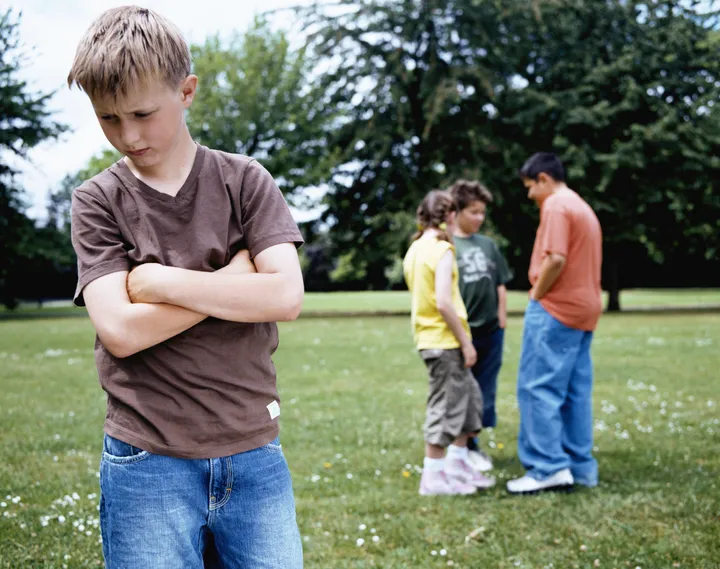
Looking back, I find the incident to be an innocent reminder of childhood. I didn't lose any friends. I mocked myself much more than anyone else did. Yet, I can still recall the visceral feeling of being excluded. The tightness in my stomach, the inability to look people in the eye and the dejection of sitting alone in a room full of people, where it took great willpower to lift a fork to my mouth. I can remember it all. It makes it easy to imagine the devastation of people who are victims of chronic ostracism.

I won't bore you with more recent tales. I want to turn to the science. How much rejection is required to experience pain and to doubt life's meaning? The quick answer: not much.

The average person feels ignored, excluded or ostracized approximately once per day. Most of these incidents are "seemingly" trivial. The word "seemingly" is essential because acute pain is the norm. In a study conducted this year, a trained researcher walked past other pedestrians and did one of the following:

1. Glanced quickly at them.

2. Gave a perfunctory nod and smile.

3. Looked right past them, as if they didn't exist.

Another member of the research team hiding in a shrub would stop the pedestrians to ask a few questions about whether they feel disconnected from other people. When pedestrians didn't get any acknowledgment from the stranger passing them, they reported a substantially lower sense of connection to other people.

These findings mirror research of elevator riders from over 20 years ago that showed how being completely ignored by the stranger standing next to you leads to a shift away from happiness toward hurtful feelings. Take a moment to think about this, just a glance from a stranger helps us remain connected to other people ... and then there's the driver that refuses to give you the nominal wave after you let their car cut in front of you (grrrrr).

In the weirdest studies, people played a five-minute computer game of ball toss with another person. Unbeknownst to the research participant, the other person was an actor given a script to be accepting, by throwing them the ball regularly, or to ostracize them, by keeping the ball away.

In some cases, they were told that it's unlikely they would like the other person. Black participants were told the other person was a KKK member, Jewish participants were told the other person collected Nazi paraphernalia, feminists were told the other person was a fluffer working for a pornographer. You get the idea. What happened?

The impact of being left out of the ball tossing game was the same regardless of whether the stranger seemed like a friend or foe. Either way, after a mere five minutes of not getting the ball in a pointless computer game, people felt an increase in sadness, despair and hostility, and a decrease in self-esteem, belonging, sense of control and meaning in life.

It's easy to underestimate the power of inaction and thus, parents, teachers, bosses and friends often neglect the consequences of ostracism. Even when someone from a despised group rejects us, we feel the psychological sting. The cruelest bodily tortures often pale in comparison to the impotence of being left out. Time to bring those powerful human capacities for awareness, openness and compassion to bear on the people that cross our path.

NOTE: for more, listen to me and the rest of the paneldiscussing social anxiety and shyness at The Diane Rehm Show on NPR


Dr. Todd B. Kashdan is a psychologist and professor of psychology at George Mason University who regularly give keynotes and workshops to business executives, organizations, schools, parents, retirees and health professionals on well-being. He authored "Curious? Discover the Missing Ingredient to a Fulfilling Life" and "Designing Positive Psychology." If you're interested in speaking engagements or workshops related to this topic or others, contact me by going to www.toddkashdan.com


Follow Todd Kashdan on Twitter: www.twitter.com/toddkashdan

Some people think that scientists research their unresolved personal issues. Well, I study rejection and social anxiety, and like everyone else on the planet, I have experienced my share of both. My ...
 
 
  • Comments
  • 25
  • Pending Comments
  • 0
  • View FAQ
Comments are closed for this entry
View All
Favorites
Bloggers
Recency  | 
Popularity
photo
HUFFPOST SUPER USER
PtownBen
11:37 PM on 10/28/2011
I myself hate rejection, i just realized I hated it so much because I'm covert narcissist. through some weeks of hard times, I'm coping by writing poetry to exlpain what I went through. Here is something about rejection.

Rejection.
My existence is a masterpiece of solo acted theater.
Life is the platform. People are the audience.
Everyone is allowed to watch. No admission fee required.
I’m the greatest actor on earth, and beyond.
I can’t play myself for my character is egocentric.
So I perform as you. I ‘am my audience.
I’m the chameleon of spectator art.
I play as my audience as it is appealing.
For everyone adores themselves.
I play as my audience for protection.
As no one likes to reject themselves.
I’m your greatest mimicker. I can read your emotions in a blink.
I have no time to empathize. I must comprehend.
For comprehension means awareness.
For Understanding my audience advances the spectacle.
However mind debilitating, I must endure. I must improve my art.
For I cannot accept rejection.
I ‘am you. I ‘am Selfless.
For I must appease you.
I ‘am you. I ‘am Narcissistic.
For I must protect myself .

I have written a few more on.
http://themahdiblog.wordpress.com
This user has chosen to opt out of the Badges program
photo
10:21 AM on 10/13/2011
Todd has hit an important component of the currently much publicized area of bullying. I see so many people who don't now what bullying is. They make off the cuff remarks, like, oh, once a bully wanted my lunch money and I kicked his butt and I was never bullied again. That's a one-time disagreement, not bullying. It is constant social rejection like Todd describes - no one sitting with you at lunch, people moving away from you, etc. He was lucky it only went on for a short time. Imagine years of this, especially as a kid when years go much more slowly than in your adult life. That is bullying. It often doesn't have overt signs, like your kid coming home with a black eye. It doesn't always have an overt cause like a kid being gay. It may have been one action, like Todd's or one time when the kid offends someone else by beating them at a game or academics or gets into a friendship triangle. In jealousy, the other kids rear up and attack, especially if the kid doesn't have great social skills or confidence.When you see your kid dreading school, telling you that have no friends, don't deny their feelings. It's no wonder these kids kill themselves so frequently these days.
12:32 AM on 09/26/2011
Important article, Todd. Well done. It connects the science on the matter with our own experiences and what we know about etiquette and human decency; much of what we were taught as our most polite manners was NOT fussy or overly formal, after all, but in fact, methods for being acutely sensitive and response to the needs of others.

Thank you, Mom and Dad for the good lessons!
12:42 AM on 09/22/2011
Great article, Todd! Taking rejection to a very basic, experiential level that just about everyone can relate to and re-activating those visceral feeling are excellent ways to develop empathy for those who are routinely ostracized. Certainly, this is something that can be taught to students not only for the sake of school culture but for society in general. And, yet, some people will naturally generalize their experience to others and pro-social feelings will kick in. Others may be glad to see that they are not the only ones being rejected, a kind of "schadenfreude." What has amazed me is that some of the most compassionate young children I've seen never had that behavior modeled for them, i.e., they were victims of severe abuse. And there are children who've experienced kind, loving parenting and just couldn't resonate with the painful feelings of others; they seemed to be natural-born narcissists. Maybe some of those people can best be reached by a process that shows them it is in their self interest to not reject others, e.g, possibly a "what goes around, comes around" approach. In any case, as groups become increasingly rigidifed and rivalrous with other groups in this country and around the globe, good to read your article which has wide-spread and critical applications to societal as well as individual problems.
Cheers,
Marion
01:07 PM on 09/18/2011
In a previous reply, Todd K. wrote: "Focusing on building efficacy, not self-estee­m. Realizing that part of the education system is building character and to do that, every single figure needs to be a role-model­. Right now we are still at the earliest moral stage of developmen­t in our schools- punish wrongdoers and thats it."

This is incredibly powerful and useful. I found this a perfect summary of the lesson I drew from the artilcle!
photo
deerinmw
I don't mean to rock the boat, but ...
10:04 AM on 09/18/2011
"there are people who could care less about rejection"
Not to nitpick or reject anyone's otherwise valid comments but I do wish people would understand the usage of "could care less" and/or "couldn't care less." If one could care less it means they haven't reached the final level where they don't care about something. If they couldn't care less it means they've reach the maximum of not caring. So if I "could care less" about what you think of my hairstyle it still bothers me on some level... but if I "couldn't care less" your opinion has absolutely no impact and is of no concern to me at all. Yes its semantics but its also about clarity and proper usage and it does make a difference on how people interpret other's remarks. At the very least it causes some confusion... does she care? or doesn't she?
photo
HUFFPOST SUPER USER
doophis
Idiota Maximus
11:59 AM on 09/17/2011
There is much insight in this piece. At age 40, I am a loner with few friends. I spend many nights and weekends by myself, yet was very social in high school and college. After all my friends had graduated and I moved off campus, I became a loner in my senior year and when I moved back home after college, all my high school friends acted like they didn't need me because they had enough people to socialize with. I wasn't going to beg them for friendship, so I embraced being alone. I have a small circle of good friends but they have their own lives, so we hang out on occasion but they are married and I'm not. I can certainly see a connection between where I am now and the rejection I felt years ago.
12:34 AM on 09/26/2011
Strongly encourage you to reach out to others -- even those whom you might not feel an immediate connection. Think of it: If you were fairly social in high school and college, but are now feeling like a loner, imagine how the less-than-social folks in high school and college might be feeling. Truly, if you're feeling awkward or alone, someone else is ALWAYS feeling more so.

Didn't mean that to come across as preachy -- you just seem like a perfect candidate to reach out a hand -- and to help others even as you help yourself. :-)
11:22 AM on 09/17/2011
Interesting and so true. I remember a few instances of childhood rejection with a sting to this day.

As for interaction on elevators, it has changed over the years. Men used to show their appreciation of pretty or stylish women on elevators. They no longer do. I don't expect a show of appreciation, as I am quite a bit older now; however, I watch their reaction when a young pretty girl gets on the elevator. Nothing. No reaction. They look straight ahead. Sometimes a man is so intent on looking at himself in the elevator mirror, he doesn't even notice the pretty girl!

I have my theories as to why this has happened. Would be interested in other people's thoughts.
photo
HUFFPOST SUPER USER
Calculator
Found guilty of Witchcraft, through Witch-hunt
03:35 PM on 09/16/2011
"Even when someone from a despised group rejects us, we feel the psychological sting. The cruelest bodily tortures often pale in comparison to the impotence of being left out."

The above statement is wishful thinking.

Speak for yourself, many people could care less about "ostracism"/"rejection". It's a matter of how psychologically fit the person is. The anecdotes provided have a strong appeal to emotion but falls flat when applied to different people.

To some people rejection or ostracism from a person or group could be an extremely devastating psychologically traumatic event and their behaviors reflect that(herd people) these tend to be conformist and people who do what they believe they should do rather than what they want to do.

For others it's an inconsequential event and life goes on(individualist).

The generalization made in the article fails to account for many variables. Such as psychological, resilience, personality type and a particular persons hierarchy of needs or what brings happiness to that particular person.
photo
HUFFPOST BLOGGER
Todd Kashdan
Professor of Psychology, Author, Public Speaker
04:49 PM on 09/16/2011
you bring up a good point in that the research focuses on the average person and thus we get the average response. And yes, for a different blog post I could list all of the traits that increase or decrease the amount of pain you experience following rejection.

and yes, there are people who could care less about rejection but this is not healthy. There's an evolutionary reason that we fear rejection and thats because in the ancestral environment, lone wolfs did not survive the elements, predators, and learn sufficiently about what can be eaten and whats poisonous. People who could care less about rejection often possess other traits such as callousness, grandiose self-worth, lack of remorse, and shallowness. In other words, sociopathic traits.
photo
HUFFPOST SUPER USER
Calculator
Found guilty of Witchcraft, through Witch-hunt
05:27 PM on 09/16/2011
Would it be possible for you to direct me to sources regarding the validity of the information you've just presented.

As I said earlier the statement has a strong appeal to emotion but it doesn't hold up empirically.

In short you're implying that:

- Anyone who can handle rejection is a sociopath.
- Humans are incapable of surviving without a group.

Both of these statements are untrue due to their broad brush nature.

America is a nation founded on individualism and rebellion. Many success stories are of people who made it without a group either by choice or by ostracism.

Sociopath along with narcissist are the newest pop psychology term which due to it's vague description can apply to anyone who chooses to behave a certain way towards a particular individual.

Someone can be callous, shallow, pompous, and lack remorse for person A(business rival). while being the polar opposite to person B(mother).

Does that mean someone is a sociopath? No, it means they do not like Person A and treats them accordingly.

Rejection like anything else is something that can be conditioned to have a lesser effect than it would without conditioning. Similar to the way Muay Thai practitioners condition their shins and forearms

Rejection hurts everyone in high school. It should be a non-issue once a person finishes college.

http://www.businessinsider.com/4-forensic-psychology-studies-that-can-keep-you-from-being-stupid-2011-9#ixzz1Y9VBXDHJ

Number 4 in the linked article has a great amount of wisdom to it.
photo
rackerly
author geniusinchildren
01:33 PM on 09/16/2011
Yes! And all school faculties should discuss implicatio­ns for improving their school culture.
12:36 PM on 09/16/2011
I was interested in reading this after watching a documentary last night called The Human Experience, which focused on how the main pillars of a happy and peaceful existence is positive community interaction and the love and nurturing from family members and friends. My only question is, what can an individual who has consistently been rejected and ostracized from peers growing up, has had mostly absent or unaffectionate parents, and a very jealous/abusive sibling, do to avoid the deep emotional distress they may feel on a daily basis, feelings of extreme hopelessness, loneliness and anxiety? I would like to believe that medication isn't the only answer. I want the optimism and self-esteem I know I was born with!
photo
rackerly
author geniusinchildren
09:32 AM on 09/16/2011
Yes! And all school faculties should discuss implications for improving their school culture.
photo
HUFFPOST BLOGGER
Todd Kashdan
Professor of Psychology, Author, Public Speaker
10:25 AM on 09/16/2011
Absolutely. The superficial approach to bullying and ostracism will not work. You can't just focus on punishment as you say, you have to focus on cultural changes. And then there are teachers, especially in sport situations, who don't even realize they are bullying and ostracizing children. The way they communicate to them in front of other children creates norms for how others view them. Mindful communication. Focusing on building efficacy, not self-esteem. Realizing that part of the education system is building character and to do that, every single figure needs to be a role-model. Right now we are still at the earliest moral stage of development in our schools- punish wrongdoers and thats it.
photo
HUFFPOST SUPER USER
mass maritimer
liberty for all
09:05 AM on 09/16/2011
Imagine that rejection coming from a parent or step-parent....
photo
HUFFPOST BLOGGER
Todd Kashdan
Professor of Psychology, Author, Public Speaker
10:27 AM on 09/16/2011
I'm with you, when the supposed safe haven is a place of suffering, unhealthy things can happen. This is why its so important for every other culture that our kids go to be designed to build them up. Not artificially like the 70's self-esteem movement but in a way where they develop skills to better tolerate pain and discomfort and gain social success from their own actions.
photo
HUFFPOST SUPER USER
Calculator
Found guilty of Witchcraft, through Witch-hunt
03:47 PM on 09/16/2011
I can see how this could be painful for some. For others it could be something that is just an occurrence in life and move on. I personally could careless, that can be attributed to life experience. Living without them when young makes it easy to do the same thing when older. Many don't have such trying life experiences so my indifference to such an event is baffling to people.

Strength is hard to come by now days. So many gloomy people licking imaginary wounds. It's sad really. Weakness is so Un-American.
photo
HUFFPOST BLOGGER
Anne Naylor
Celebrant, Weddings and Other Blessings
08:59 AM on 09/16/2011
Very good to bring this issue into awareness. It reminds me to be more inclusive of those others, whether they are passing strangers or people I know well. What we put out tends to be what comes back. Connecting is very good for our health I believe.
photo
HUFFPOST BLOGGER
Todd Kashdan
Professor of Psychology, Author, Public Speaker
10:30 AM on 09/16/2011
Absolutely. Thanks for responding. It comes down to very simple principles and what I worry about is that organizations, parents, educators, and others rely on words instead of action. We all know the golden rule. We all know that we will occasionally violate the golden rule because we're human. How can we alter society such that compassion and benevolent values take center stage? The role models in the media, namely government, are certainly not helping.
photo
alexismneely
Truth-Telling Lawyer Evolutionary Strategist + Mam
08:58 AM on 09/16/2011
Wow, Todd, thank you for this - it helps me feel not so alone in my sadness and pain around exclusion. I've spent much of my life in reaction to rejection and exclusion, only now learning to face the decisions I've made as a result that do not really serve me. I'm re-learning who I am and what I really want apart from this strong desire to connect by learning to stay connected to me first.
photo
HUFFPOST BLOGGER
Todd Kashdan
Professor of Psychology, Author, Public Speaker
10:32 AM on 09/16/2011
Hey Alexis, I'm with you. I tend to be very open about my own history of social pain and failure both for myself and to get the conversation rolling with others.....its one of those universals where we can all relate. My own past is one of the reasons I devote much of my life to studying and helping people suffering from social anxiety and rejection.