- BIG NEWS:
- The Fed
- |
- Holiday Sales
- |
- Banks
- |
- Personal Finance
- |
Despite the headlines, health care and climate change aren't the only issues that Congress will consider this fall. Also up for possible consideration is the Consumer Financial Protection Agency (CFPA) Act, legislation that would dramatically reshape consumer finance. This bill, said to be a response to the financial crisis, would actually just create another big, ineffective government bureaucracy. While there were certainly excesses in the financial services industry that hurt many Americans, the one-size-fits-all approach to consumer finance required by this bill is the wrong answer to the challenges we face.
The CFPA would mandate that all financial institutions offer "plain vanilla" financial products designed by Washington bureaucrats. To offer products that break from this mold, institutions would be required to jump through a number of costly regulatory hoops. Institutions would also be forced to pass judgment on the ability of individual consumers to understand, for example, a mortgage that is not plain vanilla, but may better suit their needs. The U.S. Chamber supports transparency and plain English disclosure of the risks and benefits of financial products, but this legislation goes too far.
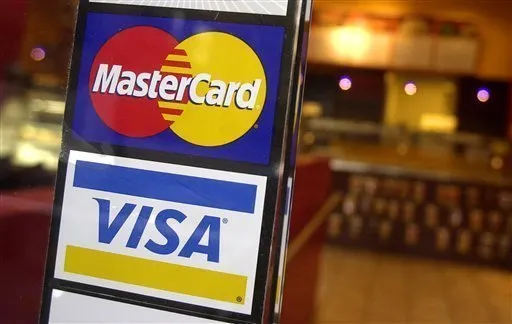
In a country as large and diverse as ours, families and businesses inevitably have different needs. Requiring that these needs be met by one set of solutions is misguided. Financial innovation has been, by and large, a positive force for consumers. It has provided more options, more flexibility, and the ability to customize solutions to fit individual needs. It wasn't too long ago that credit cards were rare. Today, they are everywhere, with terms and benefits as different as we are. If the CFPA had been around a few decades ago, we may not enjoy the convenience that comes with swiping a card.
The CFPA would also limit access to credit at a time when small businesses need it the most. Small banks, unlike their larger competitors, may find it difficult to comply with the deluge of new rules. They may also have trouble absorbing the fees that the CFPA would impose in order to finance itself. Instead of stimulating responsible lending, banks may be held hostage by the CFPA. Even for those entrepreneurs lucky enough to secure a loan under the new regime, the cost of borrowing would increase.
Creating the CFPA to deal with consumer finance issues makes about as much sense as dictating the sizes, flavors, and temperature of coffee because a few consumers spilled their beverages and were burned. We must protect consumers, but in a way that protects economic opportunity and consumer choice.
Learn more and take action at stopthecfpa.com
Charlotte Hilton Andersen: Want to Lose Weight? Lose the Debt
German researchers announced today that they found a significant link between people who are heavily in debt and people who are heavily overweight.
Grant Cardone: Consumer Spends When Value Exceeds Price
While the consumer is motivated to save money the desire to spend money runs deep in our culture.
Nathan Schneider: Recession Is Dangerously Good for the Arms Business
The more wages (and executive bonuses) come to hinge on the war business, the more war will seem like reasonable economic policy, and the less reluctance business leaders will have to wage it.
Dan Dorfman: Labor Losses Loom Larger, Not Smaller
There's an old Wall Street saying: Buy on the bad news! That's exactly what fired-up investors did on Friday.
Want to reply to a comment? Hint: Click "Reply" at the bottom of the comment; after being approved your comment will appear directly underneath the comment you replied to
Your scare tactics won't work this time Tom. The financial industry has screwed up so bad that they are loathed more than the government. Now take your medicine like a big boy.
U.S. Chamber of Commerce has no constructive role to play in trade or public affairs. It has proven itself to be one of America's greates enemies and obstacles to consumer rights and protections. A mouthpiece for Capitalist elites whose goal is to abolish unions, lower worker's wages, impoverish America, take away trade negotiations from public review and approval/rejection and injure American families.
According to LouDobbs.com the U.S. Chamber of Commerce repeatedly URGED American businesses to offshore American jobs to China arguing that they could take advantage of cheap disorganized labor, little to no worker protections, no environmental regulations, and put downward pressure on U.S. wages while hurting unions.
According to the BBC World Service, The U.S. Chamber of Commerce just lost its appeal to the Supreme Court about using E-Verify. The Chamber made a facade argument that it E-verify would discriminate against Americans getting jobs. In fact, there is less than 1/3 of 1% of all applicants whose credentials were misidentified.
We know, that the real motive of the Chamber is to encourage businesses to employee illegal aliens to exploit them as indentured servants, pay them subminimum wages under the table to evade taxes and earn higher profits for abusive bosses while discriminating against Americans, putting downward pressure on wages, redirecting blame to unions and injuring American familes.
The U.S. Chamber exists to justify rewarding unworthy Capitalist elites while punishing the workers who actually make America function.
You must be logged in to comment. Log in or connect with