Cross-posted from TomDispatch.com
It turns out that you don't want to be a former city dweller in rural parts of southernmost Australia, a stalk of wheat in China or Iraq, a soybean in Argentina, an almond or grape in northern California, a cow in Texas, or almost anything in parts of east Africa right now. Let me explain. As anyone who has turned on the prime-time TV news these last weeks knows, southeastern Australia has been burning up. It's already dry climate has been growing ever hotter. "The great drying," Australian environmental scientist Tim Flannery calls it. At its epicenter, Melbourne recorded its hottest day ever this month at a sweltering 115.5 degrees, while temperatures soared even higher in the surrounding countryside. After more than a decade of drought, followed by the lowest rainfall on record, the eucalyptus forests are now burning. To be exact, they are now pouring vast quantities of stored carbon dioxide, the greenhouse gas considered largely responsible for global warming, into the atmosphere. In fact, everything's been burning there. Huge sheets of flame, possibly aided and abetted by arsonists, tore through whole towns. More than 180 people are dead and thousands homeless. Flannery, who has written eloquently about global warming, drove through the fire belt, and reported:
"It was as if a great cremation had taken place... I was born in Victoria, and over five decades I've watched as the state has changed. The long, wet and cold winters that seemed insufferable to me as a boy vanished decades ago, and for the past 12 years a new, drier climate has established itself... I had not appreciated the difference a degree or two of extra heat and a dry soil can make to the ferocity of a fire. This fire was different from anything seen before."
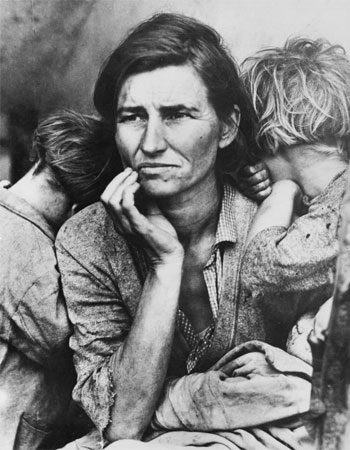
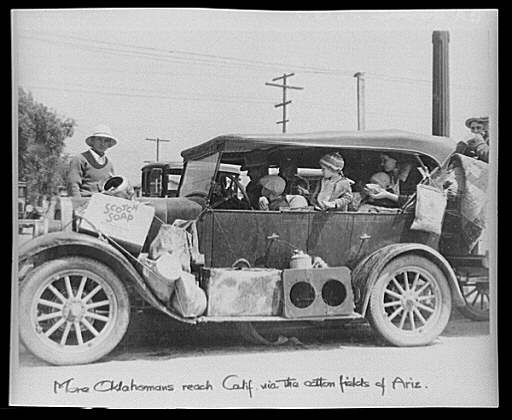
Australia, by the way, is a wheat-growing breadbasket for the world and its wheat crops have been hurt in recent years by continued drought. Meanwhile, central China is experiencing the worst drought in half a century. Temperatures have been unseasonably high and rainfall, in some areas, 80% below normal; more than half the country's provinces have been affected by drought, leaving millions of Chinese and their livestock without adequate access to water. In the region which raises 95% of the country's winter wheat, crop production has already been impaired and is in further danger without imminent rain. All of this represents a potential financial catastrophe for Chinese farmers at a moment when about 20 million migrant workers are estimated to have lost their jobs in the global economic meltdown. Many of those workers, who left the countryside for China's booming cities (and remitted parts of their paychecks to rural areas), may now be headed home jobless to potential disaster. A Wall Street Journal report concludes, "Some scientists warn China could face more frequent droughts as a result of global warming and changes in farming patterns." Globe-jumping to the Middle East, Iraq, which makes the news these days mainly for spectacular suicide bombings or the politics of American withdrawal, turns out to be another country in severe drought. Americans may think of Iraq as largely desert, but (as we were all taught in high school) the lands between the Tigris and Euphrates Rivers, the "fertile crescent," are considered the homeland of agriculture, not to speak of human civilization. Well, not so fertile these days, it seems. The worst drought in at least a decade and possibly a farming lifetime is expected to reduce wheat production by at least half; while the coutry's vast marshlands, once believed to be the location of the Garden of Eden, have been turned into endless expanses of baked mud. That region, purposely drained by dictator Saddam Hussein to tame rebellious "Marsh Arabs," is now experiencing the draining power of nature. Nor is Iraq's drought a localized event. Serious drought conditions extend across the Middle East, threatening to exacerbate local conflicts from Cyprus and Lebanon to Gaza, the West Bank, and Israel where this January was reported to have been the hottest and driest in 60 years. "With less than 2 months of winter left," Daniel Pedersen has written at the environmental website Green Prophet, "the region has received only 6%-50% of the annual average rainfall, with the desert areas getting 30% or less." Leaping continents, in Latin America, Argentina is experiencing "the most intense, prolonged and expensive drought in the past 50 years," according to Hugo Luis Biolcati, the president of the Argentine Rural Society. One of the world's largest grain exporters, it has already lost five billion dollars to the drought. Its soybeans -- the country is the third largest producer of them -- are wilting in the fields; its corn -- Argentina is the world's second largest producer -- and wheat crops are in trouble; and its famed grass-fed herds of cattle are dying -- 1.5 million head of them since October with no end in sight. Dust Bowl Economics In our own backyard, much of the state of Texas -- 97.4% to be exact -- is now gripped by drought, and parts of it by the worst drought in almost a century. According to the New York Times, "Winter wheat crops have failed. Ponds have dried up. Ranchers are spending heavily on hay and feed pellets to get their cattle through the winter. Some wonder if they will have to slaughter their herds come summer. Farmers say the soil is too dry for seeds to germinate and are considering not planting." Since 2004, in fact, the state has yoyo-ed between the extremities of flood and drought. Meanwhile, scientists predict that, as global warming strengthens, the American southwest, parts of which have struggled with varying levels of drought conditions for years, could fall into "a possibly permanent state of drought." We're talking potential future "dust bowl" here. A December 2008 U.S. Geological Survey report warns: "In the Southwest, for example, the models project a permanent drying by the mid-21st century that reaches the level of aridity seen in historical droughts, and a quarter of the projections may reach this level of aridity much earlier." And talking about drought gripping breadbasket regions, don't forget northern California which "produces 50 percent of the nation's fruits, nuts and vegetables, and a majority of [U.S.] salad, strawberries and premium wine grapes." Its agriculturally vital Central Valley, in particular, is in the third year of an already monumental drought in which the state has been forced to cut water deliveries to farms by up to 85%. Observers are predicting that it may prove to be the worst drought in the history of a region "already reeling from housing foreclosures, the credit crisis, and a plunge in construction and manufacturing jobs." January, normally California's wettest month, has been wretchedly dry and the snowpack in the northern Sierra Mountains, crucial to the state's water supplies and its agricultural health, is at less than half normal levels. Northern California, in fact, offers a glimpse of the havoc that the extreme weather conditions scientists associate with climate change could cause, especially when combined with other crises. In a Los Angeles Times interview, new Secretary of Energy Steven Chu offered an eye-popping warning (of a sort top government officials simply don't give) about what a global-warming future might hold in store for California, his home state. Interviewer Jim Tankersley summed up Chu's thoughts this way:
"California's farms and vineyards could vanish by the end of the century, and its major cities could be in jeopardy, if Americans do not act to slow the advance of global warming... In a worst case... up to 90% of the Sierra snowpack could disappear, all but eliminating a natural storage system for water vital to agriculture. 'I don't think the American public has gripped in its gut what could happen,' [Chu] said. 'We're looking at a scenario where there's no more agriculture in California.' And, he added, 'I don't actually see how they can keep their cities going' either."
As for East Africa and the Horn of Africa, under the pressure of rising temperatures, drought has become a tenacious long-term visitor. For East Africa, the drought years of 2005-2006 were particularly horrific and now Kenya, with the region's biggest economy, a country recently wracked by political disorder and ethnic violence, is experiencing crop failures. An estimated 10 million Kenyans may face hunger, even starvation, this year in the wake of a poor harvest, lack of rainfall, and rising food prices; if you include the drought-plagued Horn of Africa, 20 million people may be endangered, according to the International Federation of Red Cross and Red Crescent Societies. Recently, climatologist David Battisti and Rosamond Naylor, director of Stanford University's Program on Food Security and the Environment, published a study in Science magazine on the effect of extreme heat on crops. They concluded, based on recent climate models and a study of past extreme heat waves, that there was "a 90% chance that, by the end of the century, the coolest temperatures in the tropics during the crop growing season would exceed the hottest temperatures recorded between 1900 and 2006." According to the British Guardian, under such circumstances Battisti and Naylor believe "[h]alf of the world's population could face severe food shortages by the end of the century as rising temperatures take their toll on farmers' crops... Harvests of staple food crops such as rice and maize could fall by between 20% and 40% as a result of higher temperatures during the growing season in the tropics and subtropics." Not surprisingly, it's hard to imagine -- perhaps I mean swallow -- such an extreme world, and so most of us, the mainstream media included, don't bother to. That means certain potentially burning questions go not just unanswered but unasked. The Grapes of Wrath (Updated) Mind you, what you've read thus far represents an amateur's eye view of drought on our planet at this moment. It's hardly comprehensive. To give but one example, Afghanistan has only recently begun to emerge from an eight-year drought involving severe food shortages -- and, as journalist Christian Parenti writes, it would need another "five years worth of regular snowfall just to replenish its aquifers." Parenti adds: "As snow packs in the Himalayan and Hindu Kush ranges continue to recede, the rivers flowing from them will diminish and the economic situation in all of Central Asia will deteriorate badly." Nor is this piece meant to be authoritative, exactly because I know so relatively little. Think of it as a reflection of my own frustration with work not done elsewhere -- and, by the way, thank heavens for Google University. Yes, Googling leaves you on your own, can be time-consuming, and tends to lead to cul-de-sacs ("Nuggets end 17-year drought in Orlando"), but what would we do without it? Thanks to good ol' G.U., anyone can, for instance, check out the National Oceanic and Atmospheric Administration's Drought Information Center or its U.S. Drought Monitor, or the National Weather Service's Climate Prediction Center and begin a self-education. Now let me explain why I even bothered to write this piece. It's true that, if you're reading the mainstream press, each of the droughts mentioned above has gotten at least some attention, several of them a fair amount of attention (as well as some fine reporting), and the Australian fire storms have been headlines globally for weeks. The problem is that (the professional literature, the science magazines, and a few environmental websites and blogs aside) no one in the mainstream media seems to have thought to connect these dots or blots of aridity in any way. And yet it seems a no-brainer that mainstream reporters should be doing just that. After all, cumulatively these drought hotspots, places now experiencing record or near-record aridity, could be thought of as representing so many burning questions for our planet. And yet you can search far and wide without stumbling across a mainstream American overview of drought in our world at this moment. This seems, politely put, puzzling, especially at a time when University College London's Global Drought Monitor claims that 104 million people are now living under "exceptional drought conditions." Scientists generally agree that, as climate change accelerates throughout this century (and no matter what happens from here on in, nothing will evidently stop some form of acceleration), extreme weather of every sort, including drought, will become ever more the planetary norm. In fact, experts are suggesting that, as the Washington Post reported recently, "The pace of global warming is likely to be much faster than recent predictions, because industrial greenhouse gas emissions have increased more quickly than expected and higher temperatures are triggering self-reinforcing feedback mechanisms in global ecosystems." Now, no one can claim beyond all doubt that global warming is the cause of any specific drought, or certainly the only cause anyway. As with the Texas drought, a La Niña weather pattern in the Pacific is often mentioned as a key causal factor right now. But the crucial point is what the present can tell us about the impact of a global pattern of extreme weather, especially extreme drought, on what will surely be a more extreme planet in the relatively near future. If global temperatures are on the rise and more heat means lower crop yields, then you're talking about more Kenyas, and not just in Africa either. You're probably also talking about desperation, upheaval, resource conflicts, and mass out-migrations of populations, even -- if scientists are right -- from the American Southwest. (And in case you don't think such a thing can happen here, remember Steinbeck's The Grapes of Wrath or think of any of Dorothea Lange's iconic photos of the "Okies" fleeing the American dustbowl of the 1930s.) Burning Questions Right now, the global economic meltdown has massively depressed fuel prices (key to farming, processing, and transporting most crops to market) and commodity prices have generally fallen as well, including food prices. Whatever the future economic weather, however, that is not likely to last. So here's a burning question on my mind: We're now experiencing the extreme effects of economic bad "weather" in the wake of the near collapse of the global financial system. Nonetheless, from the White House to the media, speculation about "the road to recovery" is already underway. The stimulus package, for instance, had been dubbed the "recovery bill," aka the American Recovery and Reinvestment Act, and the question of when we'll hit bottom and when -- 2010, 2011, 2012 -- a real recovery will begin is certainly in the air. Recently, in a speech in Singapore, Dominique Strauss-Kahn, head of the International Monetary Fund, suggested that the "world's advanced economies" -- the U.S., Western Europe, and Japan -- were "already in depression," and the "worst cannot be ruled out." This got little attention here, but President Obama's comment at his first press conference that delay on his stimulus package could lead to a "lost decade," as in Japan in the 1990s (or, though it went unmentioned, the U.S. in the 1930s), made the headlines. If, indeed, this is "the big one," and does result in a "lost decade" or more, here's what I wonder: Could the sort of "recovery" that everyone assumes lies just over a recessive or depressive horizon not be there? What if our lost decade lasts long enough to meet an environmental crisis involving extreme weather -- drought and flood, hurricanes, typhoons, and fire storms of unprecedented magnitude -- possibly in some of the breadbasket regions of the planet? What will happen if the rising fuel prices likely to come with the beginning of any economic "recovery" were to meet the soaring food prices of environmental disaster? What kind of human tsunami might that result in? Once we start connecting some of today's drought dots, wouldn't it make sense to try to connect a few of the prospective dots as well? After all, if you begin to imagine what the worst might look like, you can also begin to think about what might be done to mitigate it. Isn't that more sensible than looking the other way? If the kinds of hits regional agriculture is now taking from record-setting drought became the future norm, wouldn't we then be bereft of our most reassuring formulations in bad times? For example, the president spoke at that press conference of our present moment as "the worst economic crisis since the Great Depression." On an extreme planet, no such comforting "since the..." would be available, nor would there be any historical road map for what was coming at us, not if we had already run out of history. Maybe the world we knew but scarce months ago is already, in some sense, long gone. What if, after a lost decade, we were to find ourselves living on another planet? Feel free, of course, to ignore my burning questions. After all, I'm only an amateur with the flimsiest of credentials from Google U. Still, I do keep wondering when the media pros will finally pitch in, and what they'll tell us is on that distant horizon, the one with the red glow. Tom Engelhardt, co-founder of the American Empire Project, runs the Nation Institute's TomDispatch.com. He is the author of The End of Victory Culture, a history of the American Age of Denial. He also edited The World According to TomDispatch: America in the New Age of Empire (Verso, 2008), a collection of some of the best pieces from his site and an alternative history of the mad Bush years. Copyright 2009 Tom Engelhardt