iPhone app iPad app Android phone app Android tablet app More

Featuring fresh takes and real-time analysis from HuffPost's signature lineup of contributors
Tony Schwartz

GET UPDATES FROM Tony Schwartz
 

The 90-Minute Solution: How Building in Periods of Renewal Can Change Your Work and Your Life (POLL) (VIDEO)

Posted: 05/18/10 09:42 AM ET

The only way to meet rising demand is to work longer hours, more continuously and stay connected 24/7.

Welcome to the crazy credo that many of us now live by, encouraged by the companies that employ us, in a world that's been wildly accelerated by technology.

It's also completely contrary to everything we know about what makes it possible for human beings to perform at the highest level.

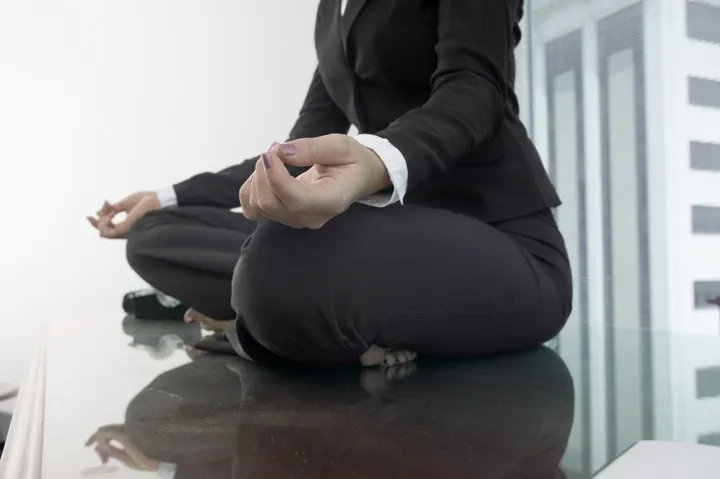
The human body is hard-wired to pulse. To operate at our best, we need to renew our energy at 90-minute intervals -- not just physically, but also mentally and emotionally.

When we build this rhythm into our lives, it changes everything.

Unfortunately, rest and renewal get no respect in the world we live in.

The modern model for success is to hunker down for long and continuous hours in front of a computer or at meeting, answer emails late into the night and work till we drop.

Consider some of the data from the poll we've been conducting over the past week at Huffington Post -- a poll you can take right here.


Among the 1000 or so respondents in the first week, more than 60 percent take 20 minutes or less for lunch, and 25 percent never leave their desk at all. Two-thirds fail to take at least some of their allotted vacation time and 25 percent leave at least a week's worth of vacation unused each year.

One third of poll respondents spend less than half an hour a day during the workweek completely disconnected from email.

But what are the costs of working so continuously? Do you work as well with your colleagues and clients, or think as clearly and creatively, or produce the same quality of work in the tenth or twelfth or fourteenth consecutive hour of a workday, as you do in the second or the fourth?

Of course not. And that's because human beings aren't wired to operate like computers.

More than 50 years ago, the pioneering sleep researcher Nathan Kleitman discovered something he named the "basic rest-activity cycle" -- the 90 minute periods at night during which we move progressively through five stages of sleep, from light to deep, and then out again.

Although it's much less well known, Kleitman also observed that our bodies operate by the same 90 minute rhythm during the day. When we're awake, the movement is from higher to lower alertness. Other researchers have called this our "ultradian rhythm."

When we need a rest, our bodies sends us clear signals such as fidgetiness, hunger, drowsiness, and loss of focus. But mostly, we override them.

Instead, we find artificial ways to pump up our energy: caffeine, foods high in sugar and simple carbohydrates, and, perhaps most interestingly, our body's own stress hormones -- adrenalin, noradrenalin and cortisol.

If we work at high intensity for more than 90 minutes, we begin to draw on these emergency reserves to keep us going. Effectively, that means we move from parasympathetic to sympathetic arousal -- a physiological state more commonly known as "fight or flight."

The problem is that many of us have become addicted to the adrenalin rush generated by our own stress hormones. Being wired 24/7 digitally also keeps us wired physically and emotionally.

We've convinced ourselves -- and we've been convinced by the cultures we work in -- that this is how we need to work to get it all done.

The problem is that more, bigger, faster generates value that is narrow, shallow, and short-term.

One consequence of relying on our stress hormones as a source of energy, for example, is that the prefrontal cortex begins to shut down in fight or flight. We become more reactive and less capable of thinking clearly, reflectively or imaginatively.

In his renowned 1993 study of young violinists, performance researcher Anders Ericsson found that the best ones all practiced the same way: in the morning, in three increments of no more than 90 minutes each, with a break between each one.

Ericcson discovered the same pattern among other musicians, athletes, chess players and writers.

For the first several books I wrote, I often sat at my desk for up to 10 or even 12 hours at a time. I never finished one in less than a year.

For my new book, The Way We're Working Isn't Working, I wrote without interruptions for three 90-minute periods, and took a break between each one. I had breakfast after the first session, went for a run after the second, and had lunch after the third.

I wrote no more than four and a half hours a day, and finished the book in less than 6 months. By limiting each writing cycle to 90 minutes and building in periods of renewal, I was able to focus far more intensely and get more done in far less time.

The counterintuitive secret to sustainable great performance is to live like a sprinter. In practice, that means working at your highest intensity in the mornings, for no more than 90 minutes at a time, and then taking a break.

Don't default to victim mode and tell yourself your company won't let you do it. Build at least one period of uninterrupted focus each day for 60 to 90 minutes and see how much more you get done.

Then start taking at least two or three short renewal breaks throughout the day. You can get a remarkable amount of renewal in just a short time. Try this technique.


Make these small changes in your life and you'll see what happens not just to your satisfaction and your sustainability, but also to your productivity and performance.

Then, let me know below how it makes you feel.


Follow Tony Schwartz on Twitter: www.twitter.com/TonySchwartz

The only way to meet rising demand is to work longer hours, more continuously and stay connected 24/7. Welcome to the crazy credo that many of us now live by, encouraged by the companies that empl...
 
 
  • Comments
  • 50
  • Pending Comments
  • 0
  • View FAQ
Comments are closed for this entry
View All
Favorites
Bloggers
Recency  | 
Popularity
Page: 1 2 3  Next ›  Last »  (3 total)
photo
rackerly
author geniusinchildren
05:50 AM on 05/22/2010
Changing pace in the middle of a lesson is also a good educational technique. http://rickackerly.com/2010/05/19/learning-disabilities-diagnosing-what-is-wrong-or-discovering-what-works/
photo
HUFFPOST SUPER USER
Geoffrey Cunningham
07:45 PM on 05/21/2010
I just came back to this post after three days of doing it the way you said. I'm an artist and a graphic designer who suffers from work addiction, procrastination, over focus, lack of focus... you name it. I have struggled with it all. I just want to thank you. The amount of work and the quality of work and the energy, balance, and focus i feel after three days is amazing. I've been setting the timer on the iPhone for 90 minutes. I've been working, eating, surfing, golfing, and actually seeing and loving my wife... and getting it done for three days! Thank you, thank you, thank you! I've been knowing i needed to figure out something that works and I feel like you have given me the answer. Much love to you!
HUFFPOST SUPER USER
Con Heartist
03:13 PM on 05/19/2010
Breathing like this saved my life! During a very intense period in my life I was a mess, couldn't sleep, eat or enjoy anything. I actually had visions of killing myself and my husband to 'save' him from any embarrassment I might have caused ... whoa ... heavy. Fortunately this didn't last long ... just a few weeks because I knew I needed 'something' to help me. My 'medical' doctor wanted me on heavy duty drugs but I resisted and found a wonderful acupuncturist and chinese herb doctor who sat me down, touched me and taught me how to breath for the first time in my life. Now I breath anywhere I want anytime I want and it centers me immediately. I'm a breathing fool and I tell anyone who will listen to me about this miracle of life ... breathing ... really breathing! I urge you all to try it and keep it up.
02:59 PM on 05/19/2010
Years ago my father gave me 2 pieces of advice regarding work,
1. Always give a man 8 hours work for 8 hours pay.
2. Do something you like and you will always make a living
02:24 PM on 05/19/2010
Thanks Tony for your relevant and insightful comments on how we work and and how we can collectively learn to work much better. How do you think your observations and skills apply to our political leaders, notoriously known for burning the candle at both ends? I ask this question because I would argue that we partly model our behaviors on the example they set for society.
photo
HUFFPOST SUPER USER
Poorsarah
02:07 AM on 05/19/2010
The three circle standing qigong works well for me...I learned the intricacies of this particular qigong from training tapes by Erle Montaigue.
11:29 PM on 05/18/2010
I taught a college course years ago on mental health and the thinking process. We explored the ramifications of both positive and negative thinking (there are + and - consequences for each). It's not true that positive is always good and negative is always bad. The desired upshot is to seek a form of "realistic thinking" (not "positive" thinking) in which a person sorts out distortions to get relevant data as accurate as possible, and then gauges his/her probes into the world based upon realistic assumptions and a willingness to consider statistical chances of success/progress (rather than perfectionism). People can learn to better see where they are in the big game of life...effort, chance and consequences.
05:42 PM on 05/19/2010
"Its not true that...." You didn't go very far into it if you still believe there is a right way and a wrong way. Black and white thinking is a little too common amongst Americans. There's so much more beyond it.
Califishing
I work smart
10:38 PM on 05/18/2010
In Nov. in Cali. it's going to be puff, puff give..
schatsie
Wall Street is Worse than Vegas
08:53 PM on 05/18/2010
and that is exactly why the French have had greater productivity gains than the US in recent years....they actually take an hour for lunch, they actually have 6 weeks of vacation and they do not have the financial stress of a healthcare system that is overly expensive and under efficient....
08:18 PM on 05/18/2010
Pranayam (the art of breathing and healing) from Yoga has been repackaged and presented as 'the energy project'....nothing can be more genuine than this........
08:05 PM on 05/18/2010
When will the American way of work ever acknowledge the importance of rejuvenation? Catnaps and siestas and shorter work days create MORE production and happier, more dedicated employees.

But no, The Man has to require 8-12 solid hours of uninterrupted (breaks? please) labor, whether white or blue collar, because no one trusts that a person is able to regulate him or herself to execute what is expected of them. It's pathetic.

We are WORN OUT.
HUFFPOST SUPER USER
HillbillyBob
02:24 PM on 05/19/2010
As stated in the article..worn out less creative thinking or critical thinking?
photo
HUFFPOST SUPER USER
wtchyldy
07:53 PM on 05/18/2010
This is easier to do when you work at home - almost impossible in an office setting - unless the office routine was based in this cycle. I don't see that happening any time soon.
BTW: Computers, etc were supposed to increase our leisure time but what they've done is make higher expectations for production and make it 24/7/365.
07:50 PM on 05/18/2010
For those interested in breathing based relaxation/rejuvenation following programs are also good:
Art of living : Sudarshan kriya ( www.artofliving.org ) &
Isha foundation: Shambhavi kriya (http://www.ishafoundation.org)
photo
redsongia
is not Chicago
05:11 PM on 05/18/2010
It sounds smart. But when I go to yoga in the middle of the day, invariably, I'm so nice and relaxed I don't do anything at work for 2-3 hours and wind up staying till 11pm on yoga days to make up for it.
photo
HUFFPOST SUPER USER
Wendy Chambers
04:54 PM on 05/18/2010
when you leave this earth people wont talk about how long you sat at your desk or how much money you made and in less then a 100 years noone one will care anyways - take the time out to just BE and feel your lifefrorce, yes we all have to work to some degree but dont forget about down time, its good for the soul.