iPhone app iPad app Android phone app Android tablet app More

Featuring fresh takes and real-time analysis from HuffPost's signature lineup of contributors
Vamsee Juluri

Vamsee Juluri

Posted: December 17, 2008 11:26 AM

How the West Lost Us: A Critique of Media Coverage of the Mumbai Attacks

What's Your Reaction?

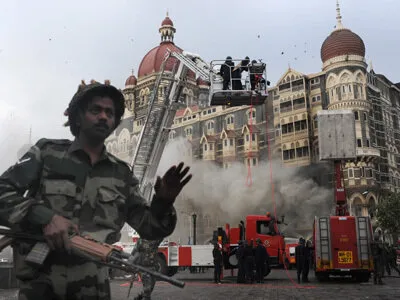
It started with what, in my view, was an inappropriate preposition. In the end, what Mumbai ended up looking like to viewers and readers in the West was something far removed from the magnitude of its loss, and from the realities of fact and perspective. From the first hours of the attack on the morning (Pacific Time) of Wednesday, November 26, until the siege ended, American television channels like CNN covered the attacks live. It was Thanksgiving holiday, and "Terror in Mumbai" became the background in innumerable homes that might have had their televisions on in between meals or naps. It was also on in homes where something like outrage was being felt, at the brazenness of the attacks, and at the vested ignorance tainting its coverage.

"Terror in Mumbai." The emphasis on "in" is not mine nor is it to make a point. That is how CNN presented its headline throughout the event. In the following days, even as the networks moved slowly back to their usual Thanksgivingish menu of inspirational and heartwarming stories, the follow-up reports all came back under the same headline. It was used on the local news stations in the Bay Area, and in time, even The Economist went with the same words on its cover. Normally, especially in the face of a tragedy of such proportions, one would not bother to fault the media for its choice of words. But the decision to frame the event as "Terror in Mumbai" rather than an "Attack on Mumbai" was not an isolated one. It was merely one part of the broader view with which the media approached it. Nor was it inconsequential. After all, within minutes of the events of 9/11/2001, the American media were calling it an attack "on" America and comparing it to Pearl Harbor, rather than a more recent act of terrorism, the Oklahoma bombing. If the American media rushed to internationalize 9/11, they seemed to be in an equal hurry in the case of 26/11 (as we would call it in India ) to domesticize it, as if "terror" is something that happens regularly in India, like water problems, or sly airport touts. It was this prejudice that provided the locus for all else that emanated, from the awkward platitudes of inexperienced anchors filling airtime to even the more erudite writings of experts and commentators.

In the first few hours of coverage, the domestication of the attacks unfolded almost silently, by virtue of the fact that much of the concern seemed to be about the foreign nationals who were reportedly being targeted (see some of the comments posted on this website for SAJA, the South Asian Journalists Association). To a less attentive viewer, it might have well seemed as if the whole drama was about terrorists "in" India attacking hapless Western tourists. Although some efforts were made in time to address the fact that most of the victims were indeed Indian, those efforts seemed lost in a deeper inertia that seemed to preclude the naming of victims as "Indian," or indeed, the attacks as "on" Mumbai, if not "on" India. Such a step would of course have implied that the media had started to seriously address what was already well established as the likely nationality of the attackers. Instead, there seemed to be something like reluctance in the actions of some of the correspondents. In one of the earliest mentions of the sea-route taken by the attackers, a reporter virtually cried out three times (or perhaps even four) that what she was reporting about the Karachi angle was only an Indian official's accusation. Nothing more. The same sort of journalistic delicacy was also poured on to higher government echelons when a "Counterterrorism Expert" on a news channel wondered if Prime Minister Manmohan Singh was having a "knee-jerk reaction" when he mentioned "outsiders."

Naturally, no one would like to see unsubstantiated allegations of such a grave sort reported as fact in the international news media in the middle of an unfolding attack of such unprecedented proportions. But all this hesitation was leading to something which in retrospect Christopher Hitchens would call a "disingenuous failure to state the obvious." Unfortunately though, it wasn't just the silence which was troubling. Even before the siege was formally ended, even as speculation and scrutiny grew, a rather strong group of voices converged in the international press on to what they saw as the obvious issue here: India.

In one of the first stories about the possible nationality of the attackers, the New York Times quoted one such expert, ironically named Ms. Fair, who insisted that "this is a domestic issue" and that it is "not India's 9/11." Interestingly, the same article also got its geography grossly mixed up, reporting that "Deccan" (part of the name that a group claiming responsibility used) was a neighborhood in my Hyderabad ! And with erroneous geography, a history goof-up couldn't be far behind either. An article in the Telegraph asserted that Kashmir was gifted to India by the departing British. Perhaps geography and history weren't exactly high on the media's criteria for analyzing the event. After all, most of the experts being quoted were of neither academic persuasion. Instead, we saw mostly security and counter-terrorism experts, including one on television who had dealt with a hotel hostage crisis, somewhere in the United States, sometime long ago.

Trivialities aside, it seemed that the attacks on Mumbai were largely destined to be seen here as a part of "India's increasingly violent history," as the title of an article in the Independent, here, put it. As the days passed, that perception was somewhat complicated, but also, sadly, not really contested, by some of the op-ed pieces that followed in the august pages of the New York Times and elsewhere. Amitav Ghosh, Pankaj Mishra, and Suketu Mehta wrote op-eds which invoked in their opening paragraphs, respectively, the following: a BJP leader's attempts to label the attacks as India's 9/11, the attackers' phone calls condemning injustices in Kashmir and Ayodhya, and that "something" about Mumbai that "appalls religious extremists, Hindu and Muslim alike." In a similar vein, the Los Angeles Times published two op-eds in response to the attacks. Martha Nussbaum's piece acknowledged that the attackers may have come from outside India , but leaps off from that into a critique of what she calls "Indian terrorism." I do not believe she used the term "Pakistani terrorism" anywhere there. Another op-ed in the L.A. Times by Asra Nomani expresses her sorrow while reading a newspaper report on poverty among Indian Muslims while residing in, and this seems to be being said without irony, "Room 721 of the Taj Mahal Palace and Tower Hotel."

The irony, it seems, is all elsewhere. All the New York Times op-eds which seem to turn a critical eye on Pakistan were written by non South-Asians, like William Kristol and Thomas Friedman. I don't find this ironic in a simply nationalistic sense though. I find the irony in the fact that even progressive critiques sometimes end up with the same effect as mainstream prejudices when not made in the right time and place.

I think that the Western media has persisted for far too long with a framework of reporting that is disconnected from reality, and this showed all too sadly in its approach to Mumbai. It continues an old imperialism, unreflectively enjoying its discursive overlordship over South Asia by presenting India and Pakistan as "rivals," as if that is what a billion and a half people think of all the time. It continues a selfish cold-war era framework of false moral equivalence between India and Pakistan, reporting that the countries have fought four wars without once naming an aggressor, chirpily discounting every Indian grievance with a clever Pakistani government retort (see this piece in Times of India). And it grants a voice it seems, to only one sort of South Asian and South Asianist opinion: one that finds fault in India, even when at least one cause lies elsewhere.

This piece was first published on The Hoot.


It started with what, in my view, was an inappropriate preposition. In the end, what Mumbai ended up looking like to viewers and readers in the West was something far removed from the magnitude of its...
 
 
  • Comments
  • 14
  • Pending Comments
  • 0
  • View FAQ
Comments are closed for this entry
View All
Favorites
Recency  | 
Popularity
photo
tathagat
appa DeepO bhava
02:09 PM on 12/19/2008
The concept of second-hand terrorism, as espoused by Pollard and Houghton, is a thought provoking argument. I would assert that this phenomenon is far more prevalent than their article would lead one to believe. Houghton and Pollard refer to "intrusive reportage" as the point of culpability where journalists become "second-hand" terrorists. They assert that "intrusive reportage" occurs when a "reporter ceases passive observation of an incident and becomes part of its dynamic." It can be argued that this point of culpability is irrelevant due to the fact that any reporting of terrorism qualifies as "intrusive reportage". Terrorism is one of the few phenomena for which any media coverage serves to alter the dynamic of the situation.
photo
tathagat
appa DeepO bhava
02:05 PM on 12/19/2008
None of the media outlet mentioned how ATS - the Maharaashtra state anti terror squad was accused of framing right wing hindu fundamentalist. From Samjhauta Express train bombing, Malegaon to various bombings against the Muslims... leader of opposition raising the issue in election rallies... Hemant Karkare the ATS chief was killed along with other two top cops...

The Indian public and the world was being fooled as India presented a list of 20 persons and pressuring Pakistan to hand them over to India or face military action... while India doesn't have an extradition treaty signed with Pakistan.

Samjhauta Express bombings were not even properly investigated... slained ATS chief Hemant Karkare’s probe into Malegaon blast had exposed the face of Hindutva terrorism. Sadhvi Pragya Singh Thakur, Lt Colonel Shrikant Prasad... closely linked with Indian right wing fundamentalist organization... neither right wing prime ministerial hopeful who led a lumpen mob in 1992 and demolished a historic mosque, more than 3000 dead in the aftermath... and law not taking any friggin' course... and 16 years on that crime still unpunished.

http://en.wikipedia.org/wiki/2007_Samjhauta_Express_bombings
http://twocircles.net/2008dec17/who_killed_karkare_muslim_leaders_support_antulay_s_views.html
09:56 PM on 12/18/2008
After a series of skewed and hollow articles by other Indians, it felt great to read this genuine, insightful, and well researched article. Thank you.

I completely agree with you. BBC also never used the word “terrorists” but kept referring them as gunmen. Even the Indian channels covered these attacks as if they were reality show. By live coverage, they fed the terrorists every move the commandos made, in detail, whereas the poor commandos had no clue on the terrorists. TOI website boasted of how nine million people accessed their website right below the headline of Taj will be declared safe only after all the rooms are searched.

I agree with nc44 about the Indians writing the op-eds. Their articles definitely are skewed, using nc44’s words, “to adopt the themes and biases of the coverage of the host venue.” For example: Arundhati Roy’s article.
09:04 PM on 12/18/2008
Wow. I don't think anyone could have said it better.Thank you.

You missed out FoxNews running Lanny Davis' "Don't buy into the Pakistan Innuendo" article while making no effort to point his past and current lobbyist relationship with Pakistan.

Or the fact Pakistan spend millions on three DC area outfits for lobbying/media and that you always see their officials get primetime pulpits spinning their stories.

Right now, since no one cares about Mumbai anymore. Zadari is actually claiming vociferously that there is no Pakistani link and that Kasab isn't from Pakistan. I wonder how long can we afford to not call them out their denial or cowardly deceit to wage a proxy war against Democratic India.
11:43 AM on 12/18/2008
The so called experts giving their opinions on various American Channels during the Mumbai attacks know nothing about the background, history or even the demography. It was just painful to watch their inability to comprehend whats going on...... Unfortunately - this is how news is and will be -
If one american or brit dies - its news.... and its news only when 50 or more africans die... its just as simple as that... I dont expect the American channels and their experts to know every issue in every corner of the world... it just isnt possible... but what is possible is - at least on days like these - its better to invite people who actually know about the issue so they can discuss and let the people know more about the real problem....
10:47 AM on 12/18/2008
Perhaps India can learn a lesson from the experience of the U.S. here. We were attacked on 9/11 by a terrorist group, the world grieved with us, and we immediately turned it into a political opportunity to start a war for greed to the benefit of rich war profiteers. We also used our histeria to create a concept of anyone who is not for us is a terrorist, and eligible for extermination or worse. This helped us justify fighting against those who opposed our plans for a global economy controlled by people in power, and policed by the American military. I am sure India does not plan anything like this, but it might be worth some study before responding. You should probably figure out your response quickly, because if you don't America might try to figure out your response for you. It's what we do.
12:26 PM on 12/18/2008
Trust us Indians to learn lessons from the stupidity and the short sighted selfishness of American alleged leadership during 9/11.

One should not forget that for Israelis - and there were more than 5 Israelis killed - it is not "an eye for an eye" but "20 eyes for each pair"!

And there is a fair measure of under the surface co-operation between Indian and Israeli governments.

Saying anything more would be detrimental to what is being planned.
01:31 PM on 12/18/2008
Very well written.
09:40 AM on 12/18/2008
You dont seem to understand....The september 11 attacks were much different than the mumbai attacks. Over 3000 people died within minutes on september 11, 2 of the worlds tallest buildings came crashing to the ground, one the largest buildings in terms of sqft, the pentagon was attacked as well. What happend in mumbai was awful, but not nearly as deadly as september 11...You want the Americans to drop what they were doing, on a very busy holiday, one of the main 3 holidays in america, because of a stand off in Mumbai, at a luxury resort that was a symbol of white british dominance until it eventually allowed Indians the right to stay there? While we know many indians died, a shocking part about the terrorists was the picking out of the americans and the british, and the jews. India has its full right to do what it wishes with pakistan.....But your pissed about how the situation was labeled in america?

It wasnt indias 9/11....hundreds of people die in countries everyday because of terrorists...iraq, most of africa, etc....I understand that india is a much more industrial nation, but its location to such terrorism doesnt shock america, when they indeed have terrorists. If you would like to call it a mini 9/11 then go ahead...it was planned, operated and caused terror among the indian people...but to put it on the same level as 9/11 is crazy.
This user has chosen to opt out of the Badges program
03:32 PM on 12/18/2008
Say what does the sky look like from that well you are in? This encapsulates perfectly the self-absorbed disconnectedness from reality of much of the American public ... and the media. It is the notion of American exceptionalism taken to the extreme. Everything about us is unique and different. Even our terrorist attacks are better than yours! 911 isn't some sort of gold standard by which every other terrorist attack has to be measured (and subsequently dismissed).

Who cares if this was India's "9/11". It was a major attack and the coverage in the US media was perversely focused rather too much on blaming the victim. I don't recall the same sort of navel gazing accompanying the coverage of 9/11, or the London or Madrid events. If you had stopped to think, you might have realized that these events, and Mumbai, are rather interconnected. But thinking before speaking might ruin your "busy holidays".

Oh and the fact is that the highest casualty was at the train station. The fact that you seem to think this was exclusively an attack on a luxury resort betrays your ignorance (and indicts the media coverage).

For what it's worth the Taj was apparently built by a nationalistic Indian businessman as a symbol of Indian defiance to British rule. So much for the "symbol of white British dominance"!
HUFFPOST SUPER USER
ndem
05:57 AM on 12/18/2008
It made me feel the same way I felt when I saw the cover of Pakistania "terrorist" on the cover of ewsweek last year...media maniulation...then I met a photojournalist who knew the person who took the cover photo...and the photographer who had been first sent to take the cover photo who came back to Newsweek from pakistan and they said his photos were not "scary" enough so sent over someone else!!!! Propoganda to create war between Indie and Pakistan
photo
HUFFPOST SUPER USER
Buddysingh
Liberal Democrat
02:36 AM on 12/18/2008
I was appalled by the news quality both International and domestic during the attack on Bombay. What I found even more appalling lack of response of the Indian news to the various inaccuracies in the international media. The Indian authorities did not do themselves proud either. 10 hours to get the commandos to reach the attack site was sickening to watch. With almost over 7500 people killed in attacks - this is no way to be prepared to handle the terrorism within India. This Govt. should have fallen within 5 days. But guess what - they still managed to win elections in 3 states.
photo
SamEllison
I feel so clean!
01:58 AM on 12/18/2008
Not many people watch CNN and please don't judge me by Thomas Friedman.
And Kristol seems to be the token white guy.
This user has chosen to opt out of the Badges program
12:26 AM on 12/18/2008
I couldn't agree more with your take on the media coverage. It was appalling to watch the various "experts" attempting to ascribe motives to the terrorists from the very outset. And these all seemed to circle back to point toward "internal" Indian causes to sort of vaguely justify it. It is interesting to note that in other parallel cases of terrorist incidents overseas (London/Madrid) the focus was very much on the horror of the event and not psychoanalysis of the perpetrators. Ironically both those cases eventually turned out to be much more homegrown than the Mumbai attacks.

The disparity between the opinion pieces by south-asian and non-south-asian writers is even more apparent when this article by Patrick French in NYT http://www.nytimes.com/2008/12/08/opinion/08french.html is compared to the one by Arundhati Roy in these very pages.
What is common among these Indians who are handed out op-ed page real-estate? They all write novels, in English. And their books are barely read in India! Almost their entire clientele consists of folks who get much of their news (and opinion) from the New York Times. It is not at all surprising that their articles skew to adopt the themes and biases of the coverage of the host venue. In fact the reason they are barely read in India is because their books are similarly written mostly to cater to the very same audience. They hardly speak for most "South Asians".