iPhone app iPad app Android phone app Android tablet app More

Featuring fresh takes and real-time analysis from HuffPost's signature lineup of contributors
Varla Ventura

GET UPDATES FROM Varla Ventura
 

A Blue Moon for Armstrong and Other Lunar Facts

Posted: 08/27/2012 4:58 pm

With the recent passing of Neil Armstrong, many of us have looked to the night sky in his memory. Armstrong, who commanded the Apollo 11 moon landing on July 20, 1969, was born in Wapakoneta, in western Ohio. Along with other pioneering astronauts, he changed the way we look at moon and what we know about the mysterious orb. Though you may not be able to attend Armstrong's official memorial, you can have your own for him this month: on August 31, a Blue Moon will occur. The perfect time to honor the first man on the moon!

Here are some facts about the moon to get you in the mood for some serious midnight gazing:

  • It takes 29 days, 12 hours, 44 minutes and 3 seconds for the moon to go through all of its phases, from one full moon to the next. This time period is close to the length of a month -- which is why the word "month" is derived from the Old English word for "moon."
  • The light that comes from the moon is sunlight reflected off the moon's surface. It takes 11/4 seconds for the light to travel to earth. The moon only reflects 7 percent of the light it receives from the sun.
  • The moon is 2,160 miles in diameter -- about a quarter of the earth's diameter. If the earth were as big as a fist, the moon would be the size of a stamp -- placed ten feet away.
  • The average temperature on the moon is minus 283 degrees to minus 266 degrees Fahrenheit.
  • Since the moon spins once on its axis every 271/3 days -- the same amount of time it takes to go around the earth once -- we end up seeing only one side of the moon (about 59 percent of its surface).
  • The moon is smaller than any planet in the solar system, but relative to the size of the planets they orbit, our moon is the largest of any planet's moons.
  • Saturn has thirty moons -- far more than any other planet. It has so many that half of them have numbers for names: Pan, Atlas, Prometheus, Pandora, Epimetheus, Janus, Mimas, Enceladus, Tethys, Telesto, Calypso, Dione, Helene, Rhea, Titan, Hyperion, Iapetus, Phoebe, S/2000 S 1, S/2000 S 2, S/2000 S 3, S/2000 S 4, S/2000 S 5, S/2000 S 6, S/2000 S 7, S/2000 S 8, S/2000 S9, S/2000 S 10, S/2000 S 11, and S/2000 S 12.
  • There is no sound on the moon. Nor is there weather, wind, clouds or colors at sunrise and sunset.
  • If you weigh 120 pounds on earth, you would weigh 20 pounds -- or 1/6 of your earth weight -- on the moon.
  • A 3-foot jump on earth would carry you 18 feet, 9 inches on the moon!
  • The moon is moving away from the earth at a rate of about 1/8 inch a year.
  • Astronauts have brought over 843 pounds of moon samples back to earth.

Thanks, Neil Armstrong, for inspiring generations and nations, and for showing us a different side of the moon.

 

Follow Varla Ventura on Twitter: www.twitter.com/@VarlaVentura

FOLLOW WEIRD NEWS
With the recent passing of Neil Armstrong, many of us have looked to the night sky in his memory. Armstrong, who commanded the Apollo 11 moon landing on July 20, 1969, was born in Wapakoneta, in weste...
 
 
  • Comments
  • 7
  • Pending Comments
  • 0
  • View FAQ
Comments are closed for this entry
View All
Bloggers
Recency  | 
Popularity
This user has chosen to opt out of the Badges program
photo
Marysdude
GySgt USMC (Retired)
10:19 PM on 09/12/2012
From the article: "The average temperature on the moon is minus 283 degrees to minus 266 degrees Fahrenheit."

I think that when you say 'average', it precludes two numbers. In this case the average is either -283 or -266 or an average of those two figures or none of the above, but it ain't what they said.
03:01 AM on 09/14/2012
Lots of inaccuracies in this article. At night the average temperature is about -243F but during the daytime it's a scalding +227F. Also, Jupiter has more identifiable satellites than Saturn: 67 to Saturn's 62. And it takes 1 1/4 second (one and a quarter second) for lunar light to hit the Earth, not 11/4 seconds. Those two fractions are not the same at all.
01:07 AM on 09/23/2012
i noticed that, also. did the math, average would be -274.5 degrees. just sayin'.
photo
HUFFPOST BLOGGER
R.W. Sanders
Numerous questions, too little expertise
11:01 PM on 08/29/2012
I've long admired Armstrong for being his own person and turning his back on sure fame and riches because he knew his own mind would not accommodate such a life. He's now on the ultimate cosmic journey, and I will remember him Friday night, and others as well. R.I.P. Neil.
10:50 AM on 08/28/2012
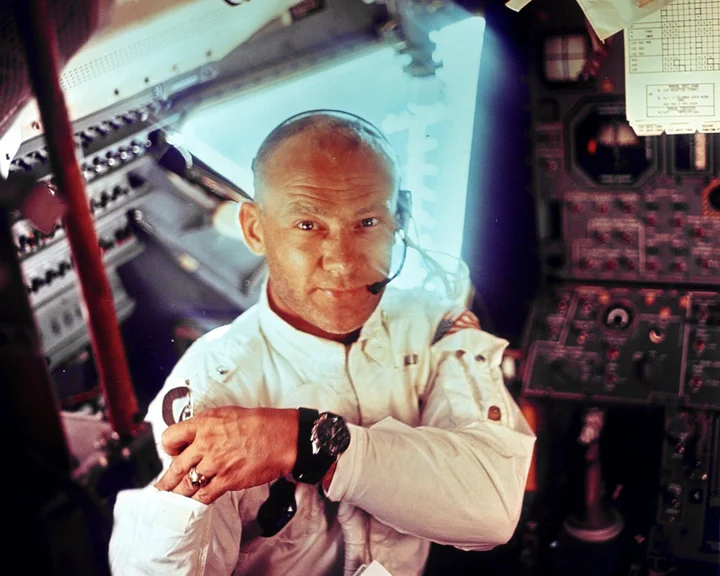
That's a picture of Buzz Aldrin.
photo
HUFFPOST SUPER USER
Daniela Burbage
Humor it does a body good
12:18 AM on 08/28/2012
With the saying once in a Blue Moon....it comes every 2-3 years. Nice bit of trivia :)
05:30 PM on 08/27/2012
Here is what you do Varla,walk around a central object with an outstretched arm constantly pointing at the center and you will be imitating the moon's circuit of the Earth and you will discover that the moon doesn't spin.If the moon turned once we would see all sides once over the course of its circuit of the Earth,if it turned twice for one lunar circuit we would see all sides twice and if it only turned 1/2 a time for each circuit we would see all sides once over two orbital circuits - this is called common sense.

If this makes sense to you then ask any question you want,I am an astronomer in a world where there aren't really any.