
NYR More

Featuring fresh takes and real-time analysis from HuffPost's signature lineup of contributors
Victor Stenger

Victor Stenger

Posted: November 1, 2010 04:25 PM

The Grand Accident

What's Your Reaction:

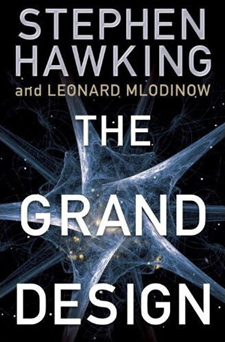
2010-11-02-the_grand_design_cover.jpgThe Grand Design
By Stephen Hawking and Leonard Mlodinow
Bantam, 2010.
To appear in Free Inquiry.

Stephen Hawking is no doubt the most celebrated scientist in the world. Deservedly so, since he has for decades made outstanding contributions to physics and cosmology while suffering from amyotropic lateral sclerosis that leaves him almost completely paralyzed. In 1988 he published a popular book, A Brief History of Time, that was a blockbuster bestseller -- although wags questioned how many of the copies sold were actually read.

The same comment is likely to be made about his recent contribution, The Grand Design, written with Caltech physicist Leonard Mlodinow. Both books are extremely well written at the lowest possible technical level. But like so much that is written by scientists for a general audience, a certain minimum scientific literacy is necessary to get any inkling of what the authors are saying.

The result with Hawking's books, given their great exposure, is a media emphasis on what they say about non-scientific issues, in particular, religion. In Brief History, Hawking stirred the pot by referring to God in many places. In his final paragraph of that book he talks about someday discovering a complete theory that tells us why it is that we and the universe exist. His concluding sentence: "If we ever find the answer to that, it would be the ultimate triumph of human reason -- for then we would know the mind of God."

Of course this was interpreted as meaning that Hawking believed in God. But he was being misunderstood the way Einstein was frequently misunderstood when he mentioned "God" in his utterances. Both asserted their nonbelief in a personal God in no uncertain terms and were simply using the word "God" in the Spinozian sense as a name for the order if the universe. In fact, in the Introduction to Brief History, Carl Sagan explicitly summarized Hawking's main proposal: "A universe with no edge in space, no beginning or end in time, and nothing for a creator to do." This refers to a model for the origin of the universe called the no-boundary model Hawking published in 1983 along with James Hartle. The new book is not just a typical gee-whiz recitation of recent developments but a profound proposal for the nature of reality that turns on its head the conventional view of how physics operates. Philosophers of science will give it a lot more attention than scientists.

The authors have learned the lesson not to mention "God" too often, but the media nevertheless have jumped on their final conclusion: "Spontaneous creation is the reason there is something rather than nothing, why the universe exists, why we exist. It is not necessary to invoke God to light the blue touch paper and set the universe going." (180)

The Grand Design is an unfortunately misleading title, probably chosen by the publisher, as many titles are, with an eye toward selling the most books. People will read into this title the implication that there is still "something out there," some supernatural force that is behind everything. This is a common belief today among the many who are abandoning organized religion but are finding it difficult to accept the strict materialism implicit in atheism. But it is materialism all the way down. The book should have been called The Grand Accident, because that's what "spontaneous" refers to -- an uncaused accident.

Hawking and Mlodinow begin by informing us, "philosophy is dead," that it has not kept up with modern developments in science, particularly physics, and that scientists "have become the bearers of the torch of discovery in our quest for knowledge." (180)

For centuries, the message of science has been that all knowledge of the world is obtained through direct observation. The revolutionary theory of quantum mechanics developed in the last century clashed with everyday experience but has proved enormously successful, passing with flying colors the many stringent laboratory tests to which it has been subjected for almost a hundred years. However, no agreement has ever been reached on what the quantum models inform us about the true nature of reality. This is by contrast to classical Newtonian physics, where no one doubts that an apple and the moon are real. Hawking and Mlodinow conclude: "There is no picture of theory-independent concept of reality." (42) They call this view model-dependent reality.

This is not as world-shaking as it seems if you give philosophers some credit. Most physicists still hold a naïve realistic view of their theories in which not only apples and the moon are real, but so are electromagnetic fields and quantum wave functions. But, despite the disdain of Hawking and Mlodinow, philosophers have been telling physicists (to deaf ears) for years that all observations are "theory laden." Indeed, centuries ago Immanuel Kant pointed out that every human concept is based on observations that are operated on by the mind so that we have no access to a mind-independent reality. All we do in physics is make observations and formulate mathematical models based in these observations that can be used to predict future observations. These models are not arbitrary -- they have to fit the data -- but we have no reason to believe that their ingredients such as space, time, mass, and energy exist in one-to-one correspondence with the elements of reality. Hawking and Mlodinow say, "It is pointless to ask whether a model is real, only whether it agrees with observations."

The authors express their preference, as do many contemporary physicists, for the quantum model proposed by physicist Richard Feynman (while still a graduate student at Princeton in the 1940s) that they refer to as "alternative histories." Actually, a better term is "sum over histories." In this model one does not follow the traditional procedure of calculating the path of a particle, or system of particles, by applying some equation of motion. Rather one assumes all possible paths exist and by summing over all those paths the probability for the particle or system ending in a specific state can be computed.

For example, if you illuminate a surface that contains two narrow slits, each photon from the source takes both paths available to it and goes simultaneously through both slits. The Feynman model enables you to calculate the observed interference pattern. If you place a detector along one of the paths, you then know which path was followed by the photon and the model correctly predicts that the interference pattern will go away.

Hawking and Mlodinow apply Feynman's ideas to M-theory, a generalized extension of string theory. Although neither theory has come close to being testable in the laboratory, not only in the present but perhaps in the foreseeable future, they argue that it is the only candidate for an ultimate "theory of everything" that meets all the requirements for such a theory.

M-theory has eleven dimensions, ten of space and one of time. Since we only need three dimensions of space along with the one of time to describe observations, seven space dimensions are curled up at tiny distances far smaller than our most powerful instruments can probe. The shape of these inner dimensions carry all the information needed to build the universe. The problem is, M-theory provides no unique shape but allows for 10^100 possible shapes (some say 10^500, but what's a factor of 10^400 between friends?).

This means that there are 10^100 (or 10^500) possible universes. Applying Feynman's ideas, Hawking and Mlodinow argue that these universes constitute alternative histories that all exist and a sum over them should be taken to get the probability for the universe that we observe. As they put it, "The universe appeared spontaneously, starting off in every possible way." (136)

So it is no longer assumed that there is an initial state, presumably "nothing," from which a predetermined path is followed to the present. Rather, the universe is taken as it is at the present time and, somewhat like a detective reconstructing a course of events at a crime scene, the most probable path back to the origin is calculated. Note that the histories that contribute to the Feynman sum depend on our current observations. Thus they do not have an independent existence but depend on what we measure. The authors say, "We create history by our observations, rather than history creating us." (140)

This unfortunate wording comes dangerously close to the claims of quantum spiritualists such as Deepak Chopra that quantum mechanics tells us that we make our own reality. But this is not quite my interpretation of the proposal made in this book, which is far more plausible. Human consciousness is not deciding what reality is. Reality is all the possible histories and these can't be changed by thinking about them. All these histories contributed to our present state and our observations pin down that state enabling us to compute the probability for each history reaching our present state.

In the Feynman method, for macroscopic systems the probability for one path far exceeds the probability for the others and that is the one we witness the system taking. Only for quantum phenomena, such as photons passing through slits, are the probabilities for different paths comparable.

So 10^100 universes converged on the one that has the necessary structure to produce life as we know it. Most of the universes probably did not support any kind of life, although a few would be expected to allow for some kind of life different from ours. Thus, the theological claim that our universe was exquisitely fine-tuned for us by a creator is refuted. Hawking and Mlodinow make it clear that the idea of multiple universes, the "multiverse," was not invented to account for apparent fine-tuning, as often charged by apologists, but is "a consequence of the no-boundary condition as well as many other theories of modern cosmology." (164) And once you have one accidental universe, you will have many.

Some reviewers have criticized The Grand Design for basing its case on the highly speculative M-theory. Actually, even without M-theory the alternate histories of Feynman together with cosmological models such as the no-boundary model are sufficient to provide a purely natural, non-causal explanation for the existence of our universe and our place in it. M-theory or no M-theory, the pieces of our universe fell into the places where they are, not because of a guiding hand and a grand design, but through mere accident. This important book deserves its position on the bestseller list.


  • Comments
  • 123
  • Pending Comments
  • 0
  • View FAQ
Comments are closed for this entry
View All
Favorites
Bloggers
Recency  | 
Popularity
Page: 1 2 3  Next ›  Last »  (3 total)
This user has chosen to opt out of the Badges program
photo
09:49 PM on 12/03/2010
OK, I undersand this being on the books page, but it should also be on the riligulous page.
HUFFPOST SUPER USER
Schweik
10:31 AM on 11/09/2010
It is not entirely clear to rational people if an Invisible Beings created humans or Humans created Invisible Beings.
There's certainly a lot more evidence supporting the latter notion.

Certainly one must examine the mystery of Santa Claus.

For those who wish to explore the fringe aspects of human fallibility to blind faith, the Cargo Cult which emerged in post-WW2 Melanesia, provides a fascinating example.
10:51 AM on 11/09/2010
A creator would hardly be an invisible being just because you can't see them. What about a child at conception it can't see their parents but it doesn't discount the fact that they aren't there.

Keep questioning things and your going to get there in the end. Perhaps you can be like Isaac Newton who tried to disprove the existence of God and yet his belief became stronger in doing so.

I was once like you; but later found more supportive facts for the existence of a creator. It isn't just some belief rather all the facts point to a creator.
HUFFPOST SUPER USER
Schweik
11:21 AM on 11/09/2010
I also beleive in a Creator. Her name is 'Eccentrica Gallumbitis.
I have written proofs she exists.
She was the One that created all There Is.
I would love to share with you the grace and the splendor of Her worship.
HUFFPOST SUPER USER
Schweik
11:29 AM on 11/09/2010
"A creator would hardly be an invisible being just because you can't see them."

Yep, just like Santa Claus.
HUFFPOST SUPER USER
Schweik
05:44 PM on 11/08/2010
"We can't comprehend something that we don't have the ability to measure. "

Equally plausible scenario-- That which cannot be measured--- despite thousands of years of trying-- simply doesn't exist.

Surely, you're considering this hypothesis. Surely.
09:21 AM on 11/09/2010
I'm not trying to save your soul, that is God's job if it is to be. You are born with the knowledge of God and I guess people think they don't need a God, might be easier. But the facts are Hawking's ideas are just that ideas. Isaac Newton one of the greatest minds ever, believed in God. He makes Hawking look like a child on an intellectual level. I'm by no means a bible or church person. I came to God thru Hawkin's book, not the bible. It is all there in his book, doesn't take a genius to realize that if something is being created from nothing then we are outside the equation that some external force is at work. Try and cool a glass of water without exerting an external object being an ice cube. By Hawking's account this is happening without adding the ice but spontaniously by itself that is just ridiculous.
HUFFPOST SUPER USER
Schweik
09:36 AM on 11/09/2010
You claim rational approach to the concept of god, and yet you're unwilling to consider a rational hypothesis that that which cannot be proven to exist doesn't exist.
Why not?

P.S. How are you doing on existence of Thor, the God of Thunder? Is He real in your opinion?
10:20 AM on 11/04/2010
I often pondered the thought that God may not exist. However, what Hawkins has proposed actually made my belief in god stronger despite my scientific mind. Just as we conduct experiments in test tubs such is our universe. The laws and properties that govern our world are separate from those that govern God's realm. We are basically in some test tube; for us to think that a Grand Creator would allow us to unlock his secrets and powers, the very ones to actually govern us, huh we are really foolish. If I were creator I would not allow others that I created to gain knowledge to rise to my status. I would of put in safe guards against it. Hawkins is truly brilliant but he is not looking outside the box on this one. Something just doesn't come from nothingness. People say who created god? We'll in the laws that govern our universe (the test tube) god could not have been created. We can't comprehend something that we don't have the ability to measure. In God's realm and the laws the exist there the creation of God can be understood. We our bound by the confines of our environment ( the test tube).
This user has chosen to opt out of the Badges program
photo
10:59 PM on 11/04/2010
Truth Itself Is Reality Itself.
And Reality Itself Is the Only God There Is.
Real (Acausal) God Is the Intrinsically Self-Evident Reality-Resort of all-and-All —and the Ultimate Potential and Possibility of all-and-All.

Perfect Dis-illusionment
The Non-"Religious", Post-"Scientific", and
No-Seeking Reality-Way of Only Perfect Means
http://www.dabase.org/dis-illusionment.htm

Reality Itself Is Not In The Middle
http://www.dabase.org/Reality_Itself_Is_Not_In_The_Middle.htm

The Intrinsic Self-Exercise of "Perfect Knowledge"
http://www.dabase.org/perfect_knowledge.htm
photo
HUFFPOST SUPER USER
David Durham
Just a guy who tries to stay informed and stand fo
01:23 PM on 11/03/2010
Let's build a metaphor supporting morality as practical. We are all in the same boat, if you will, and how the boat fares is dictated by the behavior of those in it. Say that all within the boat are interested in survival, that's fairly basic. Say that in order to survive everyone has a stake in keeping the boat afloat. You don't need a God to tell you that putting a whole in the bottom of the boat is counter-productive to the vessel's integrity. You don't need a God to tell you that excessive rocking of the boat could sink it. I believe morality is based on mutual co-existence more than anything else. It is, above all, practical.
photo
HUFFPOST SUPER USER
amleth
big fan of humanity - very often disappointed
06:31 PM on 11/02/2010
"The map is not the territory."

--A. Korzybski, 1921
photo
HUFFPOST SUPER USER
amleth
big fan of humanity - very often disappointed
06:29 PM on 11/02/2010
Physicists essentially agree that there is no experiential time but now.

Once an event or experience is in the past, the likelihood of our remembering it in every detail diminishes with time. Because of modern extensions to our memory such as film and data collection we can get astonishingly accurate in some ways, but 100% accurate memory is not possible.

Similarly, our projections into the future are never completely accurate, and they too, lose accuracy as the time frame is pushed forward.

So we have a cone of diminishing accuracy going forward and another cone going backward, with the originating point of both cones as our empirical temporal experience, what some have seen as a "quantum" point - NOW.

What is now is all that is.

Everything else is to increasing extents, dreams and wishes.

Alfred Korzybski explores these ideas at length in his explanations of why our understandings of language mislead us so badly. ("Science and Sanity," "Manhood of Humanity") He recommends that we add a silent "now" and a silent "to me" to every verbal construct of our observations and thoughts.

Korzybski also recommends diminishing one's usage of the "to be" verbal constructs, as they posit a nonexistent reality (everything is always changing, whether we see the changes or not).

Substituting action verbs "do," e.g., for "is" and "are" we instantly avoid a lot of thoughtless and meaningless name calling and misnaming.

Our observations and commentary of existence is really all we have.

Peace, best wishes.
02:51 PM on 11/02/2010
If there is no God, then all things are permitted. There is no ultimate moral right or wrong. Every man fares in this life according to the management of the creature, every man prospers according to his genius, every man conquers according to his strength; and whatsoever a man does is no crime.
photo
HUFFPOST SUPER USER
amleth
big fan of humanity - very often disappointed
05:51 PM on 11/02/2010
We do not need a god to define crime: men will continue to do so effectively.

" . . . all things are permitted . . . "

If there is no god there is no "permission," either - except that granted by humans.

Right and wrong is not "ultimate," but ever present and evolving along with us.

"Do what thou wilt shall be the whole of the law."
-- Aleister Crowley

Crowley was roundly despised and vilified by almost everyone, but the corporate world follows his "law" in both spirit and letter.The attempted constraints of human law upon the corporations are brushed aside and ignored as the grizzly ignores mice scattering before it.
photo
HUFFPOST SUPER USER
RedDogBear
06:17 PM on 11/02/2010
Replying here because the thread was exhausted below. You said:
"One of them is the "is-ness" postulated in bibbo's post above.
The underpinning of Vedic thought is "I am that I am."

I don't know what you mean by "is-ness" nor "I am that I am". Actually I thought the latter was the way God described himself in the old testament but I could be wrong. I'm serious here, if there is some core amazing idea I would really like to know it. Here are some examples:

"The entire universe arose from a singularity and we can still see tangible evidence of that in background radiation including the static that appears on a non-cable TV when its not tuned to a station."

"All life arose from one common source, a single celled organism. All life shares the same basic mechanism for describing itself (DNA)"

"Two particles can essentially be in the same place at the same time until they are observed according to Quantum Physics"

Now THERE are some mind blowing ideas. And they don't rely on metaphors or confusing text that can be interpreted a hundred different ways. They are backed up by tons of data, mathematic formalisms, and they support many scientific advancements with practical applications. So can you provide me with something like that from the Vedas or any holy book?
photo
SOD
As kind as possible and as unkind as necessary.
03:33 PM on 11/04/2010
"Right and wrong is not "ultimate," but ever present and evolving along with us."

The prevalence of this world view is why our nation bears a closer resemblance to Sodom and Gomorrah than to the world's beacon of hope that it once was.
photo
HUFFPOST SUPER USER
Herkv
Caught in a loop . . .
06:06 PM on 11/02/2010
Mammals exhibit moral behavior without reading the Bible, and that's a good thing, considering that the Hebrew Testament reads like a list of things to not do. If we did not develop moral behavior, in spite of those who do not follow it, there would be no humans left to be having this discussion.
photo
HUFFPOST SUPER USER
RedDogBear
12:28 PM on 11/02/2010
I will read Hawking's book as soon as I can get it from the library but I'm one of those people who bought but never finished a brief history of time. The thing is being a genius physicist doesn't necessarily make you a good writer for non-physicists.

I have however bought and read (several times) Brian Green's books: The Elegant Universe and The Fabric of the Cosmos. Green is one of those who IMO is not only a genius at physics but also amazingly good at describing complex ideas in ways that people who aren't physicists can understand. I felt that I truly understood things like relativity, space-time, quantum weirdness for the first time after reading Green's books.
HUFFPOST SUPER USER
Schweik
11:42 AM on 11/02/2010
"Our knowledge can only be finite, while our ignorance must necessarily be infinite."-- Karl Popper
researcher
researcher
01:30 PM on 11/02/2010
we owe our identity to our ignorance better stated as our unawareness.

once we are able to see that we see ignorance as a necessity for our individuality.

of course some have more ignorance than others. :-)

scientific materialism can blind the mind just as religious dogma can blind the mind.

both system of beliefs are kissing cousins and neither has a clue they are on the same coin called unawareness.
photo
HUFFPOST SUPER USER
Herkv
Caught in a loop . . .
06:09 PM on 11/02/2010
Although your statement that scientific materialism can blind the mind may give you some form of comfort, it is that scientific materialism which gave you your computer while all religion gives you is fables and platitudes. Trying to force them to be equivalent disciplines is disingenuous.
HUFFPOST SUPER USER
Schweik
11:41 AM on 11/02/2010
It is far more likely ( although I speculate, of course) that when Dr. Hawking refers to "God,"
he refers to generalized human understanding of that concept, rather than personal creed.
HUFFPOST SUPER USER
beverlyg
11:03 AM on 11/02/2010
What we have learned from our endeavors in science convinced me that the Bible is composed of fables.The same can be said of the Koran. Why can't the world population understand this? To continue the religious intolernce, divisiveness and wars seems so ironical. Why can't our government and Media face reality and so inform the people?
12:01 PM on 11/02/2010
I think you are being too clever by a half. We are talking about the wonder of existance and being. Pure "is" ness if you will. How does something spring from nothingness? it's a mistake to dwell upon the steps of creation and think if you can explain them then there is no need for a divine act.Still there remains the wonder of well from what did the first act(big bang,multiverse with multi- big bangs) spring from? I think the Old Testament told us as much as we can know as finite creatures. God self identified as I Am. He tells us he is "is'" ness. Who understands quantum mechanics? Nobody..not even the physicists who discovered it..I think this is the intersection of finite bumping into the infinite. The proper response is wonder and yes worship of that which is infinite.It certainly should raise the concern that we may not be capable of understanding everything...ever.
photo
HUFFPOST SUPER USER
RedDogBear
12:32 PM on 11/02/2010
I can accept that there is more to the universe then we will ever understand and if you want to call that "divine" that's OK as well. But I can't understand how whatever that divine is can best be explained by books and rituals developed thousands of years ago for people who were mostly illiterate.
HUFFPOST SUPER USER
Michael McElroy
12:36 PM on 11/02/2010
Thank you for your participation. Your assertions that "the infinite" exists as an actual thing have been summarily dismissed as utterly without merit or supporting evidence.
Ana4
neutrino alert, just passing through
01:25 AM on 11/05/2010
Good points, wrong thread. But heaven forbid the government or media should dictate what we might believe.
10:43 AM on 11/02/2010
excellent summation of the issues by Vic Stenger
and I would thoroughly recommend his own popular works to everyone
HUFFPOST SUPER USER
TokyoTea
10:41 AM on 11/02/2010
For me, the central question is not, Is God "necessary"? (You could also ask, Am I "necessary"?) The central question is whether anything exists that is not subject to material observation, quantification, and/or measurement. Religion says yes; science--when it tries to function as religion--says no. These are merely premises.

What astounds me is that, even with reality turning out to be so different from what we've thought, so mentally elusive, so downright WEIRD (entanglement, anyone?), people are still rushing to throw up limits and make definitive statements, even about the existence of any kind of nonphysical reality.

I have at times in my life had some very weird occurrences that I cannot explain in material terms. I know this is true for others as well. Science's only "explanation" of these is to claim that they didn't happen. Not good enough, folks.

I have an enormous respect for (and fascination with) 21st century science, but not for scientists who won't say, "We don't really know." The rush to insist one knows everything that's possible seems to me to be very 19th century and no wiser than any other self-referential fundamentalism.
HUFFPOST SUPER USER
Schweik
11:51 AM on 11/02/2010
"I have at times in my life had some very weird occurrences that I cannot explain in material terms.,"

But this is exactly various people thought human history said when confronted with phenomena they couldn't explain!
hey came up with various god-names for these unexplained phenomena.
What are you calling it?
HUFFPOST SUPER USER
Michael McElroy
12:37 PM on 11/02/2010
"The central question is whether anything exists that is not subject to material observation, quantification, and/or measurement. Religion says yes; science--when it tries to function as religion--says no. "

What insipid nonsense. Science is functioning as science when it refuses to posit the existence of things for which we have no evidence.
researcher
researcher
01:38 PM on 11/02/2010
spoken like a true materialist.

the blinders of materialism.

and the nonsense remark that is common among the ignorant.

when we are unable to see, we resort to calling others words and experiences nonsense.

ie an ego thing.
08:50 AM on 11/02/2010
"In the Feynman method, for macroscopic systems the probability for one path far exceeds the probability for the others and that is the one we witness the system taking."

Why would we necessarily witness the most probable path? Couldn't we witness a lesser probability or, over time, a mixture of lesser and greater probability paths?
photo
HUFFPOST SUPER USER
amleth
big fan of humanity - very often disappointed
06:01 PM on 11/02/2010
We could and do.

Just not most of the time.