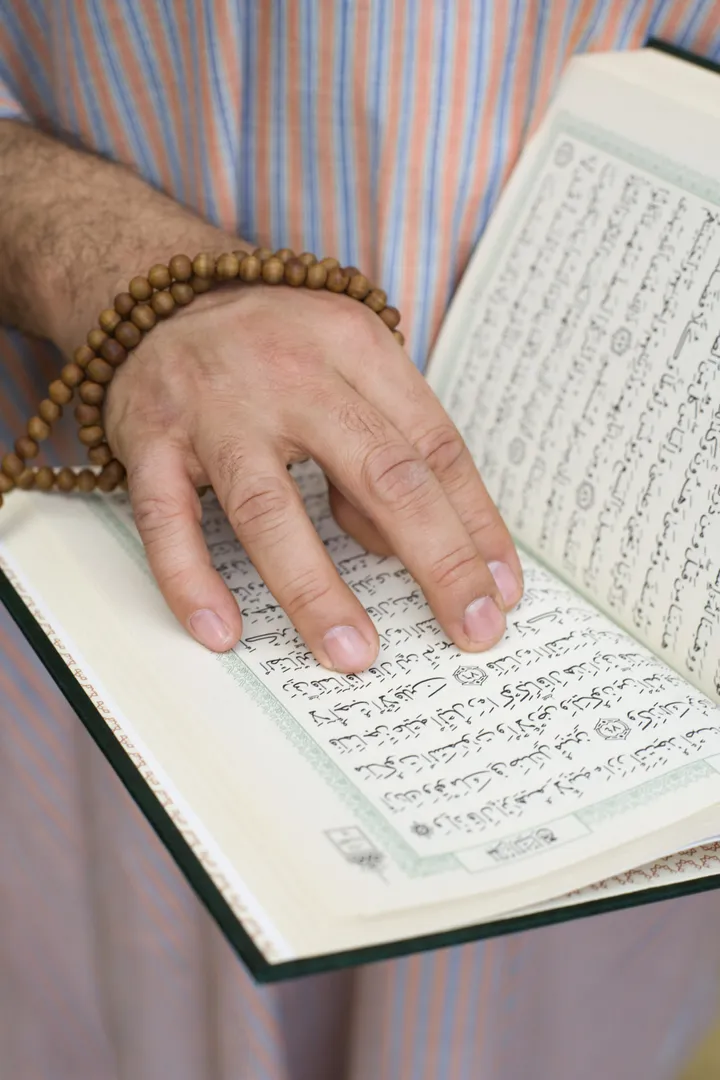
People often ask me what Islam says about this or what Islam says about that. I usually ask them what they mean by "Islam." Not many people have anything more than a vague idea of what this word can designate, not to speak of the diverse meanings that have been attributed to it throughout history.
It is fairly obvious that people think from within their own limitations. The more general a concept, the wider their diversity of understanding. Notions like "God" are notoriously up for grabs, as are words like "religion" or the names of the specific religions. There are as many "Christianities" as there are people who think and talk about it. So also is the case for "Islam." Both Muslims and non-Muslims constantly use the word with their own agendas in mind and with little or no reference to its meaning in the Quran, the founding scripture, or in the later tradition.
Most people have heard that "Islam" means literally to submit, surrender, turn oneself over. They might also have heard that it comes from the same root as salām, which means peace, lack of strife, absence of conflict. "The Peace" (al-salām) is one of God's Quranic names. By turning oneself over to the true peace that is God, one can escape the strife, conflict, war, and disharmony that are characteristic of everything other than God.
When we talk about peace in the world or in our lives, we mean achieving some sort of harmony among conflicting and contrasting forces. Such forces necessarily influence all that is specific and limited, not least the human self. God alone is free of outside influence, which is to say that he alone is true peace. Everything else is pushed and shoved from various directions, so, if we want to achieve peace, we need to make continual adjustments. This holds true whether we are talking about peace of mind, or peace in society, or peace among nations.
The Quran uses the word islām and derivatives like muslim (one who has the quality of islām) about 80 times. A small number of these instances can plausibly be interpreted as designations for the religion that the Quran and the Prophet were in the process of establishing. Historians have pointed out that the word came to be employed as a common designation for the religion only gradually, a process that has intensified enormously in modern times. Early on, for example, it was common to speak simply of al-dīn, "the religion."
Over the course of history, the historical phenomenon that we call Islam has produced many local forms. What ties them together is not any institutional setup or priestly class, but rather focus on the Quran and the Prophet as the sources for teachings and practices and the relative uniformity of ritual observances. Thus the daily prayers performed in Nigeria are practically the same as those performed in Beijing.
When we talk about the Quran, we should keep in mind that Muslims have always read the book as God's word, his self-expression, his own explanation of who he is and what he expects from people. We should also remember that it is characteristic of the Quran and of pre-modern Islamic thought generally to begin with God and to deal with the world only in terms of what is known about God.
The most basic thing that is known about God is that he is one, despite the multiplicity of his names, whether in the Quran or in other scriptures. When the Quran calls him by names like Alive, Aware, Desiring, Powerful, Speaking, Generous, Just, Merciful, Loving, Vengeful, or Forgiving, it is understood that the names differ in keeping with the manner in which the One God relates to the infinite diversity of created reality. What we call "reality" is in fact the sum total of phenomena that display God's names and attributes.
Once we begin with this notion of God as the source of all other reality, it is easy to understand why the Quran sometimes uses the word islām to designate the compulsory, universal submission of everything in the universe: "Submitted to Him is everything in the heavens and the earth" (3:83). This submission has nothing to do with free will. It is rather a fact of existence that all of us face in our everyday lives.
Whatever "freedom" may be, it is enormously circumscribed by the actual reality of lived experience. Many scientists, including many social scientists, have gone so far as to say that freedom is an illusion -- in other words, there can be no such thing as "voluntary" submission. We submit to the way things are whether we want to or not. This is precisely what the word islām designates in its most basic Quranic meaning, with the proviso that hidden behind "the way things are" is the One, Merciful God.
If the word islām in the Quran designated only the compulsory submission of everything to its Creator, most of the book would be empty words, because its teachings presuppose human freedom. It addresses the instinctive human recognition that we need guidance, "education" if you prefer. We do not on our own have the resources to understand the way things are or to live in harmony with ourselves, others, and the world at large. Scripture generally and the Quran specifically address people as (relatively) free beings with the ability to make choices that have profound repercussions on their own lives, their societies, and their posthumous becoming.
In short, the second and most common Quranic meaning of the word islām is voluntary submission to the guidance of God. This guidance comes in the form of revelation to "prophets," who are defined as those whom God appoints to convey his instructions to human beings. Through them God tells people how to live up to their humanity and how to achieve ultimate fulfillment and happiness. If this guidance is to have any effect on people's lives, they must accept it freely. As the Quran puts it, "There is no coercion in the religion" (2:256).
The first prophet and the first voluntary muslim was Adam, the father of the human race -- this is an important point on which the Islamic understanding of human nature diverges from that of Christianity. The Quran speaks of Adam, Abraham, and other Biblical prophets, as well as the apostles of Jesus, as muslims, that is, people who voluntarily surrendered themselves to God's guidance and who happily followed his instructions. Notice, by the way, that they were muslims in two senses: They were compulsory muslims like everything else in the universe, and they were voluntary muslims inasmuch as they accepted their role as creatures of God placed in the world for specific reasons.
One way to understand these specific reasons is to recall Rumi's tale of the Ocean and the fish thrown up on dry land. All fish -- not to mention the dry land itself -- are compulsory muslims. Some fish are also voluntary muslims, because they have understood that they are fish and they have submitted to the guidance of the Ocean in order
to flip and flop their way home.
For more on the meanings of "islām/Islam," see Sachiko Murata and William C. Chittick, The Vision of Islam.
The belief that Adam, Abraham, Jesus, Moses were "Muslims" is unique to Muslims, the followers of Mohamed.
Abraham was the progenitor of the Hebrew people, Moses was a Jew who was an adopted member of Akenaton's court, he led the Hebrew people out of Egypt, Jesus was a Jewish Rabi.
None of them ever followed Mohamed or the deity of Mohamed.
They followed Yahweh, not Allah. Two separate deities with completely different personalities, mythology and rituals. They are also separated not only geographically they are separated by several thousand years.
"They followed Yahweh, not Allah."- The Quran writes " There is no God but Allah"
When Yahweh was asked by Moses what he should be called Yahweh stated "Yahweh" not "Allah".
When Hagar was cast out along with her son, he was disinherited, so there is no claim to the inheritance of Abraham.
The Arabs existed before Mohamed and Allah was worshiped long before Mohamed was born. Allah is a Pagan tribal deity, he was the supreme Father God, he was married to the Sun Goddess and they have three daughters. You can read about them in the Satanic verses of the Qu'ran.
The peoples of the ancient world were "synergistic". When trading with each other which may have taken years of travel, in order to worship they would compare deities and rituals that were similar, and worship in those temples. The Kabbah was famous for the multiple deities worshiped there, along with the Father God Allah.
Allah did not have a monotheistic following until Mohamed came along. Allah did not match in any way Yahweh in personality or required ritual.
The claim that Allah and Yahweh are interchangeable and the same deity is false.
Narrated ‘Abdullâh bin Mas‘ûd: I asked Allâh’s Messenger, "O Allâh’s Messenger! What is the best deed?" He replied, "To offer the Salât (prayers) at their early fixed stated times." I asked, "What is next in goodness?" He replied, "To be good and dutiful to your parents." I further asked, "What is next in goodness?" He replied, "To participate in Jihâd in Allâh’s Cause." I did not ask Allâh’s Messenger anymore and if I had asked him more, he would have told me more. (Sahih Al-Bukhâri, Vol.4, Hadîth No.41).
Coercion? Tolerance? Peaceful?
"As the Quran puts it, "There is no coercion in the religion" (2:256)."
It isn't clear to me how it could be both at the same time. Either submission is automatic and inevitable (ie, coerced) or it is not. I suppose the sythesis of this confusion is to believe that everyone will submit voluntarily. This seems unlikely.
Now, the other thing about the word "muslim" is to be thought of like this...the laws of physics, the earth spinning on it's access around the sun, our solar system spinning around our galaxy, etc, the way a bud grows at precisely the appointed time - or not, the blood pumping through the heart, an estuary at the boundary of the ocean and the river....these things are all muslim because it follows the law, the will of the Creator of All Things. This is the Islamic viewpoint. Adam and Abraham and all of us are muslim because we submit to basic fundamental laws of our creation and nature that is not an issue of being consiously voluntary...your breathing is not a voluntary response, nor is the direction of the blood flowing in your system.
There is no *it*.
Whether it matters to YOU, only you can say; as for me, yes, "it" matters a lot.
http://www.huffingtonpost.com/2010/08/16/taliban-stone-couple-for_n_683080.html
The confusion arises that all the verses in Quran - The fist part and the second parts are all jumbled up later and are not in chronological order . So it is difficult to know.
That is why it is easy to say Islam is a loving and good religion and then in the next breath that it is a dastardly evil religion with no heart and an instrument in the hand if evil does - to kill others with impunity !
Now you go and find out which one of this book suits you need and follow that ! That's what the mullah's do - especially that they have been given authority to do so - that is Lie - cheat and do whatever it takes to further their cause in the
some food for thought, even if I dont entirely agree
It's the SPIRIT of the religion, not the LETTER of the law that matters.
The New Testament does not define true Christianity, the Inquisition and Crusades do.
Islam is now defined by terrorism. That will continue until the terrorist acts end.
What the Books say doesn't matter. "Stupid is as stupid does".
I believe there is no "true Christianity". This is a thing that, were it actually defined, there would be only one Christian denomination.
YOU can no more define "true Christianity" than anyone else other than God himself. You have what we all have -- opinions.
However, the New Testament is where we have words ascribed (attributed to) Christ and thus forms a more certain foundation of Christianity than to suppose some wars serve that purpose.
"If two men, a man and his countryman, are struggling together, and the wife of one comes near to deliver her husband from the hand of the one who is striking him, and puts out her hand and seizes his genitals, then you shall cut off her hand; you shall not show pity." Deuteronomy, 25:11-12
And I ask, "How would you like all of Christianity to be judged on THAT passage?"
http://www.huffingtonpost.com/2010/08/16/taliban-stone-couple-for_n_683080.html
Was he a peaceful man?
That's all I need to know?
'A man walking along a path felt very thirsty. Reaching a well he descended into it, he drank his fill and came up. Then he saw a dog with its tongue hanging out, trying to lick up mud to quench its thirst. The man saw that the dog was feeling the same thirst as he had felt, so he went down into the well again and filled his shoe with water and gave the dog a drink. God forgave his sins for this action'.
The Prophet was asked: 'O, Messenger of God, are we rewarded for kindness towards animals? He said; 'There is a reward for kindness to every living thing".
Pull the other one! - These stories like many others is just a big lie ! - most probably if he had come upon a thisty dog and seen his petatic face - he would immediately behead it ! and be done with IT --
There is a story as well about him...He lived next door to a Meccan woman who despised him and the Muslims. Everyday she would hurl epithets and dump her garbage in his head from her rooftop (please know that the people of Mecca who rejected his message of monotheism would do this to him even while they saw him pray). For several days he did not see and upon his inquiry found she was ill. He prayed for her and visited her in true Prophetic spirit.
The title of this article is badly worded: there is no inherent meaning to any words, only meaning human beings derive from them. If this literature really represents the deity that created our universe, why the ambiguity? A being capable of universe creation could easily have been more specific when applying pen to paper.
Lately they insist on lumping Islam in there as well, calling the whole shmear "Abrahamic religions." There is no such thing. There is Judaism, and there is Christianity, there is Islam, there is Buddhism, there is Daoism, there is Zoroastrianism, there is Mandaeanism, and so on and so forth.
The Qu'ran actually constantly refers to "the people of the book" and Allah is claimed to be the same god spoken of in the Bible. In fact, Islam actually teaches that the Bible too was the word of god, but that it had been corrupted over the centuries. To correct these corruptions, Allah hand-picked Mohammed as his final prophet and dictated the Qu'ran to him through an Angel.
In the Qu'ran you'll find Adam, Idris (Enoch), Nuh (Noah), Isa (Jesus), Ibrahim (Abraham), Ishaq (Isaac), Yusuf (Joseph), Yunus (Jonah), and many, many more. Islam speaks of creationism, the great flood, and so on. The Qu'ran is, according to muslims, the "final revision" of god's word.
Christianity is based on Judaism. Islam is based on Christianity. These are the "Abrahamic religions" whether you like it or not. They have tons in common. How could you *possibly* claim otherwise?
If you want to know about Hinduism, as a Practicing Hindu. Not a Christian or a Muslim or a communist Hindu from West Bengal.
I find it rather odd that only Christians and Muslims have so many web sites explaining other religions. There is a fundamental conflict of interest. Evangelical christians are the biggest violaters of this practice. They out rightly lie about other belief systems to make their own look better. They are simply unethical.
Neither could a Christian evangelical do an honest job of learning and presenting Hinduism. Since as an evangelical, he has an inherent duty to this faith to put down other religions and evangelize his own. That rules out any honesty in this study.
For anyone to say they know what any religion is, is folly. Every religion has many subsets and therefore defies generalized characterization. All generalizations are false, including the one that says that all generalizations are false. Or the way my grandfather explained it to me, "All Indians walk single-file. At least the one I knew did."
Imagine some Hindus were to explain christianity by what the LDS members to do their minor girls... and try to present that as christian norms and values. Emphasizing all the nasties of a small group within that larger community would do to present a deprecating impressions.
Thats exactly how Christians at large explain to others about other peoples religion. I know of no other religion that has this viIie habit and nature.
If you have learned about other non christian religions from a christian, consider it wrong by default. Consider that you have been misled. 99% you were probably lied to.
That could be difficult. Perhaps you could provide an example of how this explanation would proceed? PS -- I don't speak or read "Hindu" so I suspect your example might not be useful.
At any rate, I don't see what difference it makes WHO is telling the story, so long as the story is accurately told. It *does* make a difference when a storyteller is inserting his or her own experience and prejudice into the story, in which case it is no longer a story about LDS girls.
http://www.huffingtonpost.com/2010/08/16/taliban-stone-couple-for_n_683080.html