
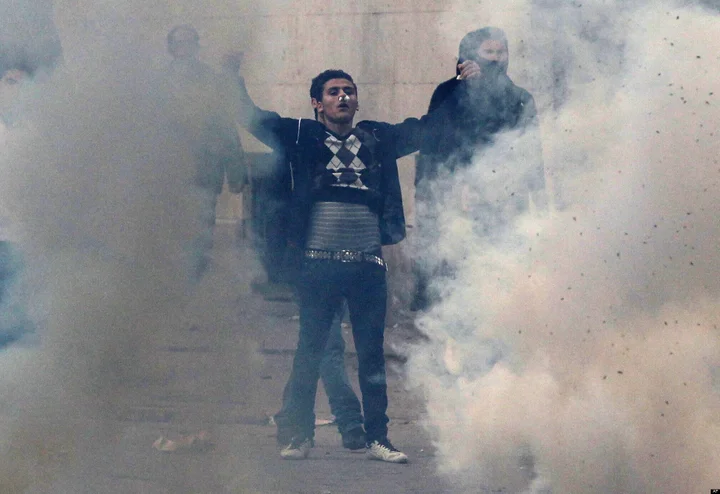
The overthrow of President Ben Ali of Tunisia is being hailed as a potential precursor to similar revolts against repressive regimes elsewhere in the Arab world. Democracy enthusiasts dream of falling dominos throughout the Middle East comparable to the cascade of apparently impregnable dictatorships in eastern Europe and eventually the Soviet Union between 1989-92.
Certainly some elements of Tunisia's so-called Jasmine Revolution parallel other upheavals. Mohammed Bouazizi, the street vendor who set himself on fire, became a symbol of heroism not unlike the Rev. Laszlo Tokes in Romania whose resistance to Nicolae Ceauseascu's venality inspired thousands to take to the streets in 1989. And the Tunisian protesters, unlike those in Iron Curtain countries, had the benefit of social networking tools like Twitter and Facebook with which to rally supporters.
But massive Tweeting and consequent street demonstrations in Iran in 2009, coupled though they were with enthusiasm for opposition politician Mir Hossein Mousavi, were not sufficient to rid the country of either its autocratic president or its theocratic state. Moreover, despite widespread protests over recent stolen elections, Alexander Lukashenko remains very much in power in Belarus as does Laurent Gbagbo in Cote d'Ivoire.
The truth is that no one knows for sure what makes for success when it comes to explosions of popular outrage. Before the revolution, Tunisia boasted both a well-educated populace and a small but courageous civil society with wide access to new communication technologies. The addition of economic stress and resentment at the luxuries garnered by the president's family through corruption made for a lethal mix. (How ironic that that corruption was largely revealed through WikiLeaks which, having intended to give the heartburn to the US, one of the most open countries in the world, contributed instead to the downfall of one of the least open.) When the military refused to protected Ben Ali, his fate was sealed. But this combination of conditions is not easily duplicated elsewhere and many of them are not within the control of those who would promote democracy.
So what should we democracy and human rights activists do to encourage positive change in repressive regimes around the world? Like the old Boy Scout slogan, we should "Be Prepared!" We should encourage the widespread availability of social networking tools and training in nonviolent strategies of social change. We should never abandon civil society when it is under threat and ensure that our own governments don't either. We should push Western governments to reexamine their ties to repressive regimes. (The US will inevitably pay a price in post-Ben Ali Tunisia for its war-on-terror-inspired alliance with Tunis.) And we should be models of civility worth emulating in the conduct of our own democracy. In this sense whether the Americans heed President Obama's eloquent words in Tucson has implications well beyond our shores.
The Jasmine Revolution may or may not have staying power. (Ask most Ukrainians whether they are happy today with the results of their 2004 Orange Revolution!) But it has underscored the message that under the right circumstances people can indeed determine their own destinies. That ought at least to give pause to autocrats from Beijing to Cairo and put at least a momentary smile on the faces of all those who care about freedom.William F. Schulz is President of the Unitarian Universalist Service Committee and former Executive Director of Amnesty International USA.