

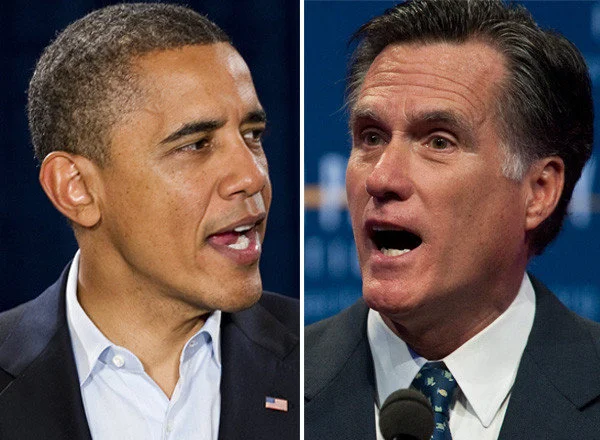
With Congress paralyzed late last year, President Barack Obama decided to assert his authority more aggressively on a number of issues: "If Congress refuses to act, I've said that I'll continue to do everything in my power to act without them." He coined a slogan: "We Can't Wait".
Global climate change certainly falls into the "we can't wait" category. It's a very bad influence on things we care about -- a healthy economy, affordable food, protection from natural disasters, lower taxes, control of federal spending, and the safety of the nation's infrastructure, to name a few. That should lift global warming to the top of the candidates' platforms and the next president's agenda.
So, when the first presidential debate takes place for Oct. 3 in Denver with a focus on domestic issues, somebody should ask the candidates this question:
Top climate experts are saying that global climate change will increase the likelihood we'll see much more extreme weather in the future, even more severe than the droughts, floods, wildfires and heat waves we're seeing today. Let's assume that the Congress remains deadlocked next year on the climate issue. What will you do as president to address the risk that these experts are correct?
If either candidate answers that climate science is not sufficiently certain to justify presidential intervention, the moderator should reject that answer. Scientists will continue working on the science; the relevant question for the president and Congress is how the federal government will help the nation reduce and prepare for the risks that global warming is upon us and likely to grow much worse.
If either candidate responds that the president is relatively powerless and the question should be directed to Congress, then it will be time to dust off the recommendations many of us advocated four years ago about what a president can do. With apologies to those who have read these before, here is a reprise of the analysis we offered to the candidates in 2008:
It is true that the Constitution gives the Executive Branch relatively little authority compared to Congress, which makes the nation's laws and controls the government's purse strings. The president is not without tools, however. They include executive orders; directives and memoranda; the veto; signing statements; National Security Directives; the authority to call Congress into special session; the ability to enter into Executive Agreements with other nations without the advice and consent of the Senate; the president's role as Commander in Chief and Chief and his job as Chief Executive of the nation's largest institution, plus some extraordinary powers the president can use during national emergencies. And, of course, there's the power of the bully pulpit.
In addition, past Congresses have delegated specific powers to the president, including many related to protecting the environment and enhancing our energy security. In a legal analysis the Presidential Climate Action Project commissioned during the last campaign, the Center for Energy and Environmental Security at the University of Colorado School of Law (CEES) found that presidents issued 370 executive orders related to energy and the environmental from 1937 through 2006, based on 112 statutory authorities put into the U.S. Code by past Congresses.
Presidents are on safest ground when their actions are based on a clear statutory authorization. When the president appears to overstep his statutory authority, he can be challenged in the courts. However, CEES found:
When it comes to analyzing presidential claims of statutory authorization...the courts have not yet settled on a clear set of rules for the analysis... (but) the most common theme is for the courts to show deference to a president's interpretation of statutes... Overall, presidents have a history of faring well when their executive orders are challenged in court.
A weakness of one of the president's most common tools -- executive orders -- is that they can be undone by Congress or future presidents. A future president can simply issue a new order that makes his predecessor's obsolete. A hostile Congress can attempt to revoke some of the Executive Branch's powers, as the House tried to do last year when it voted to take away the EPA's ability to regulate greenhouse gas emissions. But as we've seen in the Senate, procedural rules can be used to block that kind of retaliation, and so could strong public support for executive action if the next president clearly explains to the American people why it is necessary.
While some presidents declined to take any action not explicitly allowed in the statutes, a "We Can't Wait" president will push the envelope on executive authority. It has been done before. To protect the nation's natural resources, President Theodore Roosevelt pushed presidential authority beyond the boundaries set by his predecessors and beyond specific statutes. He believed he was duty-bound to do so. In his words:
I did and caused to be done many things not previously done by the President and the heads of departments. I did not usurp power but I did greatly broaden the use of executive power. In other words, I acted for the common well being of all our people whenever and in whatever measure was necessary, unless prevented by a direct constitutional or legislative prohibition.
Franklin Delano Roosevelt stretched the boundaries even farther. To deal with World War II and the Great Depression, he sometimes took action first and asked Congress for permission after the fact. According to the CEES:
To make great change, a president can go to the broader end of the spectrum. Franklin Roosevelt's administration exemplifies the most expansive philosophy regarding use of executive authority... Roosevelt aggressively sought expansion of executive authority by obtaining additional statutory delegations and actively used statutory delegations as authority for executive action to "attack" economic crisis and military foes. The success of his administration was to some extent circumstantial, due to a supportive Congress, popularity with the people, and historical situations that instilled in the nation a sense of urgency. However, it is not improbable that one or more of these circumstances would again present themselves, especially in light of recent scientific findings regarding the implications of climate change and the growing consensus as to the urgency of the problem (emphasis mine).
The Justice Department and the president's judicial appointments may also influence energy and climate policy in the years just ahead. The U.S. Supreme Court has already substantiated EPA's authority to regulate greenhouse gas emissions. The EPA's finding that greenhouse gases are a danger to public health and welfare has since been upheld by lower courts.
Our litigious citizens now are testing a variety of additional legal issues, recently summarized by the Congressional Research Service. Can the Endangered Species Act be used to restrict greenhouse gas emissions based on evidence that climate change degrades critical habitat? When should carbon emissions be addressed in Environmental Impact Statements? What about the liability, property rights and regulatory issues that carbon capture and sequestration (CCS) would trigger? Can they be resolved? Or are they so difficult that we're wasting taxpayers' money by subsidizing CCS?
Will federal insurance programs have to cover damages caused by climate change? If so, how will we handle the increased cost to taxpayers? Can electric utilities be forced to pay damages to citizens and communities because they knowingly emitted carbon pollution that contributes to climate change?
What impact will climate-induced water scarcity have on the volatile subject of water rights? Can governments be ruled negligent if they fail to avert the harmful impacts of climate change, such as flooding and sea level rise? How will we treat people who try to enter the United States from Mexico and other countries as "climate refugees"? Has climate change risen to the level of a national emergency? If so, what exactly are the president's "extraordinary powers"?
And again, the overarching question: If Congress cannot or will not deal with the rising risks and evident dangers of global warming, will the president? It's a very good question. We should insist that Gov. Romney and President Obama answer it.
Bill Becker is the Executive Director of the Presidential Climate Action Project. The project's specific policy recommendations to the 44th President and Congress are posted on its web site.