By H.E. Dr. Mustafa Cerić, The Grand Mufti of Bosnia and Herzegovina and a Co-President of the Religions for Peace World Council; Rev. Dr. Michael Kinnamon, General Secretary National Council of Churches of Christ in the USA; and Dr. William F. Vendley, Secretary General of Religions for Peace.
Our future is vested in the diplomats from 189 countries who will gather at the United Nations this month to review the Nuclear Non-Proliferation Treaty (NPT). Enforcing this forty-year-old treaty is vitally important. Controlling nuclear weapons will not only make us all safer; it is also a key to addressing other modern crises such as climate change and extreme poverty. Why?
Religions provide answers.
It is no surprise that nuclear technology magnifies the impact of human flaws. The Islamic and Christian traditions acknowledge the human proclivity for evil. But their religious convictions about human sinfulness are paired with faith in the goodness of God's authority. In both traditions, God's authority is definitive. Muslims are practitioners of Islam -- literally, peaceful submission to God. Christians are disciples of the Lord Jesus Christ. Other world religions have their own ways to speak about such matters.
The ethical consequence is that to be human is to be responsible to God. Where humanity tends to be selfish and violent, proud and wasteful, the fact that we are under God's authority calls us to humility and stewardship, and to peace based on a wisdom greater than narrow individual or national self-interests.
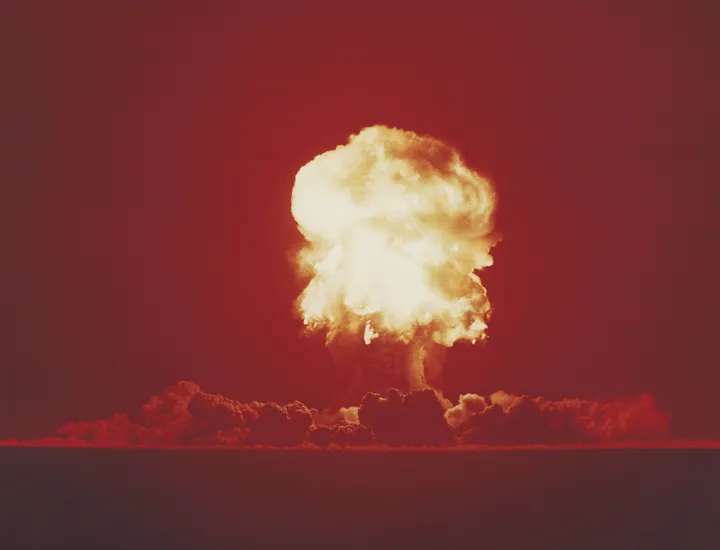
Nuclear weapons are the rejection of humanity under God; they have placed a power previously imagined as God's alone in our collective grasp. Possessing them, we claim the globe as acceptable collateral for our interests. The atomic scientist J. Robert Oppenheimer -- witnessing the power of the atomic bomb he had helped to unleash and borrowing in his own way from the Bhagavad Gita, writings sacred to the Hindu tradition -- called out ruefully, "Now I am become Death, the destroyer of worlds." Religious leaders of all faiths must work together to reject this terrifying "theology" of nuclear weapons. If we are beings under the authority of God, we dare not arrogate to ourselves the authority to destroy all life.
Nearly a century ago, an assassin's bullet triggered the First World War; today, the same human impulse could ignite a chain reaction that ends life on earth. Observers of history note that the threat of global annihilation prevented nuclear conflict during the Cold War. But this reprieve is not a prescription for future planning. Participants in the Cuban Missile Crisis share that the world escaped catastrophe by luck, not planning.
Nuclear weapons cannot be managed in an impromptu fashion. Acknowledging God's authority demands a corollary passion for an "architecture" for controlling nuclear weapons. This architecture is the NPT, first negotiated in the late 1960s. Then, the nations of the world officially recognized that they have more to lose collectively from nuclear weapons than any nation has to gain individually. That conviction gave rise to the three-fold pledge at the core of the NPT: 1) the nuclear powers pledge to pursue disarmament in good faith; 2) the non-nuclear powers agree not to acquire their own arsenals; and 3) all parties are guaranteed the right to peaceful nuclear power. At its core is the vision of a world without nuclear weapons. All nations must honor and enforce these principles. And in today's world both nuclear and non-nuclear nations must focus on the increasing nuclear threats posed by non-state actors.
Other global crises -- such as environmental degradation and extreme poverty -- also share, despite their differences, some similar characteristics with the threat of nuclear proliferation. The problem with each of them is the problem with all of them: human power has outpaced morality and placed itself above responsibility to the Divine, the Ground of Life. But because there is no arena of human action that is not to be disciplined by God's sovereignty, our religious traditions teach us that our ever-growing technological capacity to affect the entire globe carries with it the imperative of a global moral response. While this moral response must arise from individual human hearts, it must also be translated into effective laws and international agreements.
It is time to balance power with morality. We must begin by committing to the goals of the NPT. By doing so, we will foster the kind of global responsibility that can help us -- God willing -- to address the other self-made crises of our time.
H.E. Dr. Cerić, Rev. Dr. Kinnamon, and Dr. William F. Vendley are leaders in Religions for Peace, a multi-religious coalition advancing common action among the world's religious communities for peace.