
To believe that the entire galaxy is centered on this small Island or that Atlantis was here are things many Cubans have asserted more than once. We go through life with focused manias, shedding light on ourselves and digging the curette into anything we boast of knowing. One of the most widely practiced national sports is cataloging the politicians, presidents and personalities of other countries without knowing too much about them.
And so, we are quick to judge and deeply intrusive about matters beyond our borders. But in sticking our noses into foreign matters, we aren't unique. This could be said of all nationalities on the planet, without committing the sin of exaggeration. And much more so now that the global village seems ever more familiar, and thanks to communication technologies what happens in our neighbors' backyards seems as if it happened in our own. A butterfly fluttering in the Amazon may influence the purr of a collective taxi running along the Malecon. The new leader elected in Peru will greatly draw our attention, even though for 50 years we have not been able to elect our own president.
With the superficiality of those who are far away, people in the streets of Havana refer to the second round of Peruvian elections with alarm and simplicity. To change the maximum figure of a country is no longer a matter of concern only within national borders. People jump these boundaries more and more, those lines imposed by history, and they opine, assess, advise regarding what others decide, as the direction that political figures imprint on their nations, inevitably ends up influencing all those around them.
To place a ballot in a box is no longer a personal or regional act, wrapped in the privacy of the voting booth. On June 5 there is too much at stake for the region for us to reassure ourselves by saying, "This is a problem for Peruvians, it is for them to resolve it." It is difficult to remain silent when you see your neighbor in such a difficult dilemma, and you know that the path they choose will mark a part of the path of every Latin American. The Peruvian crossroads, now, is also our conflict.
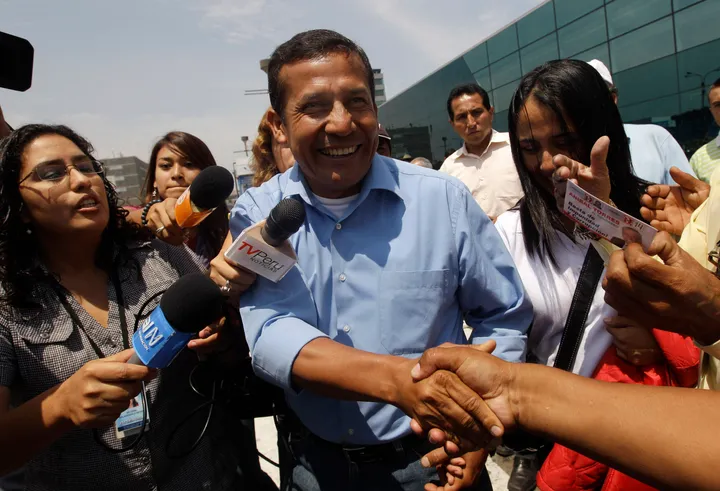
And this meddling, which we've turned to from modernity and insularity, has us looking south from the Caribbean Sea and wondering, will Keiko Fujimori, daughter of the now imprisoned former president, win? Will the leftist ex-army officer Ollanta Humala be elected? The negative echoes of the government led by the center-right candidate's father still resonate in these parts, but the rival nationalist candidate worries us more.
If we were to be guided by the official press, one could say that the Cuban authorities still sympathize with the one who, in his past presidential campaign, offered an anti-system discourse, although in this campaign he appears more measured. Among the delusions of our aging political class is the fantasy that with the emergence of an axis of support, the Cuban system will stretch from the Bravo River to Patagonia.
The managers of our national destiny fantasize about the mirage that allies will come from outside to save us, as the Soviet Union once did and as Huge Chavez is now attempting. But Humala has distanced himself, at least in his current campaign, from any discourse that aligns him with the Plaza of the Revolution. This distancing has reduced the emphasis on him in the news, as well as the admiring adjectives that the daily paper, Granma, and the national news were so ready to grant him.
The big question is whether this information strategy is aimed at not showing too much enthusiasm so as not to sway the electorate, with a closeness to the Castros, or if, in fact, the one-time fellow traveler is disappointing them with his new moderation.
Perhaps some of the doubts about Humala murmured in our streets are due to his military origins. Olive green uniforms are quite traumatizing here, especially recently as Raul Castro has placed a greater number of members of the Armed Forces in key positions. But the fundamental suspicion of the Peruvian candidate comes from a history we fear to see repeated in other places.
It's the narrative of the coming to power of a charismatic man, swearing -- and perjuring himself -- that the will of the people will be respected above all. A man who then dismantles the structures of civil society, the press, the means of expression, to expand his authoritarianism to every sphere of life. Probably the aspirant in Peru is far from doing the same, but our national suspicion does not let us see clearly.
Peruvians already have enough with their own tremendous national dilemma to also consider the apprehensions of Cubans, whatever they think. But beyond the call to opine on matters far from this island where we were born, we have always had the dream of being a continent, and in this particular case we are very aware of what is happening in Peru.
Not only because the small town that has ended up being the world has strengthened the ties that bind us, but because we sense that the election will also mold our next steps as well. But our fantasies will not influence the marks that will be made next to one or another name; in the end we are only a few interlopers more, worried eavesdroppers who have suffered too much.
 Yoani's blog, Generation Y, can be read here in English translation.
Translating Cuba is a new compilation blog with Yoani and other Cuban bloggers in English.
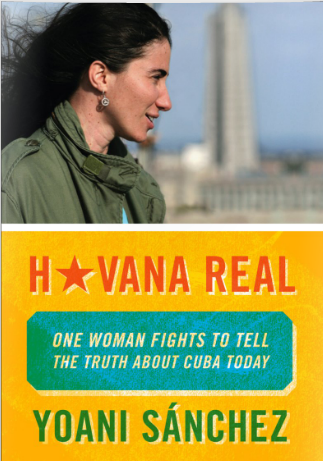
Yoani's new book in English, Havana Real, can be ordered here.