For years, Americans have been fulminating about China and its policy toward currency. While many of the debates are technical and laden with econo-speak, they boil down to the simple conviction that China is unfairly manipulating its currency to keep it undervalued against the dollar. The result is to give China unfair advantages in trade - flooding the US with cheap goods, hurting labor wages world-wide, and accumulating massive surpluses in the process.
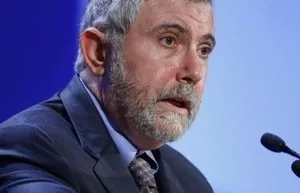
That view is again articulated by Paul Krugman in today's New York Times, which ends with the firm statement: "Something must be done about China's currency."
But what exactly must be done? And more to the point, what can be? Declaiming that something must be done assumes that the United States or some other world power can coerce or force the Chinese government to change their approach to currency in particular and economic policy in general. Before the crisis of the past year, Chinese authorities had actually begun a slow, quiet revaluation of the currency, but only after American politicians and officials stopped using the currency question as a cudgel against China. The recent decision of Timothy Geithner and the Obama Administration not to label China a currency manipulator marked a welcome change in tactics. Compare that choice to the much-publicized Schumer-Graham tariff of 27.5%. It never went into effect, but it hovered as a threat that if China didn't immediately revalue its currency, dire things would follow.
But with China now accounting for nearly $1 trillion of American debt, and with the two economies in a symbiotic relationship that neither loves but that neither can escape, the U.S. can't simply insist that China do something about its currency and expect action. These economies are now fused (see my new book Superfusion). Much like the United States for last half of the 20th century, China is becoming a global economic behemoth. It isn't supplanting the United States anytime soon, but it is rapidly joining the U.S. as the other most important engine of the global system. It remains much poorer and less developed, but it is generating a substantial share of global activity and its cascade can be felt from Rio to Melbourne.
Given that, why would China decide to disrupt the system simply because it causes consternation in America or Europe? Its economy is booming and its policies, however unorthodox, are working. China will again allow its currency to appreciate when it feels that doing so won't cause a crisis of disrupt growth. Its massive accumulation of reserves is an issue. As the crisis eases, it's likely that Beijing will return to its pre-2008 policy of gradual appreciation, especially now that it is focusing on generating domestic demand and wants greater purchasing power for Chinese citizens. But Secretary Geithner - contrary to the criticisms of Krugman and others - has been exactly right in not publicly calling out China. Such an act would be both arrogant and foolish. In the world today, the United States can afford to be neither. Let's hope we remember that.
Follow Zachary Karabell on Twitter: www.twitter.com/zacharykarabell
Dave Johnson: Palin vs. Krugman on the Dollar -- Who Is Right?
A falling, or "weak," dollar is great for American manufacturers. Conservatives, though, are trying to use the complexities of the relative value of the dollar in currency markets as an anti-Obama political issue.
Want to reply to a comment? Hint: Click "Reply" at the bottom of the comment; after being approved your comment will appear directly underneath the comment you replied to
I completed last year a study of Chinese industrial espionage against the United States. The title of the book is SNAKE FISH: The Chi Mak Spy Ring. As the writer says, industrial espionage is a major problem, and US companies are not prepared very well to protect against it.
The combined USA+China economy is amout 31% of the world (25+6) . The same as the EU economy. The valutaes of USA and China both sinks compared with the EURO. Today you'll get about 3 USD fo 2 EURO, but the import from China to EUhas dropped with 20% from july 2008 to july 2009, while export has increased.
I think your main problem is an image problem.
American industrial goods simply don't have a reputation, that makes it possible to sell for a higher price.
You can't compete on prices (the race to the bottom) but on quality and invention.
Todays hype is being green, An american fridge uses much more electricity than an european, so it looses. In EU there are a lot of restrictions on the quality of products, the chemicals used, energy consumption and so on. That has met from the cooperations, but today it is a comeptive parameter, giving European products a better image.
You buy a cheap chinese drilling machine. Uses a lot of energy and breaks after 1-2 years, or you buy f.x. a bosch(german). It works for a lifetime.
Your agricultural production is roughly in products twice the EU production, but the total sales price of the products are roughly the same. Why? Because we have a lot of highly spezialised high quality products, that gives a good price. In that way you can put more value in your production and that's the future. Quality and diversity.
China has deliberately chosen to undervalue its currency so as to encourage exports and grow its industries. Their artificially low priced goods are a gift to Americans, a gift consumers split with the Waltons and make them several of the dozen richest families in the world. Generosity has nothing to do with this kind of gift. It can be closed out in a moment -- being, after all, merely a government policy.
I think everybody understands that our debt to China is denominated in dollars, and we can monetize it by letting the international value of the dollar decline. The value of the dollar will decline because our federal deficit budgeting means we are strictly printing excessive dollars. The new dollars must drive the value of all dollars down. This is less clear because other countries have policies as reckless or worse, and the dollar declines in an atmosphere of all paper money declining.
It should seem we have some moral obligation to return value for China's acceptance of our debt, but we don't. The United States has only national interests. Nations are not people or moral as people and particularly business people might be. At that, even business people will negotiate the passage of a crisis. It's all about power, and you have to be a pretty small fish to really get screwed.
"Such an act would be both arrogant and foolish. In the world today, the United States can afford to be neither. Let's hope we remember that." Wonder what percentage of folks has any idea on this score? Hope US can afford to do both again, one day soon...
Free trade has always been a lie.
Somewhat.
We know Americans are underpaid because they do not have money enough to fulfill their duties as consumers. The trend is toward greater productivity with productivity rising faster than wages. Therefore, industry has looked to exports to absorb the added production. Ricardo not withstanding, English fabrics are not so much more efficient than Portuguese or Madeira so superior to English ale and Scotch whiskey. The only advantage of the trade is variety and it comes at a premium. Rather than import Danish cookies to Philadelphia and sell Philadelphian cookies in Denmark, the most practical thing is to exchange recipes.
International trade is theoretically incidental to the full operation of a national economy. Gathering gold is the Midas fallacy. At the last, a national economy is sustained by a national productivity, and the value of its coinage is sustained by things of real value that you can buy with it. A foreign brokerage house is not governed by your interests, is harder to oversee, and is a secondary kind of service.
Somewhat.
When the US dollar is at parity with the Chinese rimadi, imports and exports will be in balance. This in no way need be affected by how the United States apportions its income. Our two countries may continue at their relative life styles. Both can have full employment with personal wealth affected by domestic industries.
US free trade policies are dictated by commercial interests which particularly use trade treaties to circumvent representative government. A real NAFTA arrangement would include the free exchange of labor as well as goods. Obviously, the limits on what is traded are biased market restrictions.
China is very consciously following the Japanese economic model of neo-mercantilism, and mirroring Japan's success. Doesn't anyone remember that exactly the same complaints were being made to Japan 20 years ago? Since that time, the death of the Japanese economy has been greatly exaggerated: The U.S. trade deficit with Japan is much higher now than it was in the '80s and '90s.
If America does not now (actually this should have been done years ago) stop resting on its laurels and start investing heavily in both education and the rebuilding of its manufacturing sector, then it will be another country that once upon a time was a great power, like Greece, Rome, Great Britain, etc. If you want to learn more about how we are being played by China, you should check out what Tokyo-based jouralist Eamonn Fingleton has to say on the matter.
http://www.squidoo.com/eamonn-fingleton
Just blows my mind that economists continue to perpetuate this myth that somehow the terror of two economies morphed into what it is - when it is patently clear that the US corporations/politicians are the architects of this arrangement, with China being allowed to participate.
Stop the spin already, we already know they wanted to move GM's assets to China too.
China is booming and GM, naturally, would like to become a Chinese company; perhaps, using its American clout for a favorable position. I think, that is selling America short and just another example of the lack of national feeling in major corporations.
The size of the potential Chinese markets have always attracted US interests. England's desire to keep the trade in English ships was part of the reason for the American Revolution. The Boston tea party was not solely about taxes. Afterward, the United States tried to overcome European impulses toward splitting China into regions of national domination with its "open door' policy. As the Kaiser said in a notorious interview, America wants the benefits without doing the hard stuff.
We'll see what happens when China decides to cash out its development.
There is a huge difference between "what happens on paper" and what -actually- happens in the hulls of oceangoing ships ... in (closed) American factories ... and so on.
On paper, we may soon be exceeding the capacity of Microsoft Excel to store more zeroes to the left of the decimal-point. (Not really, of course.) But "all those zeroes" mean precisely what all zeroes mean.
20% tarrif on Chinese goods immediately.
Going 10% each year.
That would be a disaster. We import all kinds of things from China, so the price of goods we be even more expensive. That would also provoke a trade war.
I love how afraid Americans are. They scared us into war with Iraq. And they scared us into the bailouts. "Oh, we have no choice but to give them billions"
And now with trade its the same surrender monkeys. "It will start a trade war." America is a nation of cowards! Left and right. Both are cowards!
When the confrontation comes with China in a "real" war instead of a "currency" debate, what are you going to do Zach. Hit 'em with your Playstation? Don't be naive. Unless and until we show the Chinese that they don't call ALL the shots, will we ever be able to negotiate "fair" trade outcomes.
I fear you are going to need more of my fellow alumni to come to your defense when your approach fails.
China uses high tariffs, local content laws, preventing investment capital from leaving the country, and forcing foreign companies to partner local companies. This is the Asian definition of free market capitalism. Have you noticed that economists usually leave these policies out of their articles? They don't want us to get any ideas, just physiologically manipulate us into doing nothing while we turn into a third world country.
We destroyed our own industries, don't blame others.
US should follow China and control their currency. Bring down the US$ to increase exports. Be more competative in the International market. get back those jobs. Stop lamenting or blame others for your own predicament your future is in your hands not in others.
China pegs their money to the US dollar so if the US devalues the dollar, China devalues their money automatically.
It is not about competing with China, their good are dirt cheap because of their low standart of living cost thereby providing cheap labor. There must be a paradigm shift and not see China as the cause of US's problem otherwise it will never get out of this economic doldrums. China do not export quality equipments or automobile. Here is where US face competition from Europe, Japan and up coming Korea. China and the rest of the World buys alot of equipment from Japan, Korea and UK. US overpriced itself due to the strong US$ and high labor costs. Those that remain in competition need to go on automation to cut down on labor costs or alternatively to produce their products in a third World country where labor is cheap.
I read Krugman's opinion piece in the NYT and couldn't believe what I was reading.
How does Krugman propose the US force China to do anything?
The US is the bankrupt debtor and we have no bargaining power other than to threaten to collapse our own feeble economy. Which doesn't sound like much of a threat.
I usually agree with Krugman but he seems to have consumed a few too many adult beverages before writing that column.
Oh, I doubt Krugman cares about what the Chinese do. He's pretty much stopped being an economist at this point, and is simply another apologist for the Democrat Corporate party. He gets paid good money to promote corporate interests and that's what he's really interested in. The war machine needs an enemy, and China is a good target, so that's all he cares about. Sad, he was a decent economist at one point too.
Notice how he NEVER ever discusses or even mentions the US military budget? Never! Why is that?
The fusion is healthy for neither party and consequently, the divorce is in the initial stages. The Chinese resent the role of the dollar in the global economy and will strive to diminish this role over time, and have said so. We resent the currency manipulation as well as the absurd current account deficit we run with China, where our exports are only equal to about 20 percent of the imports we buy from them, which of course, are products manufactured by U.S., European, Japanese, S. Korean firms in China. Virtually every laptop and notebook in the world comes off the same assembly lines there.
Many firms are debating whether to manufacture in China or Mexico;it is in the U.S. interest that they chose the latter and become part of the north american market.
Also, the strength of the Chinese economy is exaggerated.They remain an export platform and transition economy and have yet to show the capacity for qualitative growth. Try and name any world class Chinese firms that can compete with Microsoft, Honda, Daewoo, or Nokia.
Mr. Karabell is right that China won't revalue its currency. But there is something strong that the US can do unilaterally to correct our massive trade deficits with China and other big exporting nations.
That is pass Senate draft Bill S.3899 - "The Balanced Trade Restoration Bill of 2006" It didn't pass in '06, when the economy seemed O.K.. But look at us now!! The Bill would create tradable Import Certificates equal to the value of US exports each year, and all imports would require purchase of certificates in the open market. No industries or countries would be targeted - all would continue to have access to our market. The result would be elimination of our trade deficits within a few years, plus a major revival of production in the US, plus the restoration of millions of good jobs. And no government deficit spending would be required. S.3899 is fully O.K. under WTO laws.Now is the time to enact this Bill and correct a longstanding failure of US international trade policy
The dollar is dying and the yuan is certainly going to strengthen sharply. China won't need us when their currency gains because they will then have a huge domestic spending boom. There people will finally be able to afford stuff that they make. Plus, China saves so much money, they will have plenty to spend.
The two are not going to be connected and it shows right now. China is doing fine while the US consumer is being devastated. China has to decouple because the US will be depressed for many years to come, most likely a decade.
You must be logged in to comment. Log in or connect with